

What IS a Keynote Speaker?

Most people have heard the phrase keynote speaker but few people could tell you what or who a keynote speaker actually is. What’s more, even the language and specifics of the speaking industry  can be mysterious and confusing to people outside of the business.

Below is a crash course on who keynotes speakers are, and what it is they actually do.

  1. What is a “keynote speaker”?

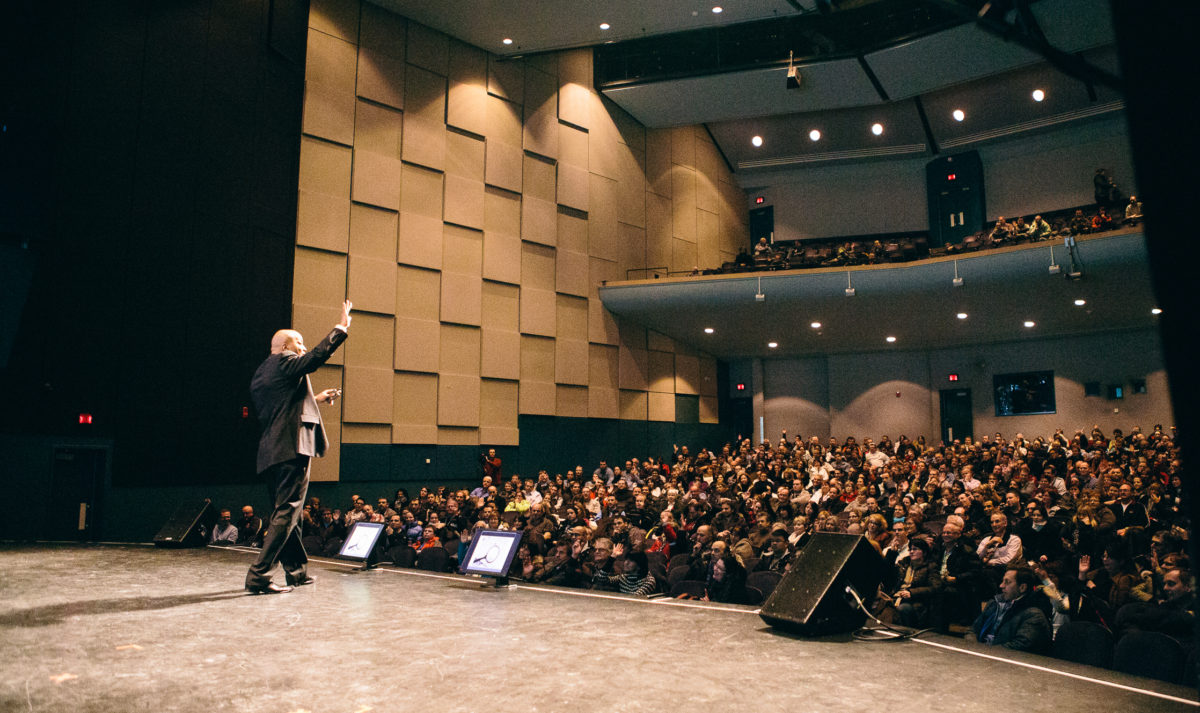
The keynote speaker sets the tone, or “key” for the event.  The term is now used much more broadly to include closing keynote speakers and all kind so of speakers in between.

2. Who are keynote speakers, and how do they fit into the context of an event?

Generally, keynote speakers are thought-leaders for the particular event. They may speak on larger topics such as customer service, the customer experience, and company culture. At an event, they might for example speak at a retail banking industry summit, where they would give the keynote speech on the importance of customer service, the customer experience, or company culture to retail banking. Then a the more specialized industry speaker or company insider would contribute their expertise, say on the current regulatory climate in retail banking, either on the same stage or in breakout sessions later that the day. 

3. How much does it cost to book a keynote speaker?

This is such a popular question, and a hard one to answer.  Celebrities or other high profile people can make up to $250,000 a speech. The rest fall in between anywhere from $250,000 to $5,000. In addition, travel and hotel fees will usually be tacked on to the speaker’s fee, and that amount will fluctuate depending on the location they are traveling to and from. Some keynote speakers may also charge less if they are speaking to a non-profit organization or if there is another compelling reason for them to discount their fees.

4. How long is a keynote speech?

Generally about an hour, including Q&A, but the trend is toward shorter keynotes about 40 minutes in length, or even shorter 15-20 minutes for TED style talks.

5. What makes a keynote speaker good or bad?

According to communications expert Nick Morgan,  a good keynote speaker “tells the audience something it doesn’t know or hasn’t thought about in precisely that way.  And a really good keynote speaker “changes the world by changing the audience in front of him or her.” The three most common issues that can trip a speaker up:  They “try to dump too much information on the audience, they focus too narrowly on an area of specialty, or they fail to get a discussion going amongst the participants.”

 

How to Become a Keynote Speaker

There are two types of keynote speakers in the speaking industry: the celebrities, like Olympic athletes or famous politicians, movie stars, CEO’s, etc., who immediately come into the business commanding top dollar because of their name recognition; and then there the rest of us–regular people who have build their clientele over years while learning how to market themselves and provide good content.

Establishing yourself as a keynote speaker begins with establish yourself as a thought leader and then promoting yourself to potential clientele. Here are a few ways to do that:

Create lots of content

This is a part of positioning yourself as a thought leader. Write articles on topics that relate to your brand and especially to your keynotes presentations. This will establish you as an expert and a trusted voice on the subject that you speak on. It can also help you reach a larger audience of prospective clientele. Creating content can also include book and/or article publications, these are great ways of establishing yourself as an expert keynote speaker.

Leverage social media

Facebook, Twitter, and LinkedIn are a must for any keynote speaker to make themselves visible to potential clients. Other social media platforms such as Instagram, Pinterest, or Snapchat may be utilized if they seem relevant to your personal brand and message. You can also promote your content through social media  and attract followers organically as well as through paid online marketing.

Have a video

Keep at least one full length video of one your keynote presentations on hand, along with several 10 min or less clips. Every client who is booking a keynote speaker will want to see a video clip of their speaking. Once you have a few different videos, create a promo video or a speaker reel to put on your website and in your email signature.

Get testimonials

This may seem like the chicken or the egg scenario, but in order to get future keynote bookings you must have testimonials. In business today, reviews are a keynote speakers bread and butter. If you’ve formed an especially good relationship with a customer who enjoyed your talk, request his or her participation as a referral for future gigs. Better yet, ask for introductions to any other organizations that might need a speaker.

Create a website

This should be obvious, but as a keynote speaker you should have a website promoting your speaking abilities. The site should include: a headshot, a bio, titles and summaries of your keynotes, testimonials, video footage, social links, a contact form and instructions for booking. Once you start getting some gigs on the calendar, you can also include your speaking schedule for the next few months so people can see you’re in demand.

Another good idea is to obtain representation through a speakers bureau to handle the logistics of your keynote talks. Depending on the individual agency, it will handle your marketing, travel, and contracts in exchange for a flat fee per gig or a percentage of your speaker fee.

Good luck future keynote speaker!

What is a Keynote Speaker?

The term keynote speaker often gets thrown around loosely and many people have different ideas about what the word actually refers to. When they hear the word keynote speaker, some people think of a motivational speaker, business  speaker,  industry expert, or a closing speaker. If you’re a business executive or an event planner, what you might actually hear, when you hear the word keynote speaker, is that you need to hire someone who can talk to our audience for about 45 minutes and they will probably cost a lot of money.

In actuality, a keynote speaker could speak on any of the above listed subjects, but what defines a keynote speaker is their ability to capture the essence of your meeting and to highlight it to your audience in a short period of time. In order to capture this essence, the keynote speaker should be willing to spend the time researching your industry, your issues, and your audience.

Once the keynote speaker completes his/her research about your organization, the speaker can then mold the presentation into a unique and distinctive presentation just for your audience. The keynote speaker may incorporate humor, audience participation, or show funny clips to add an extra bit of fun and entertainment to their talk. No matter, what shtick the speaker employs, their job is to weave your keynote message into their program in a fun and memorable way.

This is why choosing the right keynote speaker, who aligns with the message of your organization and the event, is crucial not only to the success of the event but also to how affective and engaging the keynote will be to your audience.

Booking a Keynote Speaker? What You Should Know

Planning on hiring a keynote speaker for a corporate event, conference, or summit? If you’ve never booked a keynote speaker before, or you feel like you could use some event planning hacks, here are some keynote event planning tips to help you plan a stellar keynote event for your organization.

  • Scheduling mistakes

If you’re scheduling a keynote presentation, avoid making it around a meal. Keynotes during breakfast, lunch, or dinner — or right after lunch and dinner– distract the audience from the keynote speaker and their message. And people tend to fall into food comas after finishing their meal.

  • Tech and AV requirements

Don’t insist that a keynote speaker modify their graphics to fit a particular event template for all slides. Keynote speakers’ brands should be respected — that’s part of what you hire them for.

  • Let the keynote speaker do their thing

Don’t demanding to see the keynote speakers’ presentation slides ahead of time (the best speakers are tweaking them on the plane until final touchdown) and please never distribute a keynote speaker’s slides to audiences beforehand. Maintain some suspense! Instead, get your keynote speakers to send a 30 – 60 second video clip beforehand of their speaking at a previous event. This helps with internal and external promotion.

  • Break it up

If it’s a lengthy program, add an emcee or host to help break up the long day and create opportunities for interaction. (Note: this is someone other than the keynote speaker, and can sometimes be pulled from your own organization). Also Build in some breaks. Conferences try to pack too much in, if you add in breaks and the keynote speaker’s message will sink in better and the audience will come back refreshed and ready to hear more of the keynote speaker’s message.  

Top Keynote Business Speakers

Now, more than ever, businesses are turning to keynote business speakers to gain valuable insights on industry best practices. Keynote speakers are proven experts who can energize an audience, have a story to tell, and are the best of the best in their respective topics, such as, leadership, customer service, sales, business strategy and innovation. They’re also a valuable way to educate and inspire your business’s employees and emerging leaders to dream big and achieve their goals. Here are some of the top business speakers that event planners should know about when booking their next keynote event.

  Bert Jacobs and John Jacobs

Motivational business speakers, Bert and John Jacobs have an inspirational story of turning their dream into a socially conscious business. Bert and his brother John launched their business, Life is Good, with $78 in their pockets, selling T-shirts in the streets of Boston. Today, Life is Good is a $100 million positive lifestyle brand sold by over 2,000 retailers across the US and Canada.    

Ben Casnocha

Ben is a successful entrepreneur and executive who developed an e-government software company, Comcate. He has co-authored several books, including #1 New York Times bestseller The Start-Up of You: Adapt to the Future, Invest in Yourself, and Transform Your Career (with Reid Hoffman). He is has appeared on Charlie Rose, CNN and served as a business keynote speaker and an entrepreneur speaker across the world.     

Jeff DeGraff

Dubbed “The Dean of Innovation,” Jeff is a world-renowned innovation keynote speaker, business speaker, thought leader, author and professor. He is Founder of the consulting services center, Innovatrium; and Clinical Professor of Management and Organization for the University of Michigan. He has authored successful books on innovation, including Creativity at Work, Leading Innovation, and Innovation You: Four Steps to Becoming New and Improved.

 Marc Randolph

Marc Randolph is a veteran Silicon Valley entrepreneur, advisor and investor perhaps best known as the co-founder of Netflix. His message is a blend of inspiration, stories drawn from the starting and growing of Netflix, plus dozens of concrete suggestions taken from his 4 decades as an entrepreneur on how people can bring innovation back to THEIR companies. Marc is a sought after innovation speaker, CEO speaker, and business speaker.

Thomas Kolditz

Brigadier General (Ret.) Tom Kolditz is an expert on crisis leadership and serves as Professor in the Practice of Leadership and Management and Director of the Leadership Development Program at the Yale School of Management. He is a sought after keynote speaker and leadership speaker. He has presented leadership insights to 150+ organizations worldwide. He has been featured on various media outlets, including ABC 20-20, NPR and the New York Times.   


Matthew Luhn

Matthew Luhn, one of the original story creators at Pixar, has heard thousands of great ideas while working at Pixar, The Simpsons, and ILM, but how is it that some of these ideas make great movies and TV shows, while others don’t make the cut? The answer: the best innovators and directors have developed a process that focuses their team’s creativity into not only creating great ideas but also fleshing them out – something Matthew has experienced firsthand. He has gained much recognition this year as a marketing speaker, innovation and creativity speaker, and for his storyselling for business workshops.


Pre-Event Planning Tips from Keynote Speakers

You undoubtedly have an event planner checklist that you’ve refined/perfected over the years. Here’s a chance to perhaps refine it further from advice straight from keynote speakers.

PRE-DECISION CALLS BETWEEN THE KEYNOTE SPEAKER AND THE CLIENT

“I think great outcomes begin by selecting the right speaker to meet your needs. Even the best speaker may fall short of expectations if assumptions are being made about their relevance to the topic – or some other issue.  That’s where a pre-decision call can give event planners peace of mind – and allow the speaker to determine if he/she is a good fit. More importantly, a lot of speakers might be able to give you some great ideas on how to maximize their impact and get the most out of your investment. I have given over 1500 speeches and can share ideas of what I have seen work well. I am always happy to talk with event planner before they pick me.  It is reassuring to all concerned.  It’s hard to correct a situation where the wrong speaker was chosen in the first place.  A pre-decision call is a perfect way to assure a successful speech.”

–Mike Abrashoff – Former Navy Captain and Author, It’s Your Ship

AS AN EVENT PLANNER, KNOW WHAT YOUR AUDIENCE WANTS

“I was to keynote the funeral directors symposium for state association directors and their assistant directors.  In my preparation research I learned that, reacting to the bestselling book, The High Cost of Dying, the FTC had issued new regulations on price disclosure that intensely angered most funeral directors.  The association’s executive director, however, assured me that, while some members were still hot over the issue, his state directors were ready to move on and eager to learn how to teach their members ways to effectively communicate with their customers.

“He introduced me and outlined my topic. As I was about to speak, one audience member walked to the floor mike and said, “If that is your topic, I have wasted my time coming to this meeting.”  The entire audience broke out in applause.  I had not yet spoken a word.  I quickly huddled with the executive director, now totally embarrassed by the reaction of his state directors.  As I had warned him, they were far from over their anger over the regs.

“After agreement on a change of plans, I announced to the audience I was relinquishing my time to the association attorney to talk about the FTC regulations. I got a standing ovation…and took an early flight home, but I felt bad for the executive director who had to deal with the consequences of his failure to understand the real needs of his audience.”

– Chip Bell – Customer Experience Expert and Author, Take Their Breath Away

DOES ANYONE KNOW IF THE KEYNOTE SPEAKER IS USING POWERPOINT?

“I can’t count how many times I send a technical rider (which is very easy) in advance and the things that I’ve requested aren’t there.  I can easily get by without any of it, but the things that I (or any speaker) requests are there so that they can give the best presentation possible.  Help your speaker do the best job possible for your audience and assign someone the responsibility to make sure the tech needs are passed on to the right person and in place at the event.”

– Bill Herz – Master Magician