
Project Athena Motivates Survivors to Find their Inner Goddesses

As seen on BigSpeak.com

Did you ever have a dream derailed by a setback?

Motivational Speaker, Robyn Benincasa’s non-profit, Project Athena, helps men and women rediscover their inner, empowered gods and goddess by coaching and supporting them through their dream adventures that were set aside after a medical or traumatic incident.

The non-profit is committed to giving these men and women the chance to accomplish whatever seemingly far-fetched dream they had before their setback and showing them they are still more than capable of reaching all their goals.

Recently, Project Athena helped a team of medical/traumatic survivors follow their dream in the annual Santa Barbara Adventure. Led by founder Robyn Benincasa, the group completed a 24-hour multisport adventure.

This non-competitive race covered over 82 miles of mountain biking, kayaking, and hiking. After completing the Santa Barbara challenge, the survivors felt a reclamation of their body and spirit from whatever disease or event had set them back, as well as gaining their new title of Athenas.

This adventure is designed to challenge its participants past the point of fun and show them how strong they truly are. “Commitment to a finish line starts when the fun stops,” Benincasa tells. “That’s when woohoo turns into bravery.”

Her participants are coached by Trail Angels, a team partially made up of survivors who conquered their own Project Athena challenges in the past. Benincasa says her foundation isn’t only about proving to yourself what you can do, but also “looking around the world and seeing ‘Who else can I help?’”

The emotional connection each participant has to his or her adventure motivates them to help others down a similar path to recovery. Benincasa says, “The most gratifying thing is the moment when you see someone realize they’re going to make it, when you see the fear disappear and they realize how awesome they are!”

Watch the video to get motivated by the Athenas (and Zeuses) in action on their Santa Barbara Adventure.


Jessica Welch is the Content Marketing Associate at BigSpeak Speakers Bureau, holding a Bachelor’s Degree in English Literature and Anthropology from California Polytechnic State University, San Luis Obispo. Her business thought articles often appear on Business 2 Community, Born 2 Invest, and YF Entrepreneurs.


Four Great Ways to Reward Your Employees

As seen on BigSpeak.com

Do you feel overworked and underappreciated? If you do, you’re not alone. According to work researcher Bob Nelson Ph.D., author of 1501 Ways to Reward Employees, 85% of employees feel this way.

We all want to be appreciated for the good work we do. In fact, Nelson found that 99.4% of us want to be recognized for our good work, while the other .6% also want to be recognized but checked the wrong box on the survey.

However, when it comes to recognition there seems to be a one-size-fits-all mentality in business: money first, personalized reward last.

I know what you’re saying, what’s wrong with a thick wad of cash? Money IS a great reward—if you’re working paycheck to paycheck. However, if you’re paid well, a $100 dollar bonus might not be as nice as a day off or a gift certificate to a spa. What you reward people is just as important as giving them rewards.

If you want to give people what they really want, all you need to do is ask. Then you can customize the reward to what motivates the person the most.

Customizing your reward is important

Gift giving is one of the biggest ways to keep employees happy and loyal. The principle of reciprocity is one of the strongest principles of persuasion there is. No matter who you are, you feel obligated to a person who gives you a gift.

How obligated you feel, however, depends on the type of gift you receive. According to social psychologist Robert Cialdini, gifts that are meaningful, unexpected, and customized have the biggest effect on behavior.

In a recent talk at our company, Cialdini recounted the power of customization. He told us how his speakers bureau agent in Europe was always having problems getting a client to pay on time. Cialdini advised her to include a gift to the client when she sent the next invoice. The agent recalled how the client liked modern art and so inserted a postcard of a modern art piece in the envelope with the next invoice. The customized gift worked like a charm.

The client felt obligated to return the favor and paid the agent right away. Just imagine how you could use the right gift to encourage employees great efforts?

Four different types of rewards

There are four different types of rewards you should consider giving other than money, depending on the action rewarded and the company’s resources.

1. Low-end rewards are great for unexpected gifts or small rewards. These rewards can be gift cards to Starbucks or Amazon, discounts to events or restaurants, or even flowers. At BigSpeak, we send Starbucks gift cards with our checks as a way of saying thank you for the good service we received.

2. Symbolic recognition can be just as important as cash. Being recognized in front of your peers is a great way for a company to show recognition of good work. Symbolic rewards are tokens, pins, ribbons, plaques, and certificates.

Just make sure that such recognition is timely, specific, and public so people understand and feel appreciated. The Ritz-Carlton is famous for recognizing employees in front of their peers, and speaker Chester Elton notes how the #1 ranked hospital in New York City goes even further to recognize employees by sending thank you notes to the employee’s family.

3. Time off is a great non-cash reward you can give. It doesn’t have to be a full vacation day. It can be a voucher for a long lunch or a half-day off. This reward also pays dividends to the company. Employees refreshed from their time off are more engaged and productive.

4. Employee perks are an array of work rewards you can give to employees to show how you appreciate them. Perks can be free snacks in the breakroom, company fitness, or maybe shuttle service to work. While often costing very little, these perks send a message to employees that their efforts are appreciated.

Whatever the type of reward you give, always remember to let the employee know why it is being given for the best effect. You get what you reward.


Kyle Crocco is the Content Marketing Coordinator at BigSpeak Speakers Bureau, a graduate of UC Santa Barbara, and the lead singer of Duh Professors. He regularly publishes business book reviews and thought articles on Medium, Business 2 Community, and Born 2 Invest.

From Toy Stores to Toy Stories—How Jeffrey’s Toys in San Francisco Launched the Pixar Animation Career of Matthew Luhn

As seen on BigSpeak.com

Ever wonder what inspires a Pixar storyteller and animator? How about growing up in a toy store? If you’ve ever seen Matthew Luhn, one of the original Pixar Storytellers, speak on storytelling or creativity, you’ve heard his story about growing up in his family’s toy stores and the wild creativity it birthed in him.

Luhn came from four generations of toy store owners: his parents, grandparents, and great-grandparents all owned toy stores in San Francisco, dating back to 1938 when the first family store opened (which was technically a five-and-dime store back then). In 1966, they were officially named Jeffrey’s Toys, after his uncle Jeffrey.

However, Luhn’s father did not want to be roped into the next generation of toy-store owners. As Luhn tells it, his father “got pulled into the toy store to run them very similar to Luke Skywalker in Star Wars, who wants to be a pilot but his Uncle Owen and Aunt Beru said, ‘No, we need your help on the farm.”

According to Luhn, his father “wanted to work for Walt Disney and be an animator.” When his father saw at the age of three that Matthew could draw, he decided to live his animation dream through his son and give Matthew all the experiences necessary to inspire his art.

Luhn said, “He took me to museums, animation festivals, along with pulling me out of elementary school once a week to see movies during the day. He exposed me to art, sculpture, films, animation, and most importantly storytelling.”

After being “home-schooled” in art by his father, Luhn later went on to get a degree at the world famous school for animation, CalArts, created by Walt Disney.  After his first year at CalArts, Matthew was hired to work as an animator on the 3rd season of The Simpsons, before finally landing an animation job at Pixar.

You can see some of his toy store-inspired animation work in Toy Story, where he animated the army soldiers along with Woody and Buzz. After 20 years at Pixar, Luhn now spends his time speaking about the importance of storytelling in business and how to inspire creativity in the workplace.

As for Jeffrey’s Toys, the stores are still family-owned and operated by the Luhn’s to this day. On October 27, 2017, Matthew’s dad, Mark Luhn—who still runs the toy stores—opened up the newest store location on 45 Kearny Street in San Francisco.

Inside, you can get a glimpse of the life that inspired storyteller and animator, Matthew Luhn, while picking up a toy, game, or comic, and supporting a local business.


Kyle Crocco is an East Coast native and content creator for Big Speak. His career has taken him from authoring the Heroes, Inc. series, to living and teaching abroad in France and China, to completing his Ph.D. in Education at the University of California-Santa Barbara. He is also the lead singer for Duh Professors, a local Santa Barbara band.

4 Workplace Trends in Emotional Intelligence

As seen on BigSpeak.com

Emotional Intelligence (EQ) is a hot and evolving topic. Find out the current EQ workplace trends and how they will affect you and your career.

Soft skills becoming more valuable

With automation taking over many hard skills—such as data entry and processing, and certain physical jobs like machine operation—soft skills are becoming much more valuable to employers.

Soft skills include managing and interacting with people, decision making, planning, and creative work. Basically, all skills that require a high EQ. Technology futurist Erica Orange predicts, “As smart machines relieve us of tedious manual tasks, they may allow us to spend more of our time being creative…skills like relationship-building, collaboration, empathy, and cultural sensitivity will become top currency.”

EQ as a competitive advantage

While hard skills like experience, machine operation, and computer program efficiency are easier to quantify, soft skills are proving to be a competitive advantage.

During the hiring process, when all things are equal among competitors, EQ expert Bill Benjamin says, emotional performance “counts for twice as much as technical and intellectual skills combined.” This is because it’s often easier to teach hard skills. While soft skills like patience or teamwork can be taught, they often take longer to develop (though that still doesn’t stop companies from offering EQ training!).

Emotional Intelligence training in workplace

Recognizing the value of EQ growth, employers are offering Emotional Intelligence training to employees.  

Google’s “Search Inside Yourself” two-day course is similar to a leadership course that centers around teaching the tools of mindfulness and Emotional Intelligence. The course was started by engineer Chade-Meng Tan—employee number 107 at Google—who wanted to train people to be more aware of their emotions and to be more capable of workplace collaboration and relationship building. Specifically, the course focuses on five components of emotional intelligence: self-awareness, self-regulation, motivation, empathy, and social skills.

Collaboration is on the rise

Finally, as workplaces diversify in gender, race, and age, the ability to work collaboratively as a team towards a common goal has become more valuable.

In the new book The Best Team Wins by Adrian Gostick and Chester Elton, the authors teach two important strategies to make team collaboration more effective.

First, it’s important to be transparent about collective team challenges. This involves everyone understanding their role, what problems there are for the team, and how the team fits into the larger picture of the business.

You can help establish this transparency by asking yourself questions like: “Do my employees have a say in setting goals that are important to their jobs?” and “What avenues do my team members have to voice their ideas and concerns?”

Second, it’s important to make the meaning of the work clear to team members. In order to get the most out of teams, team leaders must define a clear and compelling “why” for the work. This might be a mission statement that explains the purpose of the work and each person’s role, or a simple sentence that shows how the team can make the world a better place through their efforts.

To determine your team’s purpose, ask questions like: “Why do we exist as a team?”, “What job do we do for customers?” or “What gets you excited to come here every day?”


The content writers at BigSpeak Speakers Bureau are Experts on the Experts. They hold doctoral, masters, and bachelors’ degrees in business, writing, literature, and education. Their business thought pieces are published regularly in leading business publications. Working in close association with the top business, entrepreneur, and motivational speakers, BigSpeak content writers are at the forefront of industry trends and research.

How Empathy Helped Jessica Alba Found a Billion Dollar Company

As seen on BigSpeak.com

In the cutthroat world of capitalism, empathy and business are viewed as polar opposites. You don’t get rich by caring about your competitors’ feelings.

As the conventional wisdom goes, if you want to be an empathetic businessperson, start a non-profit. So it’s a refreshing surprise to see Jessica Alba buck the conventional wisdom and merge empathy and entrepreneurship into the very successful business of the  Honest Company.

Since founding her eco-friendly business in 2011, the Honest Company has racked up over 300 million in sales and been valued as high as 1.7 billion dollars.

At Summit LA17, I had a chance to participate in an intimate fireside chat with Jessica Alba and Alex Banayan, the writer who profiled her journey to success—and the journey of other successful people— in the book The Third Door.

Alba chatted about how she was inspired by her childhood illnesses and her own journey as a mother to envision a company that could be successful while also providing products that were fairly priced and safe to use.


Inspiration for the Honest Company

Looking at Jessica Alba now, you wouldn’t suspect she had been battled illness as a child, or that she had gone to 11 schools by age 11 (courtesy of her father being in the Air Force, not because she was a badass). However, it was these experiences of dealing with disease and always being the new kid that taught Alba the important lesson of how to empathize with others.

In her chat, Alba related how she suffered from multiple illnesses ranging from asthma to pneumonia and was a frequent visitor to the hospital as a child, undergoing the knife five times. In addition to appendix and tonsil surgery, she also had kidney surgery due to an infection.

Her empathy only grew when she became a mother. Having suffered from multiple illnesses, Alba was acutely aware of the effects toxic elements could have on the body.

While shopping at the local grocery store, she would look at the packaging for common household and food products to see what was safe. However, the obscure names and convoluted labeling made it hard to figure out what was healthy and safe for her or her child.

That’s when she had her Eureka moment, inspired by her empathy. She couldn’t be alone in her concerns for safety. There had to be other parents out there who worried about the health and safety of products purchased for their children. Other parents needed affordable products they could trust.

Thus was born the concept for the Honest Company.


Empathy was a tough sell

While the solution to parent’s safety concerns was obvious and clear to Alba, the same couldn’t be said for investors. Venture capitalists and bankers couldn’t see the connection—or profit potential— between empathy and entrepreneurship.

She developed a 100-page deck to pitch her idea of healthy, safe, and affordable products only to hear crickets. Fortunately, years of working in the entertainment industry had taught her the power of perseverance in the face of rejection.

She knew this service would help families everywhere and she couldn’t take no for an answer. Eventually, her company was funded and it continues to thrive today, proving that empathy and entrepreneurship can co-exist in the marketplace.


Ken Sterling is the Executive Vice President and Chief Learning Officer at BigSpeak. Ken holds a Ph.D. in Organizational Leadership from the University of California, an M.B.A. from Babson College.

Kyle Crocco is the Marketing Coordinator for BigSpeak and has a Ph.D. in Education from UCSB.

Motivational Speaker, Robin Givens, Supports Survivors of Domestic Abuse

As seen on BigSpeak.com

Robin Givens, author, actress, and motivational speaker helped raise $310,000 for the Newhouse Domestic Violence Shelter last night at their annual gala, House Party: Dreaming of a Bright Future.

Event sponsors attended a meet and greet with Robin, followed by an auction, live entertainment, dinner, and closed with a dance party. The event surpassed their original goal by $110,000. They are using this money to create brighter futures for those seeking safety and comfort from domestic abuse.

Robin opened up in an interview with Fox News about surviving an abusive relationship with heavyweight champion, Mike Tyson in the late 80’s. She was the first woman to publicly speak out about the domestic violence he inflicted on numerous women. She stood as a model of strength and courage for women enduring similar cruelty.

She spoke genuinely about the fear and shock she felt when she realized that she was caught in an abusive relationship. She thought she would “never be one of those women, then all of a sudden, you wake up one morning and you realize, ‘oh my God. I think I’m one of those women.”

At the gala event, Robin praised society’s strides towards supporting survivors of domestic violence. She recalls that during her battle with abuse there was a stigma associated with victims who came forward. Often times, women’s stories were discounted and ignored. Recently society has become more accepting and supportive, as seen in the social media trend #MeToo, where women bravely identified as survivors of sexual harassment.

With a commitment to the cause, nonprofits like Newhouse Domestic Violence Shelter hope to change the way we view domestic abuse. They partner with motivational speakers like Robin to not only spread awareness, but also rid society of stigmas that trap women in these unsafe situations.


Jessica Welch is the Content Marketing Associate at BigSpeak Speakers Bureau, holding a Bachelor’s Degree in English Literature and Anthropology from California Polytechnic State University, San Luis Obispo. Her business thought articles often appear on Business 2 Community, Born 2 Invest, and YF Entrepreneurs.

Mitch Lowe is Disrupting the Movie Industry Once Again With MoviePass

As seen on BigSpeak.com

Founding executive of Netflix, Mitch Lowe, spoke about his newest project, MoviePass, and its effect on the movie industry at the alumni meeting for the EAE Business School in Madrid, Spain.

MoviePass is a subscription-based, movie-ticketing service that allows users to pay a monthly flat rate of $9.95 in exchange for unlimited trips to the movie theater. This change for the movie industry is modeled after Netflix, and so far, it has received the same backlash as well.

While larger companies like AMC have critiqued MoviePass for their surprisingly low rates, Mitch recalls similar criticism accompanying the launch of Netflix: the online subscription movie rental service. He stands by his belief that no startup can destroy an industry if the established players are listening and adapting to their customers’ demands.

When MoviePass was launched in 2011 the profitability of it was unclear. The service was created in response to the falling theater sales and a lack of innovation in the movie industry. However, subsidizing America’s movie watching is no cash cow. Instead, the company is losing money in exchange for data. As people jump at the deal MoviePass gains more and more information about their consumer.

Mitch plans on using the data he collects from the current MoviePass users to help develop the service into its final product. MoviePass will give the industry greater insight into the patterns of movie-theater goers as the entire process of when, where and what movie to choose is compiled into one service. The information will also be used for advertising and marketing purposes.

Bernadette McCabe was recently hired as MoviePass’s senior VP of exhibitor relations with the duty of turning the data into profit. Mitch believes that “Bernadette’s proven track record will allow her to step right in and help exhibitors realize the power of our data, create partnerships designed to help the industry benefit from these insights, increase attendance and ultimately have a tangible impact on their business.”

After the theaters see the boost in business this service creates, a world of opportunity and development opens for MoviePass.


Jessica Welch is the Content Marketing Associate at BigSpeak Speakers Bureau, holding a Bachelor’s Degree in English Literature and Anthropology from California Polytechnic State University, San Luis Obispo. Her business thought articles often appear on Business 2 Community, Born 2 Invest, and YF Entrepreneurs.

BigSpeak Builds Company Culture with Western Retreat

As seen on BigSpeak.com

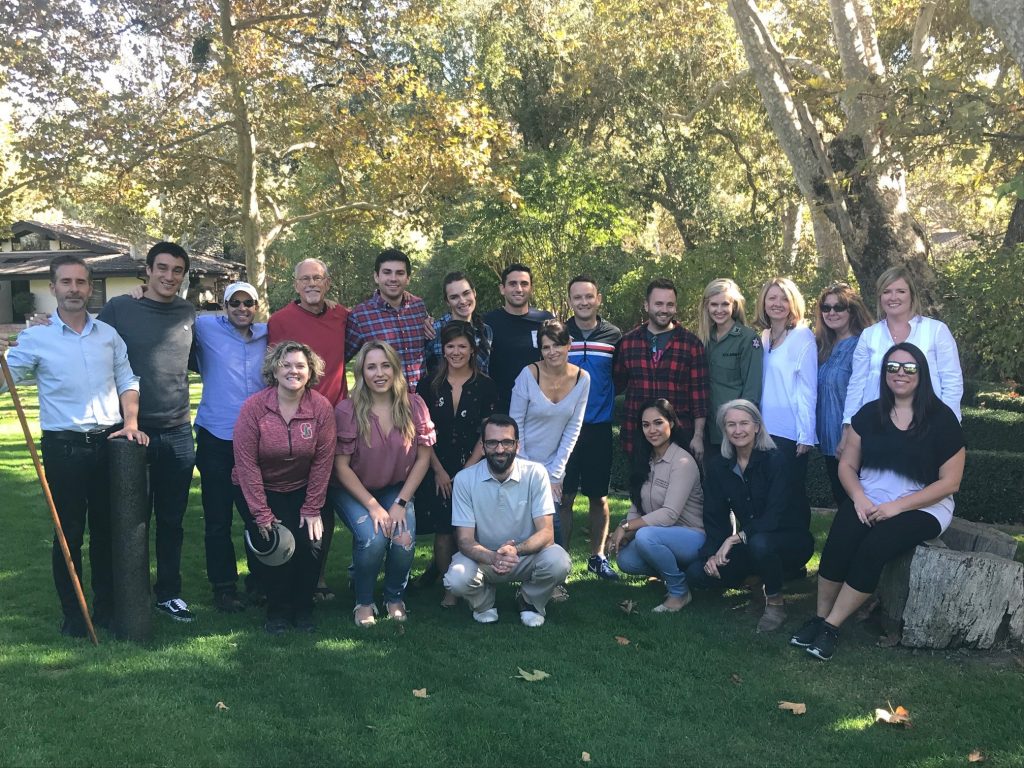
For this year’s annual company retreat, the BigSpeak team got cowboy western at the Alisal Ranch and Resort. The two-day offsite meeting was a chance for members of BigSpeak to think creatively about the future of their company and celebrate its expansion over the past three years. The result was a great deal of team building and team bonding that strengthened the company culture.

Robert Richman, Culture Architect and co-creator of Zappos Insights, led the BigSpeak group through exercises and discussions to channel their energy into future progress for themselves and their clients.

After a year of rapid growth it was time for the company to reflect, identify the driving factors, and expand on them in innovative ways. Instead of preparing for future disruptions, the team took the proactive approach and collaborated on ways to be the industry disruptor.

“It’s that type of thinking that makes companies like Apple and Google best at what they do,” says Executive Vice President Ken Sterling, “We want to break molds, not fit them.  We’re up 50% over last year and want to do it again in 2018 – this type of hyper growth isn’t accidental.”

The team also took this time to appreciate the hard work their speakers and clients contributed to BigSpeak’s success. Throughout the retreat, time was dedicated to improving their current client support systems. One of the top priorities was showing every member of the BigSpeak family how valued their time and commitment was.

Robert Richman created a safe and encouraging space for BigSpeak employees to work side by side with leadership to ensure company culture and morale are as positive as their growth. After two days of stimulating meetings, the BigSpeak team took to the trails on horseback or enjoyed 18 holes of golf on the resort’s rural course. There was something for everyone as the group took the reins or grabbed a club and kicked their feet back, whether it was in stirrups or on a golf cart.

Team members were also able to hone their archery, shooting, and fishing skills during team-building challenges on a secluded lake, as well as get their blood pumping with doubles paddle boating. With a setting as private and comfortable as theirs it wasn’t hard for them to get motivated and focus on team building.

Everybody at BigSpeak left the dude ranch feeling connected, rejuvenated and ready to take on the new year together.

Spread Your Great Ideas in TEDx Talks Through the Mixing Chamber Program

As seen on BigSpeak.com

What if you had a great idea that went unheard? People come up with great ideas all the time, but without proper guidance and coaching, those ideas can flounder and die before ever reaching a receptive audience.

Jonathan Bricker, a Seattle-based scientist, and psychologist was facing this problem when he came up with his innovative idea that could help people quit smoking. His technique combined technology with cutting-edge psychology to help people adopt healthier habits and give up smoking faster.

He explains how new research suggests it takes an average of 30 attempts to successfully quit smoking. What is the secret to self-control, he asks? Willingness. The willingness to have a craving and let it pass.

When Mixing Chamber® creator Andrea Driessen learned about Jonathan’s compelling approach, she invited Jonathan to be coached to present his idea in a short TEDx talk. Visibility from the talk has helped him spread the message on the power of willingness around the world. His presentation has so far garnered over 2.3 million views on YouTube and continues to catalyze interest in Jonathan’s work.

The idea has since been adapted to help millions around the world lower cancer risk, overcome obesity, reduce alcohol abuse and harness other behavioral shifts to live healthier lives.

So what idea do you and your teams have that deserves this level of curation and coaching to foster it into a broader conversation?


The content writers at BigSpeak Speakers Bureau are Experts on the Experts. They hold doctoral, masters, and bachelors’ degrees in business, writing, literature, and education. Their business thought pieces are published regularly in leading business publications. Working in close association with the top business, entrepreneur, and motivational speakers, BigSpeak content writers are at the forefront of industry trends and research.

Southwest A-Lister: Robyn Benincasa

As seen on BigSpeak.com

Robyn Benincasa has gone above and beyond to ensure the success of everyone she works with. Through her nonprofit, Project Athena, she strives to help women who have suffered medical or traumatic injuries live an adventurous life with no limits. Southwest Airlines has recognized her fight by naming her November’s A-Lister.

Robyn is noted for using her Rapid Rewards points to safely fly the participants of Project Athena to their next adventure, furthering their paths to recovery. It’s creative applications like this that allow Robyn to spread her inspiration across the country. For a woman who sees no boundaries in life, roadblocks just mean it’s time to fly.

Click here to read the full article on Robyn Benincasa’s award.

How to Improve Your Emotional Intelligence—Brought to you just in time for those holiday visits with the in-laws

As seen on BigSpeak.com

You can’t change your IQ but you can increase your EQ in the workplace. Improving your EQ isn’t just a valuable asset to your professional career, it can also come in handy during the upcoming holiday season when you reunite with family over the long weekend.

Emotional Intelligence, or EQ, is defined by the ability to identify and manage your own emotions and the emotions of others. According to Daniel Goleman and Richard E. Boyatzis of the Harvard Business Review, there are four domains (self-awareness, self-management, social awareness, and relationship management), and 12 competencies of emotional intelligence (emotional self-awareness, emotional self-control, adaptability, achievement orientation, positive outlook, empathy, organizational awareness, influence, coach and mentor, conflict management, teamwork, and inspirational leadership) that you can master or work on.

Having a well-balanced array of EQ capabilities can include obvious traits like empathy, a positive outlook, and self-control, but it can also prepare a leader for tough challenges, like driving change, exerting influence, and giving difficult feedback to employees.

To improve your emotional intelligence, start practicing these tasks today.

Self and Social-Awareness

Ask yourself “why”

The EQ competency of empathy rests on the question “Why?” “Why does this person feel that way?” “Why do I view the subject differently?”

“Why” questions seek to understand the point of view of others and also where your own emotions stem from. This boosts emotional self-awareness and empathy competencies.

Self-Management

Take a mental and emotional “pause” whenever possible

Our emotions often affect our judgment, and once a judgment is made, it can be difficult to change. In order to change the way we feel about a situation, we must first change the way we think about it.

When you feel a situation escalating, pause for a moment to assess your emotions before responding or making a judgment. This can also be a mental pause when you are thinking through a situation alone.

For example, if someone cuts you off when you are driving, instead of thinking that person is rude and retaliating in kind—take stock. Maybe the person did not see you because you were in their blind spot or they were in hurry because of a medical emergency.

Taking stock helps to reduce negative emotions, encourage a positive outlook, and develop self-control competencies.

Relationship Management

Listen and ask, don’t tell

The Harvard Business Review notes several studies that have found a strong association between EQ and driving change and visionary leadership.

Listening shows people you value them and what they have to say. The same is true of asking rather than telling. A recent Inc. article on boosting people skills explains, “When we ask people, we show them respect; it also changes the tone in which we ask. When we tell people, it’s much more like a command, and no one wants to be commanded.”

This positions you as a mentor and inspirational leader and encourages teamwork.

Still need help working on your EQ? Check out our Emotional Intelligence Speakers.


The content writers at BigSpeak Speakers Bureau are Experts on the Experts. They hold doctoral, masters, and bachelors’ degrees in business, writing, literature, and education. Their business thought pieces are published regularly in leading business publications. Working in close association with the top business, entrepreneur, and motivational speakers, BigSpeak content writers are at the forefront of industry trends and research.

Thanks for the Exciting World Series, Dodgers and Astros

As seen on BigSpeak.com

It all came down to Game 7, just like it always should when two great teams compete for a championship. While the ending wasn’t as dramatic as the six games before it—the Astros took a commanding lead in Game 7 and never let go—it was an exciting journey to the end.

The setup was the classic matchup of who wanted it the most. On one side, we had the Astros who had never won the World Series in their 55-year history and had only reached the finals once before in 2005, where they had been swept aside in four games by the Chicago White Sox.

On the other side, we had the storied Dodgers franchise (over 130 years old!), which had been to the big game 21 times before, winning six of those contests, but hadn’t competed for top honors since 1988.

In the end, while it was the Astros who stormed the field as winners, the real winners were all the fans who were entertained by two championship teams.

For this memorable experience, BigSpeak would like to thank the team owners of the Dodgers, the Guggenheim Baseball Group who purchased the franchise in 2012—especially keynote speakers Peter Guber and Magic Johnson—for helping to bring back the championship spirit to Los Angeles baseball.

As any sports fan knows, both Peter Guber and Magic Johnson have the winning touch. As part-owner of the Golden State Warriors, Peter Guber has helped instill the winning spirit for a franchise that had not won a championship since 1975. After taking over ownership in 2010, the Warriors have won two NBA championships and are in the record books for the best single-season win record in basketball history.

Magic Johnson also knows about winning championships in L.A, having led the L.A. Lakers to five NBA championships in the 80s.


Kyle Crocco is an East Coast native and content creator for Big Speak. His career has taken him from authoring the Heroes, Inc. series, to living and teaching abroad in France and China, to completing his Ph.D. in Education at the University of California-Santa Barbara. He is also the lead singer for Duh Professors, a local Santa Barbara band.