
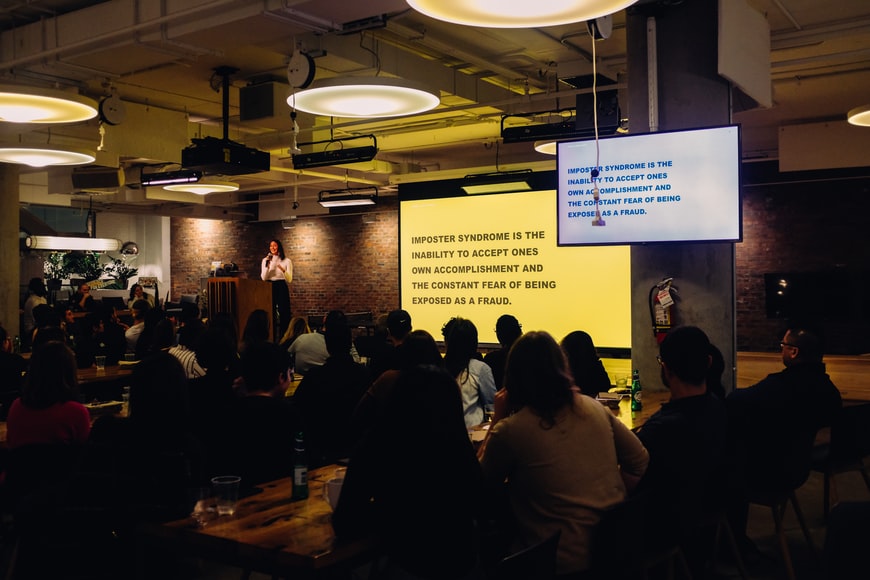
Moderated Sessions Are Better Than Keynote Déjà Vu

As seen on BigSpeak.com

You take a seat in the audience. The lights go down. The speaker bounds out on stage to a burst of applause. The presentation is smooth, polished, funny — but something is off. You’re not laughing, and the material feels stale. This is a big name, a New York Times bestselling author. Yet, somehow, you’re not feeling it.

Then it hits you. You’ve seen this exact presentation before on YouTube. The only difference between this keynote and the speech the presenter gave at the last conference you attended is the company name and logo on the PowerPoint deck. If you feel had, imagine how the rest of the audience feels. Wonder what those “smile sheets” will reveal in the post-session surveys?

Don’t panic. There’s a cure for keynote déjà vu: moderated sessions.

This format is also great for showcasing big-name celebrities. While your typical celebrity gives a great performance on film — after 14 takes, great lighting and a bunch of editing — they usually don’t knock it out of the park with a keynote. Part of it is their performance, and part of it is your expectations of perfection. BUT…imagine, if you will, a magic potion that makes it all better.

A.K.A. the fireside chat
I have to admit that when I first started in the speaker industry, I wasn’t a big fan of the moderated session. I thought, why do you want to sit in on someone else’s conversation when you can see a speaker bang out the three points you need to know to “shift paradigms for a pivotal game changer”? (Gag!).

But after seeing hundreds of keynotes, I now understand moderated sessions not only liven up a conference, but they can also be more powerful than the classic three-point presentation. Unlike your standard keynote, moderated sessions are customizable, smooth, conversational and intimate, no matter how large the crowd.

Intimate setting
Take your typical keynote: In the middle of the stage sits a lectern and a huge screen. During the talk, the speaker either stands behind the lectern or paces back and forth across the stage, clicker in hand, gesturing to the screen. There is a clear separation between the role of speaker and audience and, usually, no interaction.

Moderated sessions on the other hand have a cozy feel. Instead of a lectern, there are two comfortable chairs facing each other as if the speaker and the moderator were in a living room together. The intimate feel puts the audience at ease, makes the speakers relaxed and produces a much deeper and personal experience.

Role of the moderator
Another big difference of moderated sessions is the control the moderator has. The person running things onstage can be someone from inside the organization or another expert in the field, as long as he or she has insight into the industry and the speaker.

Having the right moderator changes the dynamic. The best moderator is someone energetic, funny and quick-witted. It’s their job to control the pace of the session, to give enough time for answers and steer the conversation in whatever direction best engages the audience to keep everyone involved. They are a friend, storyteller and emcee rolled into one.

The key is in the questions
But the biggest difference in terms of the experience are the questions. In your standard keynote, you get great ideas packed into a short time frame. Questions, if any, come at the Q&A and are usually rushed, as the speaker has other obligations.

A moderated session, on the other hand, allows the questioner to unpack those ideas and go much deeper than would be the case in your standard canned speech. The questions moderators ask can yield details and stories relevant to the audience. The conversational nature also allows for surprise insights or an exclusive story not delivered in a standard session.

The moderator can ask very specific questions about current events, the industry, the company and even how ideas relates to the exact attendees sitting in the audience. Audiences come away feeling they have learned something relevant and unique.


Adventure Time: First Jobs of Legendary Travelers

As seen on BigSpeak.com

written by Chris Taylor

“Life is either a daring adventure or nothing.”

So said Helen Keller, and a few adventurous souls have taken those words to heart. Rather than sitting at a desk or punching a timecard, you will find them cycling around the world, climbing a Himalayan peak or performing another feat of human endurance.

But of course, a career does not start atop Everest. Every big life begins in places that are laughably small. For the latest in Reuters’ First Jobs series, a few legendary adventurers share stories of the first steps on their epic journeys.

Robyn Benincasa

Two-time Adventure Racing world champion; Founder, Project Athena

First job: Chuck E. Cheese

I used to live right down the street from Chuck E. Cheese (a restaurant and arcade chain aimed at families) in Tempe, Arizona. On my first day they gave me a few options, like working the skee-ball area or giving out tickets, and I said: Not so much. Then they said, ‘Well, you could be Chuck E. Cheese,’ and I said yes. (Chuck E. Cheese is the chain’s mouse mascot.)

There were a few drawbacks to that. One is that you are not allowed to say any words or make any sounds, which is difficult when you have little kids hanging off you all day long. There are some evil children in the world.

Also, many times they had me walk on the street corner in order to attract people in. Keep in mind this was in the Phoenix area, so it was 100 degrees, and I was inside a big furry costume. It was excellent heat training for my later adventures.

I used to use a whole can of Lysol before putting that costume head on. God knows how many years of sweat were collected in there. The final drawback was that the only break area was a little place under the stairs, and the other employee who used it was a 40-year-old clown. He didn’t say much, but he looked at me a lot. So I spent way too much time under the stairs with the creepy clown guy.

Alastair Humphreys

Four-year bicycle journey around the world; National Geographic Adventurer of the Year

First job: Street advertising

The summer after I left school, I needed to earn enough money for a plane ticket to Africa, to escape from the claustrophobically boring countryside. I worked on minimum wage for Ye Olde Mill Shop in Skipton (Britain). I had to stand on the street wearing a sandwich board and holding a sign pointing toward the shop. Time dragged, my feet ached something chronic, and on one particularly hot day I almost fainted and had to be revived by the local greengrocer.

But I made it. I earned enough money for that plane ticket to Africa. And stepping out for the very first time into the bright sunshine, heat and smells of that new continent was made all the more thrilling for those hours, days and weeks in the sandwich board. A new life was about to begin.

Bear Grylls

Former British Army survival instructor; Host, multiple TV shows including Man vs Wild and Running Wild

First job: Martial arts instructor

The first job I ever had was straight after leaving school. I realized that if I wanted to explore the world, then step one was to save some funds. My ambition was to travel to northern India to climb and get to see the mighty Himalayas close up.

I initially tried being a waiter, but quickly found I wasn’t good at that at all. It would have taken me forever to save enough money. The restaurant definitely did not draw high rollers who tipped well.

I figured that working for myself would be smarter, more fun and get me to the mountains faster. But the only skills I had were climbing and martial arts. I figured there could be a market teaching effective self-defense skills to busy professionals.

I dropped leaflets on 100 streets in the area of London that my sister lived in (where I could sleep on her sofa) and hired the local hall. Within a month I had saved enough for the airfare, and after three months I was good to go. My journey in life had begun.

(The writer is a Reuters contributor. The opinions expressed are his own.)

Editing by Beth Pinsker and Cynthia Osterman


Every Story We Tell Ourselves About Work Is Wrong. Here’s How to Change the Narrative

As seen on BigSpeak.com

When Eric Termuende started looking for work, he was overwhelmed by the lack of interest from the business community. Despite being Vice President of the University of Calgary’s Students’ Union, serving as Class Ambassador for his graduating class, and having a Bachelors in Commerce in Business Process Management, only one company wanted so much as an interview with him. They were simply…not…interested.

But it wasn’t just Termuende who was having a problem with work. His peers were landing jobs but quickly realizing the job wasn’t for them. Top companies would hire these new recruits, train them for months, give them all the skills they needed to succeed in the workplace, and then they would quit.

This situation wasn’t just bad for workers but also for companies. After investing time and money in new candidates, companies would have nothing to show for the effort and have to start the hiring process again.

Termuende knew something was wrong with the hiring process—good quality candidates weren’t being hired, and those who were hired were leaving jobs after being trained. Something needed to be fixed.

The story we tell about work isn’t working

Termuende decided to investigate the issue. Instead of continuing his fruitless job search, he co-founded his own work consulting company (which has lead to NoW Innovations), to help workers and companies understand each other, tell a better story, and improve the experience at work.

After consulting with companies and interviewing workers and human resource personnel, Termuende saw there was a disconnect. Companies were telling one story about work at their company in the recruiting process and workers were finding a different story when they began their jobs.

One of the problems Termuende saw was companies were only offering applicants a limited view of a job’s duties. For example, if a company posted a job listing for an accountant, the skills and qualifications for the position would be remarkably similar across companies and industries. However, the real story of the job for an accountant in a startup versus a nonprofit versus a Fortune 500 company would be vastly different. One company might have more family-friendly policies and a pleasant company culture of recognition whereas another company might have high pay, isolation, and anonymity. Same job listing, two vastly different stories.

Furthermore, job advertisements did not take in account the holistic story of work. Before the invasive technology of today, work had been compartmentalized. Our workday began at 8 and ended at 5. When we went home, our home life started. With text, emails, notifications, and updates, our work and home life now bleed into each other. This reality—the expectations of being available outside of work hours—was never accounted for in the job description.

How to change the work narrative

After doing hundreds of interviews, the basis of his bestselling book Rethink Work, Termuende discovered that people’s psychological needs were not being addressed. Loosely based on Maslow’s hierarchy, Termuende saw part of the problem was a lack of community and a lack of a sense of belonging in the workplace. While diversity and inclusion were important for our work cultures, he saw a pressing need for more connection and trust at work.

To create this connection, Termuende suggests companies do two things. First, they need to tell a better story of their environment and expectations. Job descriptions should include the reality of the workplace, its culture, and its mission. Termuende points out when companies keep putting out the same ads, as with accountants, they will end up with the same problem of hiring workers who don’t fit the culture or conversely, workers whose needs are not met by the position.

Second, companies need to optimize their workplace to create the connection and trust employees are looking for. Termuende works with companies to improve their mission statements, to clarify work policies, and better design their work environment. For example, he helps clarify work policies for when people are expected to be on and off work so people can better understand the work-life balance.

He also suggests creating work environments that encourage collaboration and interaction rather than isolation. Not necessarily open office environments, but finding the right mix of privacy and collaboration spaces so people can be part of the community and also concentrate enough to get their work done.

In the end, Termuende says, the story of work comes down to basic human needs. Once employees feel more connected, they will feel a sense of belonging, be more engaged, and stay with their company longer. But this will only happen when companies change the story they are telling about work.


Kyle Crocco is the Content Marketing Coordinator at BigSpeak Speakers Bureau, a graduate of UC Santa Barbara, and the lead singer of Duh Professors. He regularly publishes business book reviews and thought articles on Medium, Business 2 Community, and Born 2 Invest.

Apple Cleared to Buy Shazam, Giving Apple Music a Competitive Edge

As seen on BigSpeak.com

After a four month investigation, the European Union has cleared the sale of Chris Barton’s music-identifying app, Shazam, to Apple, giving Apple Music the competitive edge it needs to compete with Spotify. With a growing distrust of American tech companies, Apple’s acquisition was stalled by the EU in order to ensure the sale did not restrict competition.

Apple has yet to announce how much they are paying for Shazam, but with the recent spike in Spotify’s popularity, they are in need of a saving grace like Shazam. While the music identifying software alone is enough to secure Apple’s future as an innovator, the massive amounts of data that comes with it are the real appeal.

Shazam has over 100 million monthly active users and more than 500 million mobile device users. With individual data on each user, Apple’s opportunities to enrich the customer experience are endless.


The content writers at BigSpeak Speakers Bureau are Experts on the Experts. They hold doctoral, masters, and bachelors’ degrees in business, writing, literature, and education. Their business thought pieces are published regularly in leading business publications. Working in close association with the top business, entrepreneur, and motivational speakers, BigSpeak content writers are at the forefront of industry trends and research.

Boost Your Growth IQ With Tiffani Bova

As seen on BigSpeak.com

Business keynote speaker Tiffani Bova has spent years turning company leaders into Einsteins of innovation by boosting their growth IQ. She works as Salesforce’s lead Growth Expert, introducing companies to inventive business models that allow them to grow bigger, but more importantly better. Prior to her time at Salesforce she served as Gartner’s Distinguished Analyst and Research Fellow for ten years. Her latest book Growth IQ was a top pick for Inc. Magazine’s summer reads and provides insights from her research and work developing companies of all sizes into sustainable giants.

Bova simplifies the chaos of an exploding business by helping leaders learn to make the right series of choices at the right time. In her time at Salesforce, she has realized there are essentially only ten growth patterns that all companies fall into. But with her help, you can choose your growth plan and map out your route to success. Bova takes the guessing game out of growth and guides your company through the confusion.

She researched twenty-one companies whose growth made them number one in its industry, including Netflix, Kylie Jenner, Red Bull, Amazon, and Marvel; and nine companies who missed a rung on the ladder to the top and found themselves back at the bottom. Her unique insights will boost your Growth IQ and empower you to choose a growth path of your own that will make you the next Netflix of your industry.

Bova is a regular contributor to Forbes, Harvard Business Review, Marketing Matters on Wharton Business Radio – SiriusXM and Huffington Post in addition to a variety of industry-leading podcasts. Her own podcast “What’s Next! with Tiffani Bova” has featured guests from Guy Kawasaki to Dan Pink, became one of the top 100 business and marketing podcasts on iTunes in 2017, and won top Sales and Marketing Podcast by Top Sales Magazine. She was also recently recognized as one of Inc. Magazine’s 37 Sales Experts You Need to Follow on Twitter, a LinkedIn Top Sales Influencer, a Brand Quarterly Magazine Top 50 Marketing Thought Leader, and one of the most Powerful and Influential Women in California according to the National Diversity Council.

Tiffani speaks on…

Building Your Growth IQ: Get Smarter About Building Your Company’s Future: Why do so many of the most promising businesses fail to achieve consistent, sustainable growth? It’s because they try the same strategy as everyone else. There’s no one-size-fits-all strategy—a winning strategy for one business may spell doom for another. In this eye-opening talk, customer growth and innovation expert Tiffani Bova draws on her expertise as a consultant and practitioner to devise a new framework for business leaders looking to pursue growth. Audiences will come away with knowledge of the ten simple—but easily misunderstood—growth paths, how to get a handle on their particular business context, and the right combination and sequence of growth paths to take them into the future.

But Do They Love It? The Customer Experience Imperative: How can you grow your sales beyond your initial client bases? One of the best ways is to provide a positive customer experience. But with the proliferation of technology and devices, the customer is now smarter and more powerful than ever. Macro trends such as social, mobile, cloud, big data, and IoT are forging a new era of engagement where the consumers are more disruptive than the technology itself. So how will you help your customers—and your own firm—connect? In this engaging talk, Tiffani Bova, will address how companies of all sizes can create new business practices that leverage technology to strengthen customer relationships and accelerate sales and growth. Attendees will hear actionable takeaways on how to create a customer-centric business and long-lasting brand loyalty.

The Future of Sales: Creating New Buying Experience

Innovation + Culture Is the New Winning Combination


Kim Perell’s Execution Factor

As seen on BigSpeak.com

In her early 20s, Kim Perell was broke and jobless. By 30, she was a multimillionaire and running a $100 million dollar, global company. Now, Kim wants to teach all aspiring entrepreneurs and business owners her method for success in her new book, The Execution Factor: That One Skill That Drives Success.

Kim Perell is an award-winning entrepreneur, executive, angel investor, and CEO of a global marketing technology company, Amobee. Laid off from her first job at an internet startup, Kim began her journey as an entrepreneur from her kitchen, becoming a multi-millionaire by the time she was 30, and selling her last company for $235 million in 2014.

Kim has been named one of AdAge’s Marketing Technology Trailblazers, Business Insider’s Most Powerful Women in Mobile Advertising, is an Ernst & Young Entrepreneur of the Year, and has been profiled by CNN Money, The New York Times, and Forbes. Kim’s passion is to help young entrepreneurs achieve success. She is an early stage angel investor in over 70 startups, 14 of which have successfully been acquired by some of the largest Fortune 500 companies.

Perell attributes her success to her ability to execute and believes that execution is a skill that can be learned. With The Execution Factor, she is outlining the five traits required to master the skill of execution and become a successful entrepreneur: vision, passion, action, resilience and relationships.

Designed to help entrepreneurs and business owners achieve their goals—rather than simply dream about achieving them—The Execution Factor is Kim’s first book.