
Great Ideas to Turn Your Event into an Experience

As seen on BigSpeak.com

People remember more and for far longer when they are engaged. However, most events tend to be the same—same booths, same swag, same PowerPoints with a list of too many bullet points. After a few days, a person’s only memory of your event will be the name badge they didn’t throw away yet.

If you want to make your event stand out and be remembered for a long time, make it an experiential event.

What is an experiential event?

Like experiential marketing, an experiential event is a method to engage your audience with your brand. The idea is to engage attendees with events that are interactive, participatory, and hands-on.

There are three ways you can engage your attendees for an experiential event: Use multi-sensory experiences, have more human interaction, and use social media.

Creative examples of great experiential events

However, if you want to get really creative, you can be inspired by three of these 20 great experiential marketing ideas at events around the U.S.

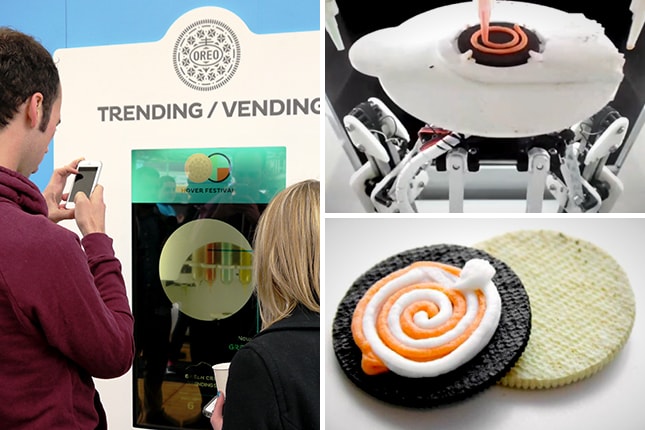
At SXSW 2017, Oreos combined Twitter, 3D printing, and an oreo cookie to create a unique experience. The 3D printer created a personal oreo cookie made for the attendee from whatever flavor was trending on Twitter at the moment. This method made the experience hands on and interactive.
HBO used the popular idea of the Escape Room to engage other attendees at SXSW 2017. Each room was designed after one of their popular shows, such as Game of Thrones. There’s nothing more engaging than having attendees work together to solve a problem—and get a reward for doing so.

At the 2014 US Open, American Express engaged attendees by giving them RFID-enabled wristbands that recorded the attendees on-site experiences and sent them a personalized email. Fans could also interact in the text cafe and charge their phones at the same time.

Experiential keynotes and speakers

Gifted and inclusive keynote speakers can also make your event an experience. These dynamic speakers use technology, interactive demonstrations, and audience participation to get people involved.

Take top innovation speaker Tan Le, for example. She uses interactive technology to add a hands-on element to her events. Le gets the audience members involved—and focused on innovation —by using her Emotiv headset to give a live “mind reading” demonstration.

Top cybersecurity speaker Kevin Mitnick , on the other hand, likes to offer a customized keynote to give his audience an experience. Using pre-arranged questions from the client, Mitnick gives a hacking demonstration to illustrate the key answers and event messaging.

If you’re looking for an experience without technology, look no farther than top-5 after-dinner speaker Adam Christing. Christing’s specialty is using humor, magic, and improve games to get audience members on stage and involved and having fun.

But don’t worry! You don’t always need high tech to be experiential. You just have to make your event interactive. You can add games, such as a simple low-tech roulette wheel to get attendees moving and participating in your brand, or have a speaker use storytelling and theater techniques like Chic Streetman to get audience members involved.

Whatever it is, make it fun and unique and people will remember your event for a long time.

Also See:

How to Create an Experiential Event


Kyle Crocco is an East Coast native and content creator for Big Speak. His career has taken him from authoring the Heroes, Inc. series, to living and teaching abroad in France and China, to completing his Ph.D. in Education at the University of California-Santa Barbara. He is also the lead singer for Duh Professors, a local Santa Barbara band.

BigSpotlight: Jonas Kjellberg Digital Transformation Speaker, Co-Creator of Skype, Author, and Investor

As seen on BigSpeak.com

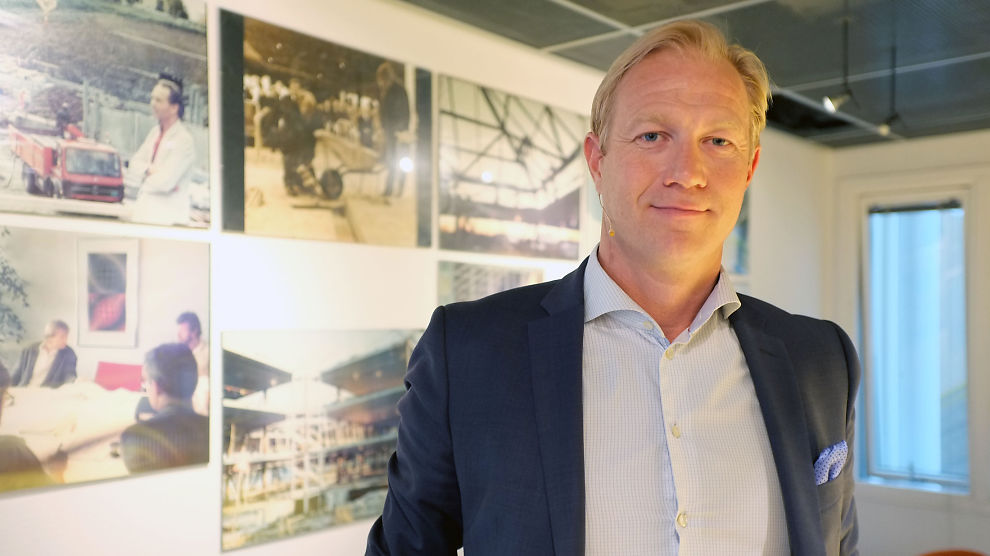
New to our roster of speakers is Jonas Kjellberg. Jonas is the co-creator of Skype and served as its managing director from 2003-2007.

A serial entrepreneur, Jonas thrived and then survived the dotcom boom, founding several tech companies such as Campuz Mobile, which was acquired by Vodafone, and Player.io, which sold to Yahoo. He has also been Vice President of Bertelsmann for Lycos Eurpose, CEO of Wyatt Media Group, and Chairman of the Board of iCloud.

When not speaking to businesses, Jonas lectures at Stanford University and Stockholm School of Economics on the topics of entrepreneurship and creating a winning sales culture.

He is the co-author of several books on starting and running a business: Gear Up: Test Your Business Potential and Plan Your Path to Success and Business Creation: Based on the Gear Up Framework

Jonas’s keynotes address questions like:

  • How to delight the product user?
  • What needs to be done to secure the innovation intent?
  • How can sales be built into the product, so that your customers will be part of your sales force by sharing their stories of delight?
  • How can you as an organization increase the frequency of that message to create a friction free story?

Listen to Jonas tell his entrepreneurial story and talk about his game changer method:


For more information on Jonas Kjellberg or to book him for your next keynote, email us at Info@BigSpeak.com


The content writers at BigSpeak Speakers Bureau are Experts on the Experts. They hold doctoral, masters, and bachelors’ degrees in business, writing, literature, and education. Their business thought pieces are published regularly in leading business publications. Working in close association with the top business, entrepreneur, and motivational speakers, BigSpeak content writers are at the forefront of industry trends and research.

Make Your Swag Great by Making it Meaningful

As seen on BigSpeak.com

We’ve all seen bad swag before—pens, keychains, and baseball caps with big logos we wouldn’t be caught dead wearing. And don’t get me started on large or heavy items like paperweights and backpacks that are bulky to carry around or take up too much space in our luggage.

On the other hand, there is the good swag that everyone likes, such as mints, powerbars, and water bottles that make our event day that much better. It’s like trick-or-treat but for adults.

But if you really want make your swag great, you need to make your gifts more meaningful.

The principle behind great swag

Swag is the chum we throw in the event waters in hopes of attracting people to our booths so we can advertise our products and services. However, if you are doing the same old generic swag that slaps your logo on a t-shirt or paper weight, you’re not going to bring in many new clients.

At heart, swag is a gift. And giving a gift invokes the strongest human persuasion principle possible: the principle of reciprocity. When someone gives you a gift, you feel obligated to that person. But how obligated you feel depends on how meaningful and appropriate that gift is for you.

According to social psychologist Dr. Robert Cialdini, author of the bestselling book Influence, you can be more effective with your gift giving if the gift is meaningful, unexpected, and customized.

For example: in one study when shoppers at a candy store received a free sample of chocolate upon entering the store, the shoppers were 42% more likely to purchase candy than those who did not receive a gift. A gift of chocolate in a candy store was a very meaningful gift. A key chain probably would not have gotten the same return.

Give meaningful and customizable swag

If you know your customer base well, you can easily customize your swag items. In the medical industry, pens used to be meaningful gift when physicians needed them for their work.

But how do you customize swag for hundreds of people? Short of having a 3D printing machine on site and making swag to order, you should think of destination or local swag.

Destination and local swag

Clients who are attending your event are often traveling from far distances. Many events are in different climates. So if your event is in Hawaii, you might give away free sunscreen or sandals. If you are in Seattle, you might think of giving away umbrellas.

In the same vein, you can localize your swag to the city. Give away local food or drinks. For example, if you’re in Portland you could offer Voodoo Doughnuts, or if you’re in Los Angeles you might offer Pink’s Hot Dogs.

Or you could offer a personalized map to show people in the conference the great places to visit and shop in the city.

Whatever you do, just remember to make it meaningful, and you will find you get a much better response rate.


Kyle Crocco is an East Coast native and content creator for Big Speak. His career has taken him from authoring the Heroes, Inc. series, to living and teaching abroad in France and China, to completing his Ph.D. in Education at the University of California-Santa Barbara. He is also the lead singer for Duh Professors, a local Santa Barbara band.

Confront Your Biases and Be More Inclusive With This 3-Step Process

As seen on BigSpeak.com

Risha Grant’s book That’s BS shows how to confront bias and be more inclusive.

Are you biased? Have you ever pre-judged someone you never met? If you felt uncomfortable with those questions, you’re not alone. We all have biases. Some are unconscious, some are validated, and all determine how we think and act towards certain groups.

However, if we never acknowledge these biases, we will never understand the power they have over our behavior or how they are affecting the diversity and inclusivity in our workplace.

Being more diverse and inclusive is important for success in business. Research has shown that companies that are more diverse have greater customer satisfaction and made 18 to 69% more in net income than companies that were less inclusive.

If you want help addressing your biases, diversity consultant Risha Grant has a book for you: That’s BS. Her book provides the reader with practical, no-nonsense advice about how to work on personal biases that doesn’t pull any punches.

Drawing on anecdotes from her life and from her years running the only award-winning, full-service diversity communications firm in Oklahoma, Grant explains the only way to increase diversity and inclusivity in our life is to give permission to ourselves to acknowledge and own our personal BS.

BS is short for “bias synapse.” Grant explains that synapses are the channels in our brain through which we act and think. In very real terms, we are our synapses. And some of these synapses function as bias synapses.

In the book, Grant shares a three-step process that grants the reader permission to acknowledge their biases and work on them as preparation for being more inclusive.

1. Identify your BS

The first step is to identify your personal BS. You can do this by asking three questions to assess, attribute, and identify the BS you have. Each question will take you deeper into the issue.

Assess: Who are the people who make me feel uncomfortable and why?

Attribute: Is the reason I am uncomfortable their fault, or is it my issue?

Identify: Are my feelings based on my personal experiences, societal norms, or a deeply rooted, long-held belief that was instilled in me as a child?

2. Own your BS

After you identify your personal BS, you need to own it. When confronted with our own personal BS, Grant says people can react in one of five ways: validation, passivity, shame, acceptance, and denial.

Validation is a bias that is based on our lived experiences. Say that you were cut off by a driver of a certain geographic location, such as a city driver. You might say that all “city drivers” are bad drivers. That bias is based on an actual experience. That does not mean you are excused from working on your bias; it just means you understand where it came from.

Passivity, shame, and denial are three ways people avoid working on biases. Shame makes you drag your feet about doing anything about a bias, passivity is your way of ignoring a bias, and denial is the way of pretending you don’t have a bias so you never confront it.

Acceptance is not a positive word in terms of bias. It means you accept that you are biased. For example: you might accept that you hate the New York Yankees or Dallas Cowboys and are fine with that and don’t want to change.

Whatever way we have handled bias in the past, once we own our BS in the present, we can work on it in the future.

3. Confront your BS

The last step is the hardest step. It is also the step we must continually work on during our life if we want to be inclusive. Grant says that the key to increasing inclusivity in our life is being intentional.

You must intentionally talk to people who are different than you to understand them. You must intentionally get out of your comfort zone to be comfortable with different groups.

Once you have confronted your BS, you can start taking the necessary steps in her book to make your life and workplace more inclusive.


Kyle Crocco is an East Coast native and content creator for Big Speak. His career has taken him from authoring the Heroes, Inc. series, to living and teaching abroad in France and China, to completing his Ph.D. in Education at the University of California-Santa Barbara. He is also the lead singer for Duh Professors, a local Santa Barbara band.
Master the Post Event Book Signing and Photo Lineup

As seen on BigSpeak.com

For attendees, a photo opportunity or a book signing with the speaker whose keynote just awed and inspired them can be a special way to end an event. Undoubtedly, these are nice ways to provide attendees with a special memento and a few minutes with the speaker.

For event coordinators, however, a photo lineup or book signing can be a logistical nightmare. Lines never seem to move or get any shorter and morph into clumps of people standing around aimlessly. Some people will take longer than their fair share of time with the speaker. Not everyone may get a copy of the speaker’s book or the opportunity to get it signed. Photos may turn out poorly due to lighting or a bad angle, and multiple re-takes will likely be requested. These are familiar scenarios for event planners.

To keep your post-event photo lineup or book signing functional, fun, and moving forward, follow these tips:

Photo line up

Hire a professional digital photographer

This will ensure that the photos come out right the first time. A professional photographer will set up the proper lighting, backdrop, and camera angle. With a professional photographer, there will be fewer (if any) photo retakes. The photos will be of better quality and the line will move more quickly. And attendees will appreciate the service and high-quality photos.

Bonus: Have a photo backdrop with event and sponsor logos printed on it. This will look more professional, and it’s a good way to promote the event.

Assign two people from your team to manage the line

Plan to have at least two ushers tasked only with the job of managing the line. One should manage attendees once they get to the front of the line and one should usher people away after they have taken the photo.

The first usher should instruct people of photo etiquette with the speaker and inform them where they can safely place their bags while taking the photo. After attendees have taken the photo, the second usher should hustle attendees along and inform them how and when they can access the photo. This second usher will also ensure that attendees don’t linger too long with the speaker after the photo has been taken and keep the line steadily moving.

Go one step further for VIP guests

For VIPs do a little something extra by sending them a framed copy of their photo in the mail. Consider engraving the frame with the event and speaker’s name, the date and the event location.

Where previously you could get 100 people through a photo lineup, with this system you’ll get 300 through in the same amount of time. Follow these tips and you’ll be well on your way to successfully managing the dreaded post-event photo lineup like a pro.

Book Signings

Coordinate all plans with the speaker’s team

Remember to maintain clear and open communication with the speaker’s team. Talk over plans to align your’s and the speaker’s expectations, needs, and preferences. It’s important to find out things like, how long the speaker is willing to stay after the event, and how many books are they willing to sign, before the day of the event.

Pro tip: a speakers bureau can help facilitate this discussion.

It’s also important to determine who is providing the books and how many are to be expected? Sometimes speakers will include an order of books in with their speaking fee, sometimes they will offer a discounted rate, and sometimes you will have to buy the books at retail cost on your own. Discuss and plan all of these details beforehand so there aren’t any surprises on event day.

Know how many books will be arriving and make sure they arrive on time

Many event coordinators have been disappointed by the number of books they received or didn’t receive on time. Check and double check that your books are arriving. Know exactly how many books are being delivered, and then manage expectations. If the event is relatively small, all attendees might get a book and the chance to have it signed. If the event is a large conference, it’s likely that not everyone will be able to receive a book.

Bring pens!

You’d be surprised how often this small but important detail is forgotten. Sharpies are the standard for many authors. Thick or thin—it’s their preference. But have plenty on hand.

Cut chit-chat to a minimum

Due to time constraints and preserving energy for the speaker, chit-chat during signing—other than an introduction and greeting—should be cut to a minimum. Follow photo lineup rule of assigning two ushers to manage the line. Determine beforehand if the schedule and the speaker will permit selfies during the book signing.

Set up the photo lineup or book signing location accordingly

Make sure the photo lineup or book signing is set up in a location that will not block people trying to exit the event and will allow ample space for attendees to form a line. This may seem obvious, but you’d be surprised how many times this actually isn’t thought through before setting up.


The content writers at BigSpeak Speakers Bureau are Experts on the Experts. They hold doctoral, masters, and bachelors’ degrees in business, writing, literature, and education. Their business thought pieces are published regularly in leading business publications. Working in close association with the top business, entrepreneur, and motivational speakers, BigSpeak content writers are at the forefront of industry trends and research.

BigSpotlight: Chris Kelly, Privacy and Security Expert, Employee 25 at Facebook, NBA Team Owner, and Tech Investor

As seen on BigSpeak.com

New to our roster of exclusive speakers is Chris Kelly, privacy and security expert, angel tech investor, and NBA team owner.

Chris Kelly has a long track record of representing and investing in innovative companies, and also in making the Internet a safer place.

Kelly was the 25th employee hired at Facebook and served as their first Chief Privacy Officer, General Counsel, and Head of Global Public Policy where he developed the site’s safety features and security policies.

In 2009, Kelly left Facebook to run as a candidate in the Democratic primary for California Attorney General, placing second in a crowded field despite having never been elected to office before.

Since then, Kelly has become a prominent investor in technology startups and independent films. Currently, Kelly is a chairman of the subscription-based movie theater service MoviePass, and serves as Chairman of Fandor, a San Francisco-based streaming media company focused on independent film and visual expression.

In 2013, he joined the executive board of a group of investors who purchased the Sacramento Kings NBA basketball team.

Before his time at Facebook, Kelly was a private practice attorney, where he represented Netscape in the Microsoft antitrust case and Diamond Multimedia in the suit over MP3 players that furthered personal use rights over digital content.

Why Chris?

Chris is versed in the legal ins and outs of privacy, cybersecurity, intellectual property, and the influence of technology on politics. His legal know-how coupled with his vast political experience allow Chris to bridge the worlds of technology and consumer rights in a simple and easy way that all audiences can understand.

Chris speaks on:

  • The intersection of sports and technology, and the intersection of politics, campaigns, and technology.
  • Privacy, security, and safety in a social media world.
  • The Facebook story, and what it takes to make the leap from small startup to a giant corporation.
  • How to succeed in Silicon Valley and how to find investors.
  • The future of technology and the digital world based on his inside experience as an investor in Silicon Valley tech companies

Listen to Kelly talk about his time at Facebook, and the nature of startups

For more information on Chris Kelly or to book him for your next keynote, email us at Info@BigSpeak.com


The content writers at BigSpeak Speakers Bureau are Experts on the Experts. They hold doctoral, masters, and bachelors’ degrees in business, writing, literature, and education. Their business thought pieces are published regularly in leading business publications. Working in close association with the top business, entrepreneur, and motivational speakers, BigSpeak content writers are at the forefront of industry trends and research.

Project Athena: The Gift of the Comeback

As seen on BigSpeak.com

“It’s not about the setback, it’s about the comeback,” says Project Athena Founder and  Adventure Racing World Champion Robyn Benincasa.

Project Athena—named after the Greek goddess of wisdom and the heroic endeavor-is a non-profit organization that helps survivors of medical and traumatic setbacks live out their adventurous dreams.

To get involved, would-be Athenas (or Zeus’s, as male participants are called) write into the website to tell their story and their adventurous dream.“Whatever your dream was when you had your setback–and you said, ‘If I could ever walk or run again, here’s what I would do’–Project Athena, will help you get there,” explains Benincasa.

Past Athenas have accomplished incredible things like running on the Great Wall of China, crossing the Grand Canyon twice on foot, and running their first marathon. Although, the purpose of Project Athena is “not about trying to get back to what you were,” says Benincasa. “It’s about trying to be the best at what you’re capable of today, in this moment.”

Setting a goal and having something to look forward to after a setback can help survivors rediscover the adventurous, capable, and confident person they are. Benincasa knows this from personal experience. After suffering from her own medical setback–five hip replacement surgeries–she created the Project Athena Foundation.

Everyone who works at project Athena is a survivor of some kind of medical or traumatic setback themselves. “One of the neatest things about the organization is that we have survivors helping other survivors,” says Benincasa.

Project Athena also offers six yearly adventures where women and men from different walks of life, with different abilities, come together to accomplish the same goal and help each other every step of the way.

One of Project Athena’s yearly scheduled adventures is a Rim to Rim trek across the Grand Canyon. The feat alone is incredible, but the team and relationship building between the group is what really makes the experience transformational, explains Benincasa:

The reason we cross the Grand Canyon twice is because once is an amazing challenge and a great accomplishment but twice is an epic journey that you wouldn’t ever undertake alone, and that’s where the magic happens. People go home feeling like they can take on the world, and that is the gift that Project Athena gives them.

Sometimes a setback offers a beautiful gift. The gift of the comeback. “The most gratifying thing,” says Benincasa, “is the moment you see someone realize they’re going to make it—when you see the fear disappear and they realize how awesome they truly are.”

You can also get involved with Project Athena as a fundraising God or Goddess. Gods and Goddesses can be family, friends, co-workers of an Athena, or anyone looking to participate in an adventure for a good cause. Visit ProjectAthena.org to learn more.


The content writers at BigSpeak Speakers Bureau are Experts on the Experts. They hold doctoral, masters, and bachelors’ degrees in business, writing, literature, and education. Their business thought pieces are published regularly in leading business publications. Working in close association with the top business, entrepreneur, and motivational speakers, BigSpeak content writers are at the forefront of industry trends and research.