How to Grow to Be an Industry Disruption

As seen on BigSpeak.com

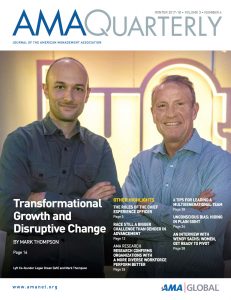
Mark Thompson—business speaker, executive leadership coach, entrepreneur, venture investor, and bestselling business author—was recently featured on the cover of American Management Association for his revolutionary ideas about transformational growth and disruptive change.

In his two-part article series, Thompson explains the way high-achievers in the business world today use disruptive change to their advantage.

In the first piece, Thompson focuses on principles that we should use to guide our views on transformational growth in order to have success like the pros. He cites World Bank, Virgin Group, Pinterest and Lyft for their creative utilization of disruption.

Thompson narrows down transformation growth to four main principles:

  1. Embrace and appreciate diversity. Diversity and inclusion are competitive advantages as they broaden your company’s vision and customer base. Diversity expert Risha Grant believes these will be will be your company’s strength in this ever-expanding world.
  2. Reinvent assumptions and burn the house down. Thompson drew inspiration for this idea from Sir Richard Branson’s insight into starting over. Even in very established businesses, you must constantly question, “If I had to start over, what would I change?” This question will keep you from falling into your comfort zone and keep you innovating.
  3. Examine how you measure and define success. In many cases, your definition of success will shift as you grow and to ensure your relevance in your marketplace you should be examining your success and setting goals.
  4. Value-driven leadership is key. In a world where globalization has made us all next-door neighbors, we must find new ways to grow together. Nobody succeeds alone, so it’s important to surround yourself with diverse teams that share your same values.

In Thompson’s follow up article, he shifts from individual to established leaders. He looked at the driving factors for disruptive and visionary leaders and found three consistent things to be true; purpose, performance, and passion were common threads with the fabric of their companies.

  • “Purpose means that you’re pursuing a mission or ideal that’s larger than you as an individual; it could be a company, community, or other organizational ideas. Some people think of this as their legacy.
  • Performance means that you’re driven to produce results and have an impact for that Purpose—it’s something you care enough about to collaborate and even compete to win.
  • In this context, passion is what drives your heart more than your head. It’s what you’d secretly do for free because it intrinsically motivates you.”

Read Mark Thompson’s full articles at American Management Association

Transformational Growth and Disruptive Change: 4 Principles to Guide You

Transformational Growth and Disruptive Change: What Drives Leaders’ Behavior?


Jessica Welch is the Content Marketing Associate at BigSpeak Speakers Bureau, holding a Bachelor’s Degree in English Literature and Anthropology from California Polytechnic State University, San Luis Obispo. Her business thought articles often appear on Business 2 Community, Born 2 Invest, and YF Entrepreneurs.

Jeff Civillico is the Whole Package You Need for Your Next Event

As seen on BigSpeak.com

Jeff’s wit, phenomenal skills, and polished professionalism added a level of entertainment that our program has not seen!” — Rite Aid

Jeff Civillico is a man of many talents. With a smile that will have you blushing and good, clean humor that won’t, he will be the highlight of your next event. He is an award-winning Las Vegas performer, Emcee, host, and charitable entrepreneur.

After years of entertaining, he has developed his own brand of fun he calls “Comedy in Action.” This mix of daring stunts, hilarious comedy, world-class juggling/balancing, and audience interaction makes for excitement the audience feels personally connected to, as they watch their co-workers in the midst of the action. His comedy is clean and appropriate for all corporate and charity events, and he avoids any kind of volunteer embarrassment.

Civillico has been a Las Vegas Headliner with Caesars Entertainment for 5 years now, performing 1000+ shows at The LINQ, The Flamingo, and now, The Paris Hotel & Casino. His “Comedy in Action” show is highly acclaimed, with an impressive list of accolades, including being named 2014, 2015, & 2016 “Best of Las Vegas” by the Las Vegas Review Journal, “Entertainer of the Year” by Vegas Inc, “Top 10 Things To Do In Vegas” by Total Vegas Guide and TripAdvisor’s “Show of Excellence.”

But Civillico is much more than just a high-quality entertainer; he is someone your company can trust to carry an event all the way through. With over 10,000 hours of hosting experience, he is a safeguard who can think on the fly, handle any entertainment crisis, and even fill in if something goes awry.

Civillico has hosted every type of corporate event there is—general sessions, awards banquets, game shows—for dozens of top companies and associations, including Disney, OSHA, Verizon, Caterpillar, Grainger, AAA, Honeywell, Culver’s, A&W, Rite Aid, Men’s Warehouse, Cisco, and many more.

Every event brings challenges, many of which are unavoidable—sessions run long, speakers finish early, tech malfunctions happen… Civillico has established himself as someone who not only makes those situations work but actually thrives in these last-minute environments of live events.

Civillico has also adapted his performance for corporate settings to challenge the audience to reflect on where they are personally and professionally. He calls his presentations “Entertainment with a Message.”

Civillico enables a renewed sense of passion, purpose, and gratitude in attendees’ work and lives. Attendees walk away more engaged with what they do and why they do it. Civillico is the perfect presenter for companies who look beyond numbers to the importance of caring for “the whole person.” As Civillico says, “Paying it forward keeps me motivated to do my best everytime I go on stage.”

Civillico practices this melding of entertainment and corporate life in his own business practices. He is the Founder & Chairman of Win-Win Entertainment, a 501c3 non-profit which connects performers to direct service opportunities for hospital patients, seniors, servicemen and women, and those with special needs. After arranging 200+ charity shows in 2015, Win-Win Entertainment began its national expansion with Chapters now operating in Salt Lake City and Minneapolis in addition to Las Vegas.

Civillico knows what it’s like to be an entrepreneur and businessman, and it truly shows in his keynote address. His ability to address serious matters in a fun and light way is what makes every event memorable and enjoyable.


The content writers at BigSpeak Speakers Bureau are Experts on the Experts. They hold doctoral, masters, and bachelors’ degrees in business, writing, literature, and education. Their business thought pieces are published regularly in leading business publications. Working in close association with the top business, entrepreneur, and motivational speakers, BigSpeak content writers are at the forefront of industry trends and research.

Part 3: How Your Business Can Overcome like a World Class Team—Both On and Off the Racecourse

As seen on BigSpeak.com

Even with the best plans, you can have setbacks. Setbacks are the true test of any great team. How you respond will determine if you truly have a team or just a bunch of individuals.

In Part 2: Adapt of the three-part Innovate, Adapt, and Overcome series, we looked at how teams adapted to their conditions and environment in order to succeed innovated in challenging circumstances. In Part 3: Overcome, I will share three ways that some great teams responded to events that may have stopped lesser teams by changing their point of view, putting their teammates first, and having the right attitude.

See challenges instead of roadblocks: Sometimes setbacks are just the inspiration you need. In my very first Adventure Race, Team Intersport, the top French Team, was on a mission to WIN. They had taken 2nd place in the “Raid Gauloises,” the original adventure racing world championships, in 1993 and in 1994, and nothing was going to stop them.

However, on their way walking to the start line in the middle of the Borneo rainforest on race day (it took us three days to get to this start line. It was REMOTE), one of their team members broke his ankle. The rules of the sport state you must start and finish the race with the same four team members, and if one person quits or is injured and can’t complete the course, your entire team is disqualified.

At this point, most teams would have begun packing their bags for the long slog home. But Team Intersport decided to see a challenge instead of a roadblock. They would find a way or make one.

As the other teams gathered at the start line, members of Team Intersport began running through the tiny farming village knocking on the huts and searching for someone, anyone, who had the courage to open the door and agree to take part in this crazy adventure. Literally minutes before the starting gun, they convinced a 35-year-old farmer, Dawat Mutang, to throw on the available lycra outfit and backpack full of gear he had never seen or used—and they headed for the start line.

Dawat did not speak a word of French, the team did not speak much English. He had never used climbing gear, never paddled in a boat…and never ridden a bicycle in his life. But they had no other choice. Dawat literally learned every sport and how to use every piece of gear AS HE RACED for five non-stop days and nights through the rainforest.

The team had left the starting line together just hoping to complete the course, given their circumstances, but Dawat’s willingness to learn, his fortitude, and his experience in navigating the jungle turned out the be a great asset for the team.

Team Intersport not only finished the race…..they overcame every obstacle in their path and took SECOND place out of 63 teams! And Dawat became a hero in his village. How awesome is that?

Your Turn: The next time your mind sees a “roadblock” in your path to your goals…WHAT IF you considered it a “challenge” instead? Seeing challenges vs roadblocks opens up our creativity, agility, and ability to innovate. It’s also in those moment of challenge that the universe extends a hand and inspires us to rise to the occasion (and write an epic chapter in our own history book!)

Put your teammates on your shoulders: The biggest hero of the team is not always the one with the strongest body, but the one with the best attitude.

On day 5 of the Eco-Challenge Adventure Race in Australia, the Japanese Team, Eastwind, discovered that their female teammate had ripped her Achilles’ tendon. As they approached the final big mountain climb, over the highest point in Queensland, they discovered she could walk no more.

But Team Eastwind had come much too far to quit. So they came up with a very creative (albeit grueling) plan to overcome their obstacle. One of their teammates had a lot of mountaineering experience, and he showed his teammates how to turn a backpack inside out in order to carry someone on their backs.

For the next two days of climbing, scrambling and navigating the rough, trail-free terrain, each member of Team Eastwind took turns carrying their injured teammate on their backs, up and over the mountain and then 13 miles on roads to the beach, where they would launch for the final paddle to the finish.

When they arrived at the kayak launch point to a well-deserved heroes’ welcome, the team put the injured girl on their shoulders, showing the world that it was SHE who was the hero for enduring it all with grace and class.

What a great statements about teamwork and true leadership, right? We always achieve our greatest heights when we put our teammates on our shoulders…

Laugh your way to the finish line: When the you-know-what hits the fan and the fan is on high speed, what’s the best way you can inspire your teammates to overcome the challenges in their path? LAUGH.

In the Borneo EcoChallenge World Championships, two teams, one from the US and one from the UK, each had two team members quit along the way. But instead of quitting the race completely, they convinced the race director to allow them to put together a new team of four from these two teams of two so they could at least cross the finish line and experience the rest of the course.

Now they just needed a new name that reflected the four of them and their mission. One teammate quickly came up with perfection. “Hey, we’ve now got a team from the US and a Team from the UK, so US and UK, spells U SUK, and we suck!”

Driven by the fun and adventure of creating this brand new, aptly named team, all four team members spent the rest of the race giving one another hell, and laughing all the way to the finish line. They overcame their obstacles with humor.

The most enduring and representative one-liner from their TV coverage summed up their approach: “We discovered that pain is mandatory…but suffering is optional.”

Your Turn: Next time you’re having a sufferfest, remind yourself and your teammates of 3 things: one thing you’re grateful for (even in that moment), the fact that you’re adding yet another brick to your “character wall” in your life, and one great gift you’re going to give yourself when it’s all over!


Robyn Benincasa is a World Champion Adventure Racer, full-time Firefighter, top inspirational speaker, and CNN Hero who helps Survivors live an adventurous dream as part of their recovery. For more information, go to www.worldclassteams.com and www.projectathena.org

Part 2: How Your Business Can Adapt like a World Class Team—Both On and Off the Racecourse

As seen on BigSpeak.com

Conditions change…stuff happens. In fact, change is the only thing that stays the same. How we respond and adapt to changes is what ultimately makes the great ones great.

In Part 1: Innovate of the three-part Innovate, Adapt, and Overcome series, we looked at how teams innovated in challenging circumstances. In Part 2: Adapt, I will share two examples of teams that learned to adapt to their conditions and environment in order to succeed.

Part 2: Adapt

Adapt to the conditions: Two days into the Borneo Eco-Challenge, my teammates and I found ourselves battling with the top Australian Team and the top French Team for the lead through the long, muddy, and leech-ridden trek through a dense rainforest to the transition area where we would start the mountain biking leg.

The rain was coming down in buckets, and the small game path that we were using to hike alongside a creek for the final leg of the trek was very quickly being washed away. The riverbanks became a slip and slide, and we found ourselves spending more time on our asses than on our feet. Then the creek began to rise in the flash flood conditions, and the small trickle quickly became a fast moving, churning, muddy river. The other teams quickly sprinted for higher ground.

That’s when I saw my team captain staring at the river. I immediately knew what he was thinking. Every alarm in my body went off.  Then he said it out loud:  “WHAT IF we decided to turn this hiking section into a swimming section instead?”

My other teammates and I were in complete disbelief for a moment. Was he serious? This was WAY too dangerous. These were now class II and III rapids, churning with dangerous debris.

But then it slowly sank in. He was right. The river would quickly take us the next several miles to the checkpoint—If we survived.

He promised he would swim each section first to ensure that the undercurrents, leg grabbing snags, boulders, and swirling tree branches in our path were something that the less experienced swimmers on the team could successfully navigate. Then we would all regroup when we made it through the next rapid to a safe spot.

We started out in daylight, but it quickly became dark, and the only way we could see one another was by tracking the bobbing headlamps shooting through the rapids. After a few hours of this terrifying and risky swim, we finally began to see the lights of the village below. When we emerged from the river, muddy and exhausted, our arrival at the checkpoint was a complete surprise to our crew and the camera crews, who had spent the last couple of hours staring into the darkness in the direction of the trailhead, looking for the first hikers.

We didn’t realize it at the moment, but our risky move to capitalize on our suddenly available resources and adapt to the evolving race conditions ultimately gave us a two hour lead on the other teams…that we held until the final caving section….

Adapt to the environment: Sometimes, you need to adapt to the environment. Near the end of the Borneo Eco-Challenge, the top French Team, Intersport, was still hot on our heels coming out of the long painful caving section, in which we had to wade through 100 yards of bat guano, ascend up ropes to the top of cave, and then tiptoe on blistered feet for 2 miles on a razor-thin ridge line of jagged rocks with a 1200 foot sheer drop on both sides.

We were all destroyed, mentally and physically from 5 non-stop days of racing, covered with leeches, and had a very strong and rested team hunting us down. Things were looking pretty grim for our living our dream of winning the Eco-Challenge. We retained only a few minutes of our hard-won lead after the last 10-mile run from the caving section to the beach for the final leg of the race, a 60-mile open ocean paddle in native canoes.

We quickly organized our gear and paddled out of the bay, looking over our shoulders for the competitors on our heels. As we reached the open ocean, we encountered our worst nightmare:  an unrelenting direct headwind that held us to a crawl. What we hoped would be a 6 mile per hour pace was down to 2 mph. And if more than one of us stopped paddling to eat or drink, we would actually go backwards. If we completely exhausted ourselves we would not only lose, we could be lost in the ocean somewhere completely off course during the night.

In the waning moments of daylight, my Team Captain, Ian Adamson, decided to adapt to the environment. He noticed a large island a couple of miles to our right, and it appeared to run for a few miles at a 45 degree angle between us and the finish line. He quickly explained to us what he wanted to do, and we all decided to take a calculated risk and go for it, despite the impending darkness and uncertainty about where this side journey would ultimately spit us out.

The one thing we knew for sure was we had the best navigator in the sport and a strong, motivated team. We made a beeline for the island, and for a few hours, we contoured the lee side of the island, sheltered from the headwind—and evidently sheltered from the camera crew in the helicopter. In the very dramatic USA Network television coverage, the narrator announced “…and Team Salomon Eco-Internet has completely disappeared from the course (cue suspenseful music, go to commercial).

Overnight, we slowly but surely moved closer to the finish line at an angle, shielded from the headwinds of the impending thunder and lightning storm. As the moon rose and the wee hours crawled by, we found ourselves back on the vast open ocean, alone, having no idea what place we were in, whether our risk was worth the reward, or whether we had made a decision that ultimately lost us the race we fought so hard to win.

At sunrise, our suspenseful silence was broken up by a low humming sound in the distance. A fishing boat…moving closer and closer. Or so we thought. As the boat pulled up alongside us and came into view, we quickly realized that this wasn’t just another fishing boat, it was a boat full of cameramen, photographers and media, waving and smiling and excited about escorting us for the last few miles of the race to the finish line.

We had adapted to the environment, we had found a creative and more efficient way to the finish line, and we had won.

Your Turn: Where can you take a calculated risk in your life or in your business in your quest for that big win? Tip: Calculated risks are a little less risky and have a better chance of success with a great team around you for the journey!


Robyn Benincasa is a World Champion Adventure Racer, full-time Firefighter, top inspirational speaker, and CNN Hero who helps Survivors live an adventurous dream as part of their recovery. For more information, go to www.worldclassteams.com and www.projectathena.org

Part 1: How Your Business Can Innovate like a World Class Team—Both On and Off the Racecourse

As seen on BigSpeak.com

My teammates and I were multiple time world champions in a crazy, non-stop, multi-day sport called Adventure Racing, in which mixed-gender teams of 4 people kayak, mountain bike, mountaineer, raft, run and hike for 5-10 days across some of the most remote and inhospitable places on earth, using only a map and compass for navigation.

The race was NON STOP!—So sleeping—if we slept and when we slept—was all part of our team’s strategy. To make things even more interesting, all team members were required to stay together for the entire race, within 50 yards of one another from start to finish, and if one of our team members quit or was injured and pulled from the race course, our entire team was disqualified.

One would think that the best and brightest endurance athletes would consistently win, but that couldn’t be further from the truth. What we discovered from years in this sport is that the teams that consistently won were not made up of the strongest individual team MEMBERS, but the greatest teamMATES.

The other thing we discovered was that successful teams had an ongoing drive to become more efficient, find a better/slicker route than their competitors, and to never ever let the rules (or even worse, the *assumed* rules) get in our way. In short, what separated the good teams from the Great teams was that the best of the best were always finding ways to Innovate, Adapt and Overcome.

Inspired by my sport—and the article in Fast Company Magazine featuring our adventure racing team and what we learned about Extreme Teamwork that could be applied to business—this three-part series will show how your business can Innovate, Adapt, and Overcome like a World Championship team, both on and off the racecourse.

Part 1: Innovate

Innovation doesn’t necessarily have to be a huge paradigm shift or an industry changing “disruption.”  Sometimes innovation means just finding a better way based upon your team’s strengths and talents, or consistently looking for creative ways to improve efficiency, lower costs, or increase output.

Here are a few of my favorite success stories from some very innovative leaders and teammates…

Use tow lines: In the Adventure Racing World Championships in Ecuador—a race that took 9 days for the win— my teammates and I were all suffering at different times, as you might imagine. But rather than slow down and wait for our slowest person, as we and other teams have always done, one of my teammates had a beautiful brainstorm about a way we could move more efficiently as a team.

My teammate created a tow line. He cut a small piece of bungee cord from the netting in the back of his backpack and made a 2 foot-long tail with a little handhold on the end of it; then he hung it from the bottom of his backpack— So that whomever was struggling to keep up the pace at the moment could just grab onto him and we could take them with us!

The tow-line idea was so simple and perfect, and it made a huge impact on our ability to move more quickly as a team. By the next race, we had also found innovative ways to rig tow lines on our mountain bikes using retractable small dog leashes, and we mastered the art of towing kayaks in tandem as well. It wasn’t long before other teams noticed our tactics—and our success, and our tow lines became a must-have for winning races.

Your Turn: How can you build a team in which people not only feel comfortable sharing their strengths with one another but also sharing their challenges? (And also grabbing that tow line. Grabbing a tow line is never a weakness on a world class team. It’s how we win.)

Never assume the rules: In the Eco-Challenge World Championships in Fiji, one of the top navigators in the sport, Ian Adamson, pulled off a very keen navigational coup by never assuming the rules.

In the race, our route included a very long, fixed-rope ascent up several levels of a waterfall, and there was a “checkpoint” we were required to pass through on a ledge halfway up the falls. Every other team that came to the waterfall before and after Ian’s team did what they assumed they should do: ascend to the required checkpoint halfway up the waterfall; then continue up the rope all the way to the top of the waterfall before navigating through the jungle to the next required checkpoint.

After all, if the rope went to the top of the waterfall, then that’s where all the team was supposed to go, right? Nope, not according to Ian. He had his team ascend the rope only to the midway checkpoint as required; then he skipped going to the top of the waterfall and made a beeline to the next checkpoint in the jungle. Never assuming the rules saved his team a significant amount of time—and they went on to win the race.

Your Turn: What rules do you assume at work or in your life that aren’t actually there? Try looking for solutions with a fresh mind and the full freedom to innovate.

Play to your strengths: We were racing head to head with the best team in the sport of Adventure Racing, the French Team Intersport, in what is, to date, the toughest adventure race in the history of the sport—The Raid Gauloises in Ecuador—when we decided to use our strengths to get ahead.

On day seven, we began a section that would take us three days downriver to the finish line. Each team was given a whitewater raft. For hours, our team was neck and neck with the other top team as we went through the whitewater. Then my very creative teammate, Steve Gurney had a race-changing idea to play to our strengths.

When we got to the next checkpoint,  the race director took away each team’s whitewater raft and handed us two inflatable canoes. Our competitors grabbed their canoe paddles, jumped back on the river with their canoe paddles and their 5-person team in the two boats, and raced away, leaving us behind.

Steve Gurney looked at the two boats, turned to us, and explained his innovative idea. He said, “Hey guys, I have an idea. I want to tie our two boats together, end to end, using our climbing rope from the mountaineering section. I think we’re going to be faster in one boat. And why don’t we get out our kayak paddles that we have in our gear boxed for the final kayak to the finish and try using them in the canoes? We’re a much stronger kayaking team than we are a canoeing team. Maybe we can adjust them to be a little wider to fit around the edges of the canoes?”

That’s how the magical bullet of a boat that we lovingly called the “Steve Gurney Missile” was born. We were literally another 30% faster in one boat with kayak paddles (our strength) than our competitors were in two boats using canoe paddles.

By the next day, we had run up a two-hour lead on a team that ran side by side with us for 6 days. Then we won the race.

Your Turn: So how can you play to your strengths and create a Steve Gurney Missile in your personal or professional life? It’s all about taking your core strengths, your agility, your creativity, your resources and your teammates and finding a way to tilt the game board in your favor, change the way the game is played, or even change the game.


Robyn Benincasa is a World Champion Adventure Racer, full-time Firefighter, top inspirational speaker, and CNN Hero who helps Survivors live an adventurous dream as part of their recovery. For more information, go to www.worldclassteams.com and www.projectathena.org

Bethenny & Fredrik: King and Queen of Manhattan Take the Throne Feb 6 at 10/9c

As seen on BigSpeak.com

All hail Queen of the Skinnygirl empire Bethenny Frankel and King of NY Real Estate Fredrik Eklund as they join forces to make an unbeatable property-slinging team on Bravo’s Bethenny & Fredrik. Both entrepreneurs have had royal success with their own Bravo shows (Bethenny on The Real Housewives of New York and Fredrik on Million Dollar Listing) where their corky and unabashed personalities stole hearts across the nation.

Bethenny is best known for her cocktail-company-turned-lifestyle empire, Skinnygirl. She recently expanded her brand to include a fashion line and a rumored dating app. Possibly inspired by Fredrik’s ventures into High Kick Wine and his flirt with the spirits industry, Bethenny decided to take on the upscale world of Manhattan real estate.

In true Bethenny-fashion, she dove into the new show head-first, teamed up with the best, and put her business savvy to her latest passion. She’s paired her intuitive eye for design with Fredrik’s expertise as the number one broker in the nation to become a powerhouse team, flipping multimillion-dollar luxury listings–and getting themselves into hilarious situations in the making.

On each episode of the show, Bethenny and Fredrik are either buying, renovating, or selling Manhattan real estate. “Bredrik” (if you will) are longtime friends but have drastically different business styles. While Fredrik is all high-end glamour, Bethenny’s more stay on budget. They both have made large monetary investments in each property they flip and every listing is an opportunity to gain or lose millions. Their polarized approaches—amplified by their big and contrasting personalities—are a recipe for some challenging projects and lots of laughs.

While navigating the new terrain of mixing business and friendship on the show, they will also be juggling their personal lives. With Fredrik’s new babies and Bethenny’s intriguing dating life, how will they manage to fit in another business endeavor?

In Bethenny’s words, “We’re insane masochists that love to laugh.”

This hilarious duo is tag-teaming the podium as well. They are now serving up keynote addresses with the same charm and wit you’ll find on their show. Apparently, after the first season, they aren’t tired of each other yet. They want to bring their charisma to entrepreneurs, real estate brokers, sales agents, and anyone who wants a good laugh and some business wisdom.


The content writers at BigSpeak Speakers Bureau are Experts on the Experts. They hold doctoral, masters, and bachelors’ degrees in business, writing, literature, and education. Their business thought pieces are published regularly in leading business publications. Working in close association with the top business, entrepreneur, and motivational speakers, BigSpeak content writers are at the forefront of industry trends and research.

Top Business Books From the Top Keynote Speakers in the World

As seen on BigSpeak.com

Are you looking for a business book or new idea that will give you a whole new point of view? An idea that will make you change the way you act or conduct business? If you are, you are in luck.

BigSpeak is happy to present the men and women who are changing the world with their ideas in speech and in print. The following is a list of the top business books by some of the top keynote speakers and thought leaders in the business world.

The Art of Deception

Kevin Mitnick's Art of Deception

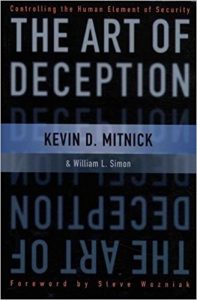
Kevin Mitnick is a top cybersecurity keynote speaker, the world’s most famous hacker, best selling author, and security consultant to Fortune 500 and global governments. His two books The Art of Intrusion: The Real Story Behind the Exploits of Hackers, Intruders and Deceivers and The Art of Deception: Controlling the Human Element of Security, are mandatory readings for security professionals. The bestselling The Art of Deception uses fictionalized case studies to show how computer hackers use social engineering to crack computer systems. While The Art of Intrusion gives real-life stories of hackers who cracked systems with tips for prevention.

Futuretainment

Mike Walsh Futuretainement

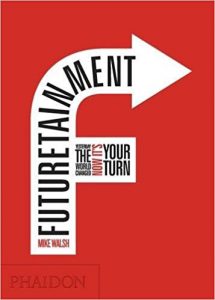
Mike Walsh is a top futurist keynote speaker, bestselling author, IoT expert, and CEO of Tomorrow, a global consultancy on designing business for the 21st century. His 2009 bestselling book Futuretainment: Yesterday the World Changed, Now It’s Your Turn gave 23 “eerily accurate” insights on the rise of the Internet, mobile devices, social networking, etc. and how they will change the worlds of media and entertainment forever. Using Vince Frost’s original photographs and high-impact graphs, his book is “as much a work of art as a business tool.”

Gear Up

Gear-Up-Jonas-Kjellberg

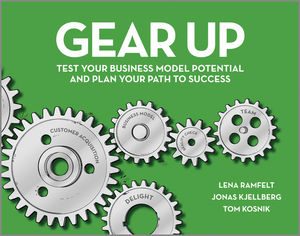
Jonas Kjellberg is a digital transformation keynote speaker, co-creator of Skype, author, and investor. While serving as Skype’s Managing Director (equivalent to a CEO in the U.S.), Kjellberg helped generate 90 percent of the revenue stream by bringing costs down. He believes all business people can do the same. In his illustrated and insightful book Gear Up, Kjellberg helps budding entrepreneurs follow his success by showing, among other strategies, how your business can be competitive by bringing your costs down to zero in one area of your business.

The Happiness Advantage

Happiness Advantage by Shawn Achor

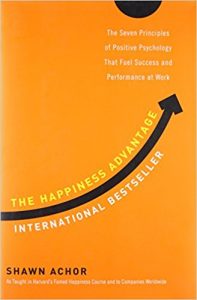
Shawn Achor is a top motivational speaker, happiness researcher, and founder of GoodThink Inc. His happiness research has been featured on numerous media outlets, including Oprah Winfrey, the Harvard Business Review, and one of the most popular TED talks. Achor’s international bestseller, The Happiness Advantage, uses his ten years of research on happiness, as well as stories and case studies from thousands of Fortune 500 executives, to explain his seven principles of positive psychology for success in work and life.

How Winning Works

how winning works by Robyn Benincasa

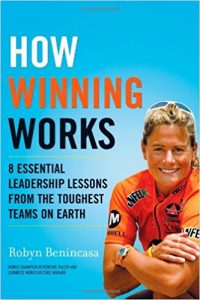
Robyn Benincasa is a top motivational speaker on leadership and teamwork, world champion adventure racer, CNN Hero, and founder of the Project Athena Foundation. In her New York Times bestselling book, How Winning Works, Benincasa uses exciting and dramatic stories from her time as an adventure racing team member to explain the 8 essential leadership lessons for leading successful teams. By the time you reach the last chapter, you will be amazed by her fortitude and inspired by her lessons to build better teams.

Influence

Influence by Robert Cialdini

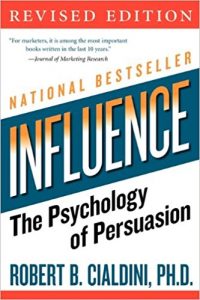
Robert Cialdini is a business keynote speaker, social psychologist, and the most-cited researcher in the fields of influence, persuasion and negotiation. His groundbreaking book on persuasion, Influence, is a national bestseller and has inspired the work of behavioral economists everywhere. In the book, Cialdini explains why people say ‘yes’ by using the six principles of influence. His follow up New York Times and Wall Street Journal bestseller, Pre-Suasion, shows readers how you can prepare a person to say yes before even making a request.

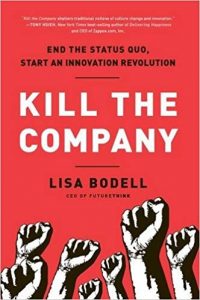
Kill The Company

Kill the Company Lisa Bodell

Lisa Bodell is a globally recognized futurist, CEO of futurethink, and winner of the Top 5 speaker award by Speaker.com for her keynote talks on innovation and change. Her bestselling book Kill the Company won the 2014 Axiom Best Business Book Award and was voted the Best Business Book by USA Book News and Booz & Co and her new Why Simple Wins, is changing the way people work. In her talks and books, Bodell teaches companies how to create space for change by eradicating the complexity that is killing their ability to innovate and showing how simplicity can add a competitive advantage.

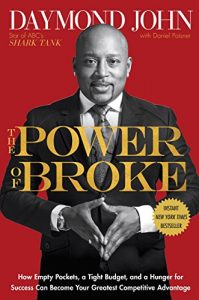
The Power of Broke

Power of Broke by Damyond John

Daymond John is a top business and motivational speaker, founder and CEO of FUBU clothing, reality TV judge on Shark Tank, and bestselling author. His motivational business book The Power of Broke, was not only a New York Times bestseller but also received an NAACP Image Award for Outstanding Instructional Literary Work. In his book, John relates the story of how he managed to market his FUBU clothing on a shoestring budget and how having limited resources can actually be a competitive advantage for broke entrepreneurs.

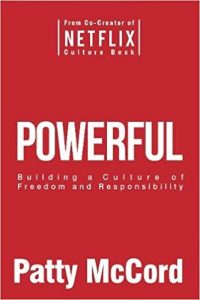
Powerful: Building a Culture of Freedom and Responsibility

Powerful by Patty McCord

Patty McCord is a business keynote speaker, consultant, and former CTO of Netflix. McCord was responsible for creating the Netflix Culture Deck, which has been viewed more than 15 million times. Her book Powerful: Building a Culture of Freedom and Responsibility was named by The Washington Post as one of the 11 Leadership Books to Read in 2018. Using her experience from Netflix, McCord explains how businesses can create a culture of high performance and profitability by focusing on radical honesty and getting rid of the old standbys of corporate HR, such as annual performance reviews, retention plans, and employee empowerment and engagement programs.

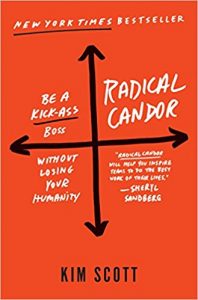
Radical Candor

Radical Candor by Kim Scott

Kim  Scott is a business keynote speaker and CEO. Her silicon valley resume includes executive positions at Adsense, YouTube, and Google, and a stint as a faculty member of Apple University. Based on her experiences as an executive, Radical Candor is an essential guidebook for all leaders who want to build better and more effective teams. In the book, she outlines how leaders can build trust by caring personally and get more out of each team member by challenging directly.

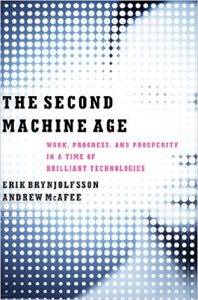
The Second Machine Age: Work, Progress, and Prosperity in a Time of Brilliant Technologies

Second Machine Age Andrew McAfee

Andrew McAfee is a top technology keynote speaker, futurist, and one of the most influential people in IT.  He has authored or co-authored more than 100 articles, case studies, and other materials for students and teachers of technology, as well as the New York Times bestselling book, The Second Machine Age: Work, Progress, and Prosperity in a Time of Brilliant Technologies. His book gives the data on why fewer people are working, wages are going down and the best strategies for survival in disrupted industries and professions.

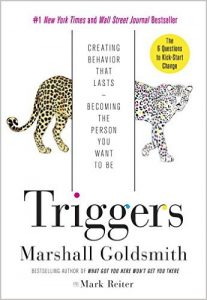
Triggers

Triggers by Marshall Goldsmith

Marshall Goldsmith is a management and leadership keynote speaker, world’s #1 executive coach, bestselling business author, and a Top 50 thought leader. His books have sold over two million copies worldwide and been translated into 32 languages. In 2016, Amazon.com listed Triggers and What Got You Here Won’t Get You There among the ‘100 Best Leadership & Success Books’ to read in your lifetime. In Triggers, Goldsmith “examines the environmental and psychological triggers that can derail us at work and in life” and in What Got You Here Won’t Get You There, Goldsmith teaches salespeople how to kick the 16 bad habits their customers want them to give up in order to increase sales.


The content writers at BigSpeak Speakers Bureau are Experts on the Experts. They hold doctoral, masters, and bachelors’ degrees in business, writing, literature, and education. Their business thought pieces are published regularly in leading business publications. Working in close association with the top business, entrepreneur, and motivational speakers, BigSpeak content writers are at the forefront of industry trends and research.

Reinventing Philanthropy As An Employee-Centered Growth Strategy

As seen on BigSpeak.com

Original article by Glenn Llopis can be found on Forbes. 

big reason diversity programs fail to result in sustainable levels of inclusion that drive growth is because organizations are not committed to embrace differences as opportunities. Instead they continue to strip employees of their identities and make them assimilate to the needs of the organization. Those programs are most often developed to comply with corporate governance and self-regulation often under the heading Corporate Social Responsibility or CSR. Today, companies are learning that while these programs may be well meaning, they have been misguided in their approaches and outdated in their ideas. They cater to the status quo. They assume existing and potential employees must be defined by the business.

The same has been true for decades when it comes to driving change in another area usually governed by CSR: giving back.

Again, most corporate giving is well meaning. On the face of it, nothing is wrong if your organization is donating millions of dollars to noble causes. And companies know that this is an essential part of doing business today. According to a 2017 Cone Communications CSR Study, “Companies must now share not only what they stand for, but what they stand up for.” For example, 78% of Americans want companies to address important social justice issues and 87% will purchase a product because a company advocated for an issue they cared about.

But there is another growing trend when it comes to giving back when it comes to inclusive leadership: letting the individuals define the business . . . of giving. This extends beyond brand-building in the marketplace to attracting top talent and letting individuals lead where they want to go in the workplace.

Companies like Salesforce and Subaru have learned that it is not enough to just define the causes to donate to or match employee donations. Before there were clear lines between personal and business lives. Today they are one in the same. As a result, more and more companies are learning they must not only offer but even mandate time for volunteer programs either as part of events organized by the company on weekdays (not weekends) or for those causes most important to individual employees. Whatever the “costs” in terms of time either of those approaches has for organizations, they know they will more than get a return on the investment from increased employee engagement and loyalty.

Still something wasn’t clear to me. On the one hand, some companies were allowing individuals to define giving to their own causes. But what about those corporate-wide causes? It’s all fine and good for organizations to devote time and money to worthy organizations like the American Red Cross or Habitat for Humanity, but do they reflect the causes the employees care about most? Defining where to give without listening to your people is still the business defining the individual even if the cause is noble: Here’s what we’re going to do; you follow.

Looking for insight on how an organization can evolve to allow individuals to define the business of giving overall and its benefits, I turned to Mary Jane Melendez, Executive Director of the General Mills Foundation, on how the company created an “employee-centered strategy” for giving back, focusing on global hunger and sustainable agriculture.

First, a little background. General Mills is a 150-year-old company with 38,000 employees worldwide. Since 1954, the company’s foundation has contributed over $2 billion to global charities. But while the company has worked to evolve to customer and employee-centered approaches to lead inclusion as a growth strategy, the way the foundation gave back had not similarly evolved to allow its employees’ influence over its direction. Melendez led the charge to do so.

“I think it’s the key element” she says. “We had never approached employees before to ask them how they wanted to engage; we had designed programs for them and invited them to engage. But we turned the tables and said, ‘What do you want? How do we deliver what you want? Let’s design something with you and for you. Not for you and without you.”

What was fascinating to me, however, is that creating a new strategy for the foundation was not Melendez’s original intent. She started at the top to understand from their perspective what the foundation was doing well and where it had opportunities to improve. She could have stopped there and designed an approach that would have substituted a different approach for the existing one. Because without strategy, change is merely substitution not evolution.

Instead, Melendez decided to see if what she heard at the top reflected those at the bottom, right down to a group of summer interns. Listening to her, it was clear three things defined the foundation’s approach to evolve the strategy of the foundation:

  • Get informed employee perspectives before designing anything
  • Have the courage to disrupt the status quo
  • Intentionally engage employees in a way that drives value for the business

Get informed employee perspectives before designing anything

Melendez and her team took an organic, grassroots approach to design, putting all employees at the center of her strategy. Talking only to the senior most leaders up to the c-suite is not a recipe for understanding individual differences. And while talking directly to all employees – especially 38,000 of them – is not feasible, it is often not necessary as long as the people being spoken to represent the bottom-most of an organization and feel safe to express their opinions. Melendez accomplished this by engaging with more than a thousand employees over four months in two dozen countries and that new sense of connectivity pays dividends at work as well. They often went three and four levels deep within divisions and departments, gaining a powerful knowledge base for the new direction of the foundation.

“You have to have the employees’ voices at the table before you’re designing anything,” Melendez says. “What are their thoughts about what’s happening today? How do they feel about it? Are they proud of it? Do they think that we have opportunities to do better? Do they have ideas on how some things could be brought to life?”

Have the courage to disrupt the status quo

Despite the different perspectives she gained globally, Melendez refused to assimilate those differences to what the General Mills Foundation had been doing for more than sixty years. She found like-mindedness in the different perspectives and was prepared to forge a path forward through those differences, even if it meant changing the entire approach of the foundation and what was important to the top of the organization.

“There were a lot of things that were important to our senior executives that didn’t resonate with employees living and working in, say, Mumbai,” Melendez told me. “We had to make sure that we were thinking more holistically about what engagement looks like from a food company with a global perspective. What could we uniquely bring to the table by engaging this employee base? Beyond providing volunteer opportunities, we asked them how they wanted to get engaged. We thought about the skills and expertise that they can bring forward to help us tackle some of these really big issues that are important to them.”

Intentionally engage employees in a way that drives value for the business

Too often when the work is done, organizations forget to make a commitment to continue to have the employee voice at the table to create and implement the changes and maintain them over time. That’s the equivalent of throwing your people a bone and letting the status quo return as the company defines the approach and a huge value is lost.

“It can’t be one and done,” Melendez adds. “You can’t just have a conversation, say it was great and you gave me wonderful feedback, and then go and design your new workplace program without them. No, we must continue to have conversations and continue to get feedback from employees world keeps changing. Business keeps changing. Consumers want different things and our employees are going to want different things, too.”

An employee-centered strategy like General Mills’ foundation is not without challenges, not the least of which is the time it takes and the different ways required to get the information needed from all employees. But it was not chaos. What surprised Melendez most was the fact that she could find like-mindedness in the voices of General Mills’ employees. A company like General Mills may employ tens of thousands of individuals but that does not mean they don’t share values.

Melendez was pleased to discover this – and surprised by the responses: “When we started doing this, a concern I had was that we would be going down a lot of rabbit holes – were we really going be able to actually cull together a coherent strategy because each person is going to have a different area of passion. But that was not the case. Whether an employee had been here in Minneapolis for 30 years or was a new employee halfway across the world, the theme of their responses was that we are a global food company and our work should focus on hunger relief and food security. Our employee base is also passionate about protecting the planet and above all they hungered for our company to invite them deeper into our purpose and this had created enormous value.

What organizations can learn from the approach Melendez took at General Mills is the company did not just learn what its employees wanted, it discovered who they are. It understood more about how they see themselves and the roles they play and how the assets and skills that they bring can solve for problems and see opportunities for growth. It all comes down to seeing and serving people as individuals, then designing systems to make sure those individuals are included at every level of the organization and ensuring the right performance metrics are in place to get you there – and this assessment will measure the key indicators that can get you there.

Too often organizations don’t know their employees. They know what their job function is. They know their titles. They know who they report to. They know what they pay them. But they don’t know them as individuals. Melendez gave them permission to express their passion and share their perspectives based on their personal beliefs, values and experiences. In other words, General Mills created connections, discovered alignment and then built them into intimacy.

But again, follow through was key to honoring that intimacy.

“Our approach has our employees’ fingerprints all over it,” says Melendez. “We brought them along and had them be part of the strategy and execute the programming. What is so incredibly powerful is that they’re bringing a skill and expertise that no one else can bring forward in that area. They are now a part of the solution. They help move the need on issues in ways that are more powerful than writing a check. We’ve seen greater employee engagement globally. Getting calls from more engaged employees in Australia or Argentina or Mexico? That’s delightful.”

Yet it’s not that they’re more engaged; it’s that they’re more genuinely engaged. Melendez and the General Mills Foundation have created environments in which people feel that they can trust the organization more so that they can share at a level that matters to them.

“The seven of us in the foundation realized we have an army of 38,000 people who have brilliant ideas and are willing to help us think through some of these things that can be really challenging. There’s a spirit of wanting to provide feedback, wanting to be helpful, wanting to share insights, wanting to add value, and wanting to help. Through this, you start to create relationships and make connections that weren’t there before. Creating new points of connectivity at work pays dividends in the form of a more engaged employee base.

Maybe that’s the biggest lesson of all for organizations looking to be more inclusive in their leadership: Stop assuming that you have all the answers – be vulnerable enough to listen to your employees. That’s what legacy is. That’s how you build cultures of significance, not just success. Perhaps this explains why the General Mills Foundation has recently become part of the Human Resources department as the company moves to further understand the power of moving people to the center of its growth strategy.

From Pretty Boy to Tech Guru: What Ashton Kutcher Can Teach You About Personal Branding

As seen on BigSpeak.com

“Opportunities look a lot like work.”— Ashton Kutcher

If you’ve only encountered Ashton Kutcher while watching silver screen classics like That ‘70s Show or Punk’d, you might not peg him as a savvy entrepreneur and tech investor. And no one would blame you—his clueless characters and irreverent on-screen personality hardly lend an air of intellectual authority and business know-how.

But the former teen heartthrob and current Mr. Kunis has deftly repositioned himself, using his on-screen popularity (and resulting liquidity) as a springboard for successful investments and entrepreneurial ventures. The result? A multi-faceted and formidable personal brand spanning media, investments, and business speaking engagements.

From actor to investor

Before getting swept up in a successful modeling and acting career, Kutcher had always been fascinated by science and technology—a passion he decided to explore with his growing Hollywood salary.

Initially making a few smaller investments as an angel investor, Kutcher struck it big after investing $1M in Skype in 2009. Purchased just 2 years later by Microsoft for $8.6bn, Kutcher saw huge returns.

In 2010, with the Skype success under his belt, Kutcher joined forces with music manager Guy Oseary—whose roster of star clients includes Madonna and U2—to form A-Grade investments. Together, the two have since enjoyed a slew of successes including a $500,000 stake in Uber that’s now worth an estimated $50M—a 100 times a return. Other wins included early-ins with Foursquare, Airbnb, Uber, and Spotify. In the subsequent 6 years, A-Grade’s portfolio has reportedly grown from $30M to over $250M.

Becoming a media mogul

Kutcher’s not just an investment guy. He also has a media company and news site, A+Plus, that has been quietly posting optimistic and viral content since 2014.

Though it was founded by a team with little to no media experience, Business Insider reported that A+ is now one of the 50 biggest websites in the US, and ranks in the top 15 for mobile browsing, with more unique visitors than Fox News or TMZ.

Kutcher’s new public image is a drastic change compared to his early years of fame. His role as Michael Kelso on That 70’s Show put him on the map, and he continues to inhabit a lovable-yet-dumb persona with an almost identical part in Netflix’s show The Ranch. But now it seems his passion is in technology and entrepreneurship and contrary to most entertainers, acting is more of just a day job.

From goofy guy to entrepreneur

As one of the first celebrities to endorse and promote Twitter, Ashton was seen as the face of this modern shift in technology. With over 17 million Twitter followers, Kutcher has harnessed the platform expertly to rebrand, posting material that frames him as a hardworking tech and media guru instead of just a wacky hunk. Using his massive fanbase as an audience, he has been able to expose his tech and startup investments to fresh eyes while simultaneously gaining a reputation with industry folk.

Speaking to others

Kutcher delivered a speech at the Teen Choice Awards of all places in 2013 that was not necessarily intended as advice for developing a strong personal brand, but serves well to be viewed as such.

In his speech, he said, “Opportunities look a lot like work.” Developing a strong and recognizable personal brand doesn’t come overnight; one must put in tangible effort to make it happen.

True to the inspirational tone of A+Plus and his Twitter account, Kutcher said the most “sexy” characteristics a person can have are “being really smart, and thoughtful, and generous.” When you frame yourself as an expert in certain fields with the know-how to get things done, people notice. Consider flaunting this knowledge on your social media.

“Everything around us that we call life was made up by people that are no smarter than you,” Kutcher proclaimed. He realized this himself when he went from existing just as an actor to investing his money and time into new ventures, letting the world know in the process. Ashton seized his opportunity to start climbing the ladder of success as an actor and then morphed his success into exactly what he wanted it to be.

He shares his branding strategies, investment ideas, and inspirational message as a motivational business speaker with the goal of helping others reach whatever form of success they aspire to.

Ashton Kutcher is a shining example of how you can transform your personal brand by building off platforms you already have and bringing something new to them.


The content writers at BigSpeak Speakers Bureau are Experts on the Experts. They hold doctoral, masters, and bachelors’ degrees in business, writing, literature, and education. Their business thought pieces are published regularly in leading business publications. Working in close association with the top business, entrepreneur, and motivational speakers, BigSpeak content writers are at the forefront of industry trends and research.

The “No Asshole Rule”: Why Eliminating Assholes from Your Life is Good for Your Business

As seen on BigSpeak.com

“Eliminating the negative is the first and most important step to take in your work and rest of your life.” — Robert Sutton, Ph.D.

That tension you feel in your spine…the dread you feel as you pull into your office parking lot…the way you walk slowly towards your supervisor’s office…these are warning signs that you work with an asshole.

Robert Sutton, Ph.D., Stanford professor, organizational change expert, and bestselling author, wants to help you rid yourself of the office bully. His book The No Asshole Rule will help you verify that you work with an asshole, realize how assholes are destroying your company, and understand what you can do to handle them and save your sanity.
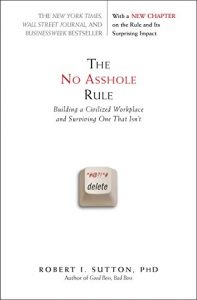
No Asshole Rule

Diagnosing your asshole problem

What is an asshole? People use the term frequently for anyone that bothers them, but for Sutton assholes are people that use their position to create a toxic environment for you and other workers.

An asshole isn’t an “askhole” (someone who always asks for your advice and does the opposite), nor is it someone who is grumpy, having a bad day, or just has a blunt way of speaking. It’s someone who uses their power every day to make your day worse. If you’re not sure if someone is an asshole, here are two questions you should ask yourself.

1) After talking to the alleged asshole, do you feel oppressed, humiliated, de-energized, or belittled by the person? In particular, do you feel worse about yourself?

2) Does the alleged asshole aim his or her venom at people who are less powerful rather than at those people who are more powerful?

If you answered yes to both questions, your co-worker is an asshole.

If you’re still not sure, then ask yourself if you are often subjected to any of the following:

  • Personal insults
  • Invasion of your “personal territory”
  • Univinted physical contact
  • Threats and intimidation, both verbal and nonverbal
  • “Sarcastic jokes” and “teasing,” used as insult delivery systems
  • Withering email flames
  • Status slaps intended to humiliate you
  • Public shaming or “status degradation” rituals
  • Rude interruptions
  • Two-faced attacks
  • Dirty looks
  • Treating you as if you are invisible

If you answered yes to one or more items on the list, then you definitely have an asshole problem.

Assholes are bad for you and your business

No one wants to be around an asshole. Besides the daily aggravation, they can ruin your career prospects and general happiness.

In a study on employees with abusive (read: asshole) supervisors, Sutton reports that employees “quit their jobs at accelerated rates, and those still trapped in their jobs suffered from less work and life satisfaction, reduced commitment to employers, and heightened depression, anxiety, and burnout.”

But assholes are not just bad for you personally, they are also bad for the business environment. Just witnessing someone being an asshole has a negative effect. According to research by Charlotte Rayner, it showed that 25 percent of bullied victims AND 20 percent of witnesses quit their jobs, compared to a typical quit rate of about 5 percent.

Assholes are even worse for a company’s operations and work environment. A study by Jerald Greenberg found when people “work for insensitive jerks, they find ways to get back at them, and stealing is one of those ways.” Furthermore, a 2008 survey by University of Florida researchers found “those with abusive supervisors put forth less effort, made more errors on purpose, hid from their bosses, and avoided making suggestions or helping co-workers.”

Finally, the daily damage of being in the presence of an asshole is hard to overcome. According to research, Sutton states “negative interactions have five times the effect on mood than positive interactions.” That means you need a lot of good things to happen in your day to make up for that one asshole.

The benefits of an asshole free workplace

While it should be obvious that an asshole free workplace is ideal, two clear benefits are less employee turnover and more commitment to the organization. It also benefits the bottom line in other ways.

Sutton points out that “Costco’s ‘shrinkage rate’ (theft by employees and customers) is only two-tenths of one percent” while “other retail chains suffer ten to fifteen times the amount” because Costco compensates their employees fairly.

Moreover, organizations that rule with compassion instead of fear “share ideas more freely, have less dysfunctional internal competition, and trump the external competition.” In effect, workplaces without assholes are not only nicer places to work, they are more financially successful.

The cure for assholes: prevention and management

If you want to cure your workplace’s asshole problem, Sutton suggests your organization have some sort of “no asshole rule” and that this rule should be “woven into hiring and firing policies.”

According to Sutton, one of the best ways to avoid assholes is to change your hiring practices. First, Sutton suggests only bringing in people who are competent for the position so you can spend all your interview time assessing the cultural fit with your company, rather than the person’s job qualifications. How good someone is at their job won’t tell you if they’re an asshole.

Second, Sutton suggests you involve more people in the hiring process. When interviewing a potential new employee, have this person meet with people above their position, below their position, and at the same level to get a sense of their personality. Also make sure you have very few assholes on the hiring committee, since like attracts like, assholes tend to hire other assholes.

Furthermore, an organization’s “no asshole rule” should extend to everyone. According to Sutton, “organizations that are serious about enforcing the no asshole rule apply it to customers, clients, students, and everyone else encountered on the job, not just employees.” At Gold’s Gym for example, the philosophy is you can fire abusive customers and have them go to another gym.

Finally, the way to keep this rule working is also to make sure that bad behavior is not rewarded. According to Sutton, if people see assholes are not “rewarded for their actions, other organization members will be more diligent about adhering to the no asshole rule.”

Dealing with assholes, if you can’t leave

Of course, you may already be working with an asshole. So what should you do if you currently have an asshole problem? Sutton advises that if you work for an asshole, you should leave right away, if possible.

However, he realizes that not everyone can leave their job. Therefore, if you must work for an asshole for the duration, he has some coping techniques for you.

First, Sutton suggests you can reframe the situation. View the situation as temporary and don’t blame yourself for what is happening.

Second, you can practice indifference and emotional detachment. According to Sutton, “When your job feels like a prolonged personal insult, focus on just going through the motions, on caring as little as possible about the jerks around you, and think about something more pleasant as often as you can.”

If you practice these techniques, you can protect your mental and physical health until the situation changes or you find a better job.

However, the best cure for assholes is preventing them from working in your organization in the first place.


Kyle Crocco is the Content Marketing Coordinator at BigSpeak Speakers Bureau, a graduate of UC Santa Barbara, and the lead singer of Duh Professors. He regularly publishes business book reviews and thought articles on Medium, Business 2 Community, and Born 2 Invest.


Apply Now to Chum the Waters With Your Shark Tank Ideas

As seen on BigSpeak.com

By now every entrepreneur has heard of ABC’s reality show Shark Tank, and most of you have probably considered baiting the hooks with your own business ideas. For those of you unfamiliar with Shark Tank, it is a show where entrepreneurs try their hand at scoring big investments and advice from self-made CEOs and business executives, the “Sharks.”

Week after week, we watch as startups and small businesses present their ideas to the panel of sharks including Mark Cuban, Kevin O’Leary, Barbara Corcoran, Lori Greiner, Daymond John, and Robert Herjavec. Some pitches inspire bidding wars between investors and the room quickly turns into a feeding frenzy. Others flounder on the surface as the Sharks look for a meatier catch.

Those that are chosen by a Shark not only have the financial support of a top executive, but also the guiding wisdom to build their product or service into an empire. Receiving an investment from the Sharks is not a far-fetched goal. If you have an idea you need help with, get inspired by past minnows that grew into big fish and follow their lead with a simple application.

The transformative power of the Sharks

With the time and dedication of the Sharks on your side, you can watch your company grow into the booming business you always dreamed of while you were hand-boxing shipments in your garage. Here are the success stories to prove it. Mark Cuban and Kevin O’Leary split a $150,000 investment into GrooveBook, a photobook-building app that was later sold to Shutterfly for $14.5 million.

Barbara Corcoran’s investment in Grace and Lace, a fashion company, which boosted its sales to a predicted $6.5 million for 2016.

Al “Bubba” Baker reached $200 million in Bubba’s-Q Boneless Ribs’ lifetime sales with the guidance and investment from Daymond Johnson.

Tipsy Elves’ ugly holiday sweaters reached $8 million in sales with the help of Robert Herjavec in 2016.

Be their next success story

I’m sure some of you probably remember watching these episodes and judging from your couch whether or not these ideas/products compared to your entrepreneurial endeavors. We’ve all done it. But being the next Shark Tank success story and working alongside some of the most influential investors isn’t as hard as you’d think.

With an investment rate of 59 percent in their last season, it turns out that the Sharks aren’t as gruesome as you’d expect. Not only are they closing deals more than half the time, but the amount they’re investing has increased dramatically since season 1. They went from shelling out an average of $181,000 per deal in season 1 to an average of $300,000 per deal in seasons 6, 7, and 8.

What it takes to get on the show

If you’re tired of watching other entrepreneur’s win the investments you know your company deserves, give it a go. There are two ways to apply to Shark Tank with your business idea or pitch: email or open casting call. Either way, you’ll need to know your product/pitch down to the smallest details, as you can see from the questions on the Shark Tank initial application.

You have nothing to lose; even if you don’t receive a life-changing investment the Sharks are sure to give you constructive criticism that may turn you into a success on your own.


Billion Dollar Keynote Speakers and Their Multimillion Dollar Friends

As seen on BigSpeak.com

There’s no better way to learn how to make a profit than from the advice of someone who has built a billion-dollar enterprise. Billionaire entrepreneurs not only know a lot about making profits but also a lot about starting businesses, growing markets, and investing in industries.

These billionaire speakers and industry leaders have made successful enterprises in every area of business from entertainment to technology to transportation. They have changed lives and the world around us. If you’re interested in being a billionaire or in just running a successful business, BigSpeak is proud to present our list of Billion Dollar Speakers.

Tilman Fertitta

Tilman Fertitta is chairman, CEO, and owner of Fertitta Entertainment Inc., and star of CNBC’s Billion Dollar Buyer. As a restaurateur and casino owner of Landry’s and Golden Nugget Casinos, Fertitta was able to amass his billion-dollar fortune. Now he spends his time helping small businesses on his show Billion Dollar Buyer, where he gives practical business advice on their business plans and methods and makes real orders for their products for his restaurant properties.

Marc Randolph

Marc Randolph is a top entrepreneur and innovation speaker, angel investor, and co-founder of Netflix. In 1997, he co-founded Netflix with Reed Hastings, serving as its first CEO until Hastings took over in 1999. While not a billionaire himself, he helped co-founder Hastings and Netflix to become billion-dollar enterprises. Since leaving the company, Randolph has used his expertise as a tech advisor and angel investor for other companies.

Sheryl Sandberg

Sandberg is a top leadership expert, COO of Facebook, and bestselling author of Lean In. She earned her first success as part of the Google team before being lured to work at Facebook. Her bestselling book Lean In confronted the problem of gender biases and career choices, while promoting the solution of believing in yourself and owning your ability to combine both work and family.

Steve Wozniak

Steve Wozniak is a top technology and innovation speaker, co-founder of Apple Computer, and the bestselling author of his autobiography iWoz: From Computer Geek to Cult Icon. He is responsible for designing the Apple II, and for his contributions to technology, he was inducted into the Inventors Hall of Fame in 2000. While not a personal billionaire, he helped Steve Jobs and Apple become billion-dollar enterprises.

Mark Cuban

Mark Cuban is a technology and media entrepreneur, owner of the Dallas Mavericks, and a very entertaining judge on NBC’s Shark Tank. Cuban made his mark in the technology and entertainment world as co-founder of Broadcast.com, the leading provider of multimedia and streaming on the Internet, and MicroSolutions, a leading National Systems Integrator, both of which he sold. Currently, he is the Chairman of the HDTV cable network HDNet.

Peter Guber

Peter Guber is an Entrepreneur Speaker, Chairman and CEO of Mandalay Entertainment Group, a Championship Team Owner, and a New York Times bestselling author. Known for his “golden touch” as a movie producer, his films have earned five Best Picture Academy Award nominations, with Rain Man winning in 1989. He is the Operating Owner of the NBA Champion Golden State Warriors and his book Tell to Win was a New York Times bestseller. In his spare time, he teaches as a full-time professor in UCLA’s School of Theater, Film and Television. His business acumen in sports and entertainment has helped his companies amass billions.

Magic Johnson

Earvin “Magic” Johnson is the President of the Lakers and universally known for his 13 year career in the NBA, where he won five national championships with the Los Angeles Lakers and a gold medal at the 1992 Olympics in Barcelona, Spain. Johnson is also the Chairman and Chief Executive Officer of Magic Johnson Enterprises. His business savvy and investments are putting him closer to the billionaires club every day.

Peter Diamandis

Peter Diamandis is a top innovation speaker, futurist, Chairman/CEO of the XPRIZE Foundation, futurist, and a New York Times bestselling author. He is most famous as founder and chairman of the XPRIZE Foundation, which leads the world in designing and operating large-scale incentive competitions; and as Co-Founder & Exec Chairman of Singularity University, where he counsels the world’s leaders (and billionaires) on exponentially growing technologies.

Sir Richard Branson

Sir Richard Branson is a world-famous billionaire and the founder and president of Virgin Group. In 1970, Richard Branson founded Virgin as a mail order record retailer, expanded into recording studios in 1972, and never stopped growing and influencing the world through his new businesses (Virgin Airlines and mobile phones) and philanthropic efforts.

Daymond John

Daymond John is a top branding and motivational speaker, founder and CEO of FUBU clothing, reality TV judge on the Shark Tank, and a bestselling author. He has won numerous awards, such as Brandweek Marketer of the Year, and His New York Times bestselling, motivational business book The Power of Broke, also received an NAACP Image Award for Outstanding Instructional Literary Work. His business sense has helped many billion-dollar enterprises.

Marissa Mayer

Marissa Mayer is the former President and CEO of Yahoo and Employee 20 of Google. At Google, Mayer was responsible for some of the company’s most recognizable and successful products, including Google Maps, Google Earth, Street View, Google News and Gmail, and is widely credited for the unique look and feel that has come to characterize the Google experience. While leading Yahoo, Mayer tripled the stock price, grew mobile users to 650 million, and changed the corporate culture.

Martha Stewart

Martha Stewart is a lifestyle expert, Emmy Award-winning television show host, entrepreneur, and bestselling author. Starting with her own catering business in 1972, Stewart developed a penchant for elegant recipes and a unique visual presentation style that served as a basis for the book Entertaining, published in 1982. Today her company, Martha Stewart Living Omnimedia, reaches approximately 66 million consumers across all media platforms each month, and she is well on her way to amassing a billion-dollar fortune.

Elon Musk

Elon Musk is the Co-founder and CEO of Tesla Motors, and the Founder of SpaceX and PayPal. He is well known for his futurist vision as well as his entrepreneurship. Under his direction, Musk has changed and developed both the payment and transportation industries. Currently, he has founded the Boring Company, and is looking at developing hyperloop travel to make commuting underground a faster mode of travel.

Jeff Bezos

Jeff Bezos is the founder and CEO of Amazon, the richest man in the world, and well known as an empathetic leader. Under his direction, Amazon has become the destination of choice for online shopping and a titan in the entertainment industry with original and award-winning movies, such as Manchester by the Sea and the Big Sick. He has made self-publishing available to the masses through Kindle and has made voice-activated computers commonplace with the Alexa Echo device.

Larry Page and Sergey Brin

Larry Page and Sergey Brin are the co-founders of Google, which has now become the Alphabet company. Their algorithm for online search transformed the way people find information on the Internet, making Google into a verb, and themselves and their investors into billionaires. Their various products (Gmail, Maps, Drive) have changed the way businesses save data and collaborate online. And their personal motto, “Don’t Be Evil” has helped the company stay as a force of good for technology users worldwide.

See Below For More Top Keynote Speakers:

Top Business Keynote Speakers

All Top Keynote Speakers


The content writers at BigSpeak Speakers Bureau are Experts on the Experts. They hold doctoral, masters, and bachelors’ degrees in business, writing, literature, and education. Their business thought pieces are published regularly in leading business publications. Working in close association with the top business, entrepreneur, and motivational speakers, BigSpeak content writers are at the forefront of industry trends and research.