Robert Sutton on How Bosses Waste Time

As seen on BigSpeak.com

If all leaders want what’s best for their company then why do so many people hate their bosses? Part of the reason stems from a feeling of time being wasted. Leaders often put tasks on their employees’ plates without even realizing they’re doing it or what it fully entails. Stanford Professor, Robert Sutton, recently examined ways bosses unintentionally waste their employees time and resources and gave avoidance advice in his number one most read Wall Street Journal article “How Bosses Waste Their Employee’s Time.”

Robert Sutton, an organizational change expert and unofficial office mediator, has dug deep into office culture to understand how to streamline processes, create a harmonious environment, and increase productivity. Alongside his Stanford colleague, Huggy Rao, Sutton has studied a multitude of organizations to determine the best ways to lessen a company’s “organizational friction.”

Sutton identified some of the leading causes of wasted time in the office, and not surprisingly, most were caused by leadership without the bosses even knowing.

Fad Surfing

One CEO who Sutton studied couldn’t turn down the latest office trend and ended up rolling out new company-wide initiatives without accounting for the last sweeping declaration they made that implemented a whole new way of doing things. Employees were asked to drop everything and start over with the latest management concept.

Executive Magnification

Waste also comes when employees are hyper-focused on kissing up to their bosses. Oftentimes this happens when leaders are self-absorbed and it’s reflected in the way employees hang on their every word. Sutton found numerous instances where this mentality cost the companies not only time but money. One retail company launched a two-year campaign to improve sales associates’ demeanors after the CEO made an off-hand comment about a rude clerk. When he found out, he ordered the company to shut it down.

Another company plastered over a brand new door that was put in when the CEO asked in passing, “Why is there a new door there?” When he found out and explained it wasn’t a complaint just a question they reinstalled the door.

Sutton believes there are ways for leaders to become more aware and intentional about their requests and comments. Being able to hear criticism and handle feedback will allow employees to ask clarifying questions and rid your company of detrimental assumptions.

Looking at the bigger picture, Sutton believes leaders need to redefine what it means to be a star employee. Traditionally, the employees receiving praise are the ones managing a large team and growing their employee roster. There is little focus on whether that means adding unnecessary rules that slow processes. It’s time to recognize the employee who ends outdated procedures instead of implementing new ones. Leaders should be praising the employee who speaks up about things (even in opposition to the boss) in order to better the company.

To read the full article on The Wall Street Journal click here.
 

Why Your Next Purchase Will Be a Subscription Service

As seen on BigSpeak.com

Look at your credit card bill? How many of those charges did you actually physically use a card for? Most are probably recurring charges for subscriptions services like Netflix, Spotify, or Uber. As a nation, we’re renting more and owning less.

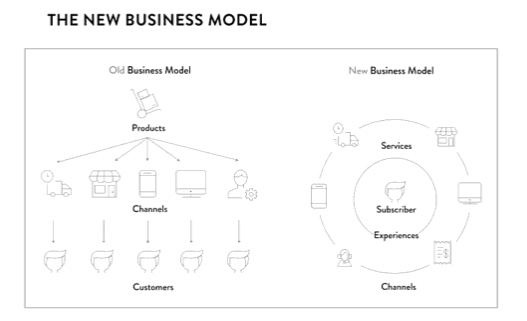
Welcome to the subscription economy. You’ve actually been living here a while. What seemed like an extreme idea a decade ago has now become the business model de jour. Instead of buying cars, DVDs, and software, we now rent them for a short time.

When Zuroa founder and keynote speaker Tien Tzuo proposed the idea of a subscription economy people thought he was crazy, he was smoking something funny, and his ideas were out-of-step with reality.

But, ask yourself, when was the last time you bought a new CD? Now companies like GE and IBM, stalwarts of the Fortune 500, no longer talk about being product companies. Instead of selling light bulbs and software, they sell digital solutions. Apple no longer puts its emphasis on iPhones but sees the next area of growth in streaming services and recurring revenue.

This is the new model for business. In his national bestselling book Subscribed: Why the Subscription Model Will Be Your Company’s Future-and What to Do About It, Tzuo outlines how the subscription model will benefit consumers and businesses alike.

subscription economy model

Less risk in trying new products

With a subscription service, a customer is no longer committed to owning a product. So when the latest Nicki Minaj album comes out, you don’t have to be stuck with a bunch of songs you don’t like. With a subscription service like Spotify, you can try the album out and if it isn’t any good, you can always listen to Taylor Swift.

And for small businesses, it allows them an opportunity for people to try their product without fear, giving them a chance to expand their customer base. Tzuo points to a small arts and crafts company that uses a subscription service to get customers to try their products and has built a strong following from it.

No more obsolescence

For consumers, there is no more worry of buying a tech product, only to have it become useless after a year or two. For years, people had to pay for each new Microsoft Office or operating system software update. Now, many software companies offer subscriptions with constant updates.

For example, Adobe has a subscription service for its Creative Cloud suite of video, image, and design software. This subscription helps pay for software development costs and also keeps a loyal and committed fan base by providing the latest updates.

Customer-centric service

In the old business model, companies were focused on products and their own needs. But with a subscription model, it puts the focus squarely on the customer. Consumers benefit by getting value and new options created for them all the time. Take Amazon Prime, for example: it is always adding new films, music, and books for subscribers to try out. Or companies that make apps for smartphones: these apps are constantly updated with new features.

For companies, a customer focus saves money and time by only focusing on those products and services their customers really want. A good example of this is when Fender decided to focus on their customer base. It created tuner apps and music lessons to help users learn to play Fender guitars, thereby changing new guitar buyers into long-term customers.

For customers and businesses, this subscription model will bring an amazing future of products and services that will stay relevant. While this model will change everything you’ve become accustomed to, there’s no need to be afraid of it—you can try out it for little risk, and if you don’t like it, you can stop anytime.


Kyle Crocco is the Content Marketing Coordinator at BigSpeak Speakers Bureau, a graduate of UC Santa Barbara, and the lead singer of Duh Professors. He regularly publishes business book reviews and thought articles on Medium, Business 2 Community, and Born 2 Invest.

BigSpeak Welcomes New Exclusive and the Father of the “Subscription Economy” Tien Tzuo

As seen on BigSpeak.com

BigSpeak’s newest exclusive speaker, Tien Tzuo, is the father of the “Subscription Economy,” He evangelized the shift from a product-based economy to a subscription-based model. Nowadays you can try everything through a subscription service with little commitment and the comfort of knowing you can cancel at any moment. Before you were fully consumed by the joys of subscription services Tien Tzuo was building an award-winning subscription management platform to revolutionize the way we make purchases.

After spending 10 years reworking our consumer economy Tzuo founded Zuora in 2007, an enterprise software company capable of powering any subscription-based company. Due to his cutting-edge technology, the term “Subscription Economy” was coined, referring to the turn of the century trend of renting on a subscription basis rather than buying and owning your product or service.

Before Zuora, Tzuo was one of the ‘original forces’ at Salesforce, joining as employee number 11. In his 9 years at Salesforce, Tzuo built its original billing system, later serving as chief marketing officer and chief strategy officer.

Tzuo authored the book Subscribed: Why the Subscription Model Will Be Your Company’s Future -and What to Do About it which serves as a guide for companies moving into the future of purchasing.

Tien speaks on…

  • The Subscription Economy: A Once in a Century Business Model Shift
  • Most Fortune 500 Companies are Built Wrong – Confronting Your WTF Moment
  • How to Survive the End of Ownership and Thrive with a Subscription Business Model: Common Traps to Avoid in Leading & Reinventing Your Company for the Subscription Economy
  • The Golden Age of Media – What Every Company Can Learn from Subscription Services

BigSpeak Continues to Climb the Inc. 5000 List for the Fourth Year in a Row

As seen on BigSpeak.com

For the fourth year in a row Inc. Magazine added BigSpeak Speakers Bureau to its 36th annual Inc. 5000—an exclusive ranking of the nation’s fastest-growing private companies. The list represents the most comprehensive look at the most important segment of the economy—America’s independent entrepreneurs.

With no signs of slowing down, BigSpeak has moved up 259 spots from the previous year, landing the company at No. 2909 with three-year revenue growth of 140 percent. Companies such as Microsoft, Yelp, Pandora, Dell, Domino’s Pizza, LinkedIn, Zillow, Oracle, Intuit and Zappos gained early exposure as members of the Inc. 5000.

BigSpeak began in CEO Jonathan Wygant’s garage two decades ago and has grown tremendously, impacting thousands of businesses and individuals each year with the spread of transformational messages. Wygant founded BigSpeak to address the unfulfilled need to provide top thought leaders, keynote speakers, and professional development programs that are uniquely customized to each client’s specific requirements.

This Inc. 5000 award is the fifth win for CEO, Jonathan Wygant, whose previous company, Iris Arc Crystal, was ranked 281 in the Inc. 500. Upon notification of BigSpeak’s selection to the 2018 Inc. 5000 list, Wygant said, “I am extremely proud of the team’s dedication and focus serving our Fortune 1000 clients with excellence that led to rapid and sustainable growth over the last five years. Many companies such as Microsoft, Fidelity, Johnson & Johnson, GE, and Genentech have been clients for nearly 20 years. We have exciting plans to continue on a similar growth curve over the next five years.”

President Barrett Cordero has been at the helm of the tremendous growth, focusing on sales, speaker representation, key investments, disruptive innovations and providing an exceptional work environment. BigSpeak team members enjoy flex-schedules, remote work, pet and child-friendly offices, HSA/FSA health plans, pension plan, profit sharing, and off-site team building trips.

From Hit Songs to Headphones: Two People Who Changed the Way We Listen to Music

As seen on BigSpeak.com

Hit songs and cell phones

Enter any cafe, any day, and what do you see? Someone holding their phone closer to some music speaker. You can’t go to a bar, club, or cafe without someone checking their phone so they can figure out who’s singing that crazy cool song with the wicked beat. And let’s face it, most of the time that person is probably you trying to Shazam it.

Before people Shazamed it, we lived in a world of musical ignorance. People (meaning you or maybe someone older than you who lived in that dark ages before smartphones) would hear a great song, ask around if someone knew who sang it, get frustrated when no one knew, and let the idea eat away at them until they were lucky enough to catch some DJ announcing it on the radio. What was a music lover to do?

Enter Chris Barton and the team of Shazam, like the superheroes of music search. Before there were iPhones and Google, his team had a dream. A dream that the average person anywhere (you, in other words) could use a regular dumb flip phone that came with your basic phone plan to identify songs playing in noisy bars and clubs. Before the Internet was everywhere and wifi hotspots were a thing, the idea you could dial a short number to access a database of several million songs, have your phone listen for a minute, and then find out the name of the song and artist was revolutionary. Now it’s what happens on your daily Starbucks run.

Since that day we were saved from our musical ignorance, phones have become smarter, song databases have grown larger, and Shazam has become a way not only to identify a song but also to share them on social media—and to purchase the music. The app was so useful in driving business to Apple Music, that Chris Barton and his team were able to cash out to Apple in 2017.

But not all our musical problems were solved when Shazam launched in 2002. Some of them were actually caused by Apple.

From earbuds to headphones

When Apple changed the way we accessed music by creating the iPod, the company also changed how we listened to music. No longer did you hear people talk about their surround sound, Dolby, multichannel, THX something-or-other stereo system and how it could give you the best sound quality ever, or how you had to listen to the new remixed, mastered, anniversary edition of Pink Floyd’s The Dark Side of the Moon, because it sounded like you were in the studio hanging out with the band.

In one swift movement, Steve Jobs made us all musical introverts. We all had our own private DJ device in our pocket along with a personal stereo in the form of white earbuds provided by Apple. No one was talking about sound quality anymore.

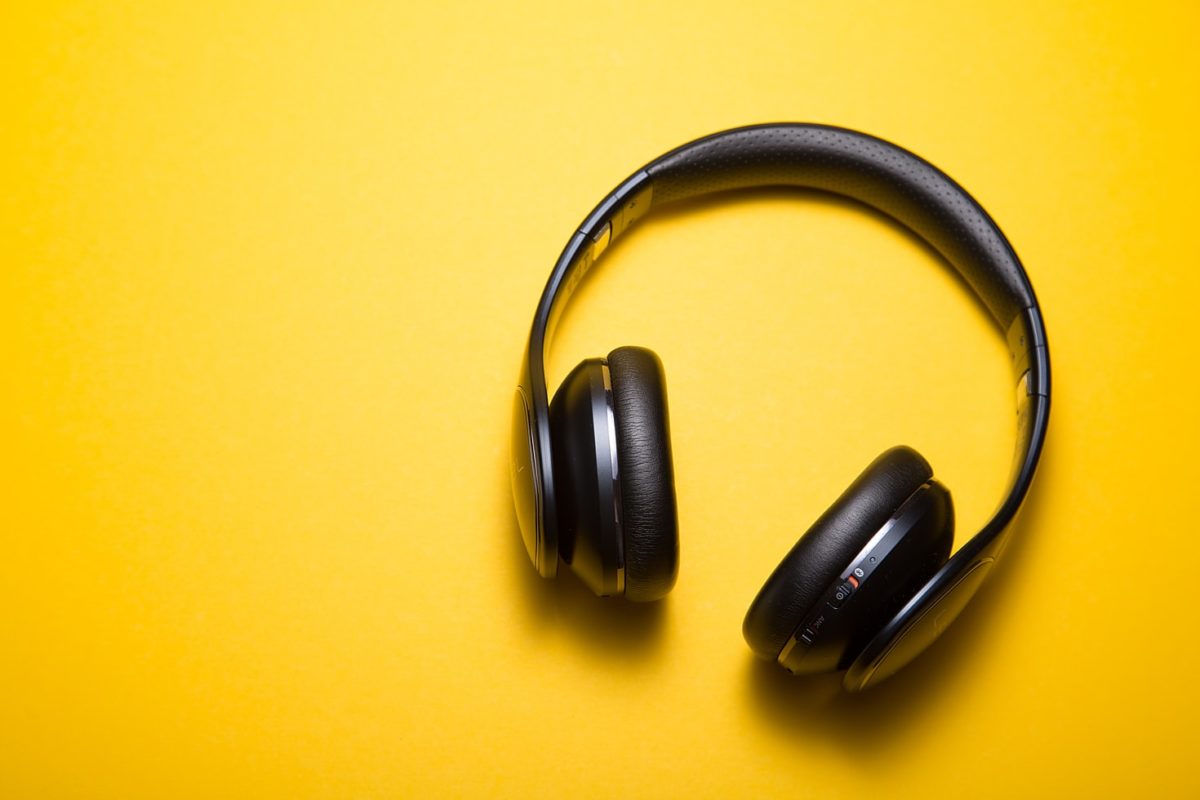
Instead, people were talking convenience, playlists, and song shuffle instead of clarity and quality. But Dr. Dre and Jimmy Iovine knew the music we heard on iPods could sound better, much better, but only if people yanked out their white earbuds and put on some decent headphones. So Dr. Dre and Jimmy Iovine teamed up and developed headphones that would truly reproduce the dynamic sound quality of the music created by artists in the studio.

The result was the multicolored Beats by Dre headphones. Introduced to the world in 2008, these anything-but-white headsets took a while to make their full impact on the music market. Despite their dynamic sound range people still used their white earbuds.

That was until brand genius Omar Johnson, voted one of the most Top 50 Most Innovative CMOs by Business Insider in 2016, helped make Beats headphones into a worldwide phenomenon. Together with his diverse team of marketers, Omar created viral marketing campaigns like “Straight Outta Somewhere” and “Powerbeats starring LeBron James” that spawned social media mania and made Beats headphones one of the most desired headphones of athletes and celebrities around the globe. Olympic medal winners and basketball MVPs alike could be seen sporting the headphones—sans payment or endorsement—and the Beats headphone brand took off like wildfire.

Now you can see people wearing the colorful Beats headphones as often as you see a pair of white earbuds. Apple noticed their popularity (and sound quality as well) and bought Beats in 2014.

What happens next to our music experience only these pioneers can tell.


Kyle Crocco is the Content Marketing Coordinator at BigSpeak Speakers Bureau, a graduate of UC Santa Barbara, and the lead singer of Duh Professors. He regularly publishes business book reviews and thought articles on Medium, Business 2 Community, and Born 2 Invest.

Event Planning Professionals Call BigSpeak For the Best

As seen on BigSpeak.com

Want to drop jaws are your next event? Event planning professionals say the sure-fire way is to bring in a killer keynote speaker. NorthStar Meeting Group, a world-class event planning company, knows the importance of an entertaining and thought-provoking keynote speaker. A great keynote speaker can set an uplifting and positive tone for what’s to come… and a bad keynote speaker will make sure half your audience slips out the door before you get to the meat of the meeting.

After surveying the top speakers bureaus in the nation NorthStar Meeting Group has found the most engaging keynote speakers in the business. Making the list are BigSpeak exclusives, Matthew Luhn, Robyn Benincasa, and Srinivas Rao.

Matthew Luhn, former Pixar storyteller, animator, and expert branding keynote speaker, has been recognized for his humor and genuineness on stage, as well as his impactful marketing and branding training with CEOs, marketing teams, directors, and other professionals. He teaches any corporate audience the importance of storytelling in business while providing them with the tools to shape their own company’s brand.

Then there’s Srinivas Rao, who founded Unmistakable Media to bring creativity back to the workforce to help your company stand out in an oversaturated marketplace. His podcast, three books, media company, and keynote speaking all work to help you be the most distinct and interesting version of yourself and your business.

Of course, adventure racing champion, firefighter, and motivational speaker Robyn Benincasa made the list as well. She founded Project Athena, a non-profit dedicated to helping women who have experienced trauma reach their most audacious adventure goals. From competing with a world-class adventure racing team to saving lives with her firehouse Robyn is an expert on teamwork and leadership. In her powerhouse keynote, she builds a stronger company culture through proven team -building skills.

To see the comprehensive list check out NorthStar’s website.

Cynthia Breazeal Asks: Where Are the Robots for the Rest of Us?

As seen on BigSpeak.com

Have you ever wondered why we don’t have personal robots? We can send robots into space, have them manufacture cars, and serve drinks in Las Vegas, but what about one for the home? Sure they can put together a mean Tesla and analyze core samples from a distant planet, but what about washing our laundry, cooking some frittatas, or making us a nice hot cup of organic, free-trade coffee? You know, the really useful stuff?

And while we’re at it, why can’t these robots be fun and tell us the insane probability of getting a date with a supermodel or reel off a few jokes about the priest, the rabbi, and the duck when we’re having a bad day? Where were the robots we were promised by Star Wars? Where’s our personal C3PO?

If this kind of question has been keeping you up all night, you’re not alone. It’s also the same question that bothered social robot pioneer and keynote speaker Cynthia Breazeal. When she was a bright-eyed graduate student at M.I.T., she saw how robots were being sent into fiery volcanoes, down deep into the depths of the ocean, and onto the red dirt of Mars and wondered why aren’t these robots interacting with humans? Where were our robot companion sidekicks? How could robots help us be better humans?

Then Cynthia had her epiphany—interacting with inanimate objects and interacting with a living, thinking being were two entirely different paradigms. Energized, she marched into her advisor’s office and declared she had to change everything about her entire Ph.D. research. And so began her journey into the world of social robotics.

What is social robotics? And can you trust robots?

You probably have heard of machine learning, digital voice assistants, and industrial robots (more on that below), but social robotics isn’t about playing chess, commanding Alexa to order a Hawaiian pizza, or building an iPhone in a vacuum-sealed room. It’s about interacting socially—with mechanical devices.

Cynthia is on the forefront of the emerging field of social robotics. As director of the Personal Robots Group at MIT, she studies how we can live better with robots. Her research has focused on how these socially trained robots can help us maintain weight loss, learn Spanish, and teach us about human behavior. For example, how does trust work? And did you know that you could trust a robot?

Cynthia’s research has shown when we interact with a machine that can physically move in some way, we feel more comfortable, we get more out of the experience, and we even come to trust and like the robot. This kind of information shows us how much physical behavior is important for building trust as well as showing us how we can get more out of computers when they are anthropomorphized.

The humanoid robots of Star War are not here yet. We still have a long way to go until they serve as our wingmen in bars. While great strides have been made in terms of mobility and dexterity, other technical limitations remain in terms of weight and battery life. The Atlas “backflip” robot you may have seen jumping around on YouTube, billed as the “The World’s Most Dynamic Humanoid” can carry only 25 pounds and run for an hour or so. Definitely not ready for an all-night rave or taking on the death star. And that robot can’t even interact with humans in a social way either. So you know it’ll never buy the first round.

Right now we only have the beginnings of socialization as realized by Cynthia’s startup robot: Jibo. Jibo is “The World’s First Social Robot for the Home.” The robot doesn’t have legs or wheels, and can’t bring you a cup of coffee yet, but Jibo has face and voice recognition technology and will notice when you come into a room. Unlike Alexa, Jibo isn’t tied into a database, so the experience interacting with Jibo is more human-like than talking to a digital voice assistant.

While droids aren’t slinging out sarcastic comebacks yet, the rise of personal robots is on its way. Until then, we’ll just have to be satisfied with machine learning, digital voice assistants, and industrial robots. To learn more about those topics, read below.

Machine Learning

The best computers can learn to become better in a certain defined field. Keynote speaker Andrew McAfee has shown us how we are entering a second machine age with computers beating humans at games like Chess, Go, and Jeopardy. Likewise, algorithms can help us better trade, sell products on Amazon, find a date, and choose movies on Netflix, according to marketing expert and neuroscientist Carmen Simon.

Digital Voice Assistants

We are all familiar with digital voice assistants. Who has not said, “Hey Siri,” “Hey Google,” or “Hey Alexa?” These voice assistants not only help us with rote tasks, like setting alarms, choosing awesome playlists, and reordering diapers, they also entertain us with their limitations in countless internet memes. A.I. pioneer and Siri inventor Adam Cheyer has predicted digital voice assistants are going to be the new way we interact with computers. And keynote speaker and innovator Tan Le’s Emotiv brainwear will have us interacting with computers and technology just through our brainwaves alone. Just watch as this quadriplegic man in Brazil can drive a formula car with thoughts alone.

Industrial Robots

Industrial robots are the machines saving us from the drudgery of assembly line work. They can tirelessly repeat repetitive tasks without the need for rest or mandated coffee breaks. Perennial disruptive innovator, TED talk regular, and keynote speaker Kevin Surace has shown industrial robots are going to continue doing away with manufacturing jobs and rote tasks in the future, freeing us to do more engaging tasks.


Kyle Crocco is the Content Marketing Coordinator at BigSpeak Speakers Bureau, a graduate of UC Santa Barbara, and the lead singer of Duh Professors. He regularly publishes business book reviews and thought articles on Medium, Business 2 Community, and Born 2 Invest.

Carmen Simon Is Here to Make Your Marketing More Memorable

As seen on BigSpeak.com

Marketing and leadership keynote speaker and branding/sales expert, Dr. Carmen Simon, researches and teaches cognitive neuroscience at Stanford University to bring the most cutting-edge findings to her Silicon Valley startup, Memzy. As the founder of Memzy, she helps corporations use brain science to create memorable messages that influence customers’ decisions.

Her most recent book, Impossible to Ignore: Creating Memorable Content to Influence Decisions, has been promoted on several book lists as one of the top international books on persuasion. In the book, Carmen explains how you and your company can use memory hacking tricks to market better, tell a significant story, and make sure your brand is remembered by your consumers.

Carmen has two doctorate degrees, one in instructional technology and another in cognitive psychology, and is a recognized expert in applying neuroscience to leadership, communication design, and customer engagement.

Her sought-after keynote speeches unveil science-based techniques for getting others to see your way, remember your way, and go your way.

Carmen speaks on…

The Neuroscience of Being Memorable:

Carmen offers strategies for transforming yourself and your message into something worth noticing and remembering. To help us understand how people pay attention, remember content, and ultimately act on it, we look at the field of neuroscience, which reveals insights on how the brain processes information and tends to remember it – or, more often – forget it.

The Neuroscience of Engagement:

What does it really take for the brain to be engaged? This keynote offers four evidence-based, practical guidelines, which you can use immediately to create meaningful engagement for your internal and external audiences.

The Science of Storytelling for Leaders:

To become true leaders and influence others’ action, we must ask: what makes a memorable story? And what is the optimal amount of narrative we can use when we speak about technical or scientific content? Carmen shares the latest brain science research on storytelling and how to best apply it to your own leadership style to inspire and influence others.

The Neuroscience of Humor:

The most successful business professionals are the ones people remember. Join this session to hear a cognitive neuroscientist’s view on how you can create communication at the corner of humorous and memorable. You will learn practical guidelines and reconsider preconceived notions about using humor in business communication and interactions.

The Neuroscience of Decision Making:

Join this keynote to discover strategies for transforming your message into something worth noticing and remembering. To help us understand how customers pay attention, remember messages, and ultimately act on them, we look at the field of neuroscience, which reveals insights on how the brain processes information and tends to remember it – or more often – forget it.

Could a Robot Replace You?

We can look at the “human vs. machine” as a symbiotic process: The computer and the human need each other to make each other better. Unfortunately, when we rely too much on automation, the computer seems to take over. Automation may free us from that which makes us free. Carmen looks at ways to balance the human and the machine and create better engagement with your customers.

Crisis Equals Opportunity: Why You Should Dive In When Everyone Is Leaping Out

As seen on BigSpeak.com

Do you remember where you were when the housing market crashed? Were you out weeding the garden, at dinner with close friends, or maybe just listening to a pop song on the radio when the news came on?

If you don’t remember where you were, what you were doing, or who you were doing it with that’s because the housing crash didn’t happen in one day. Mostly, the market collapse was a slow-motion train wreck with a few precipitous cliff drops during an 18-month period between October 2007 and March 2009.

The aftermath is probably the only part you remember. Your investments had lost half their value. Your house was valued at less than your mortgage. Plans for early retirement had to be postponed or canceled entirely. And the last place you wanted to put your money was in stocks.

But if you were a value investor, like Sir John Templeton, you were probably smiling. Not because John was a cruel, heartless bastard. Rather it was because the housing collapse represented the singular best buying opportunity in several decades. If you had invested after the crash (or kept investing all along), you would have seen momentous returns over the next decade.

Investing when no one else will is at the heart of what value investing is all about and the subject of top financial speaker Lauren Templeton’s book Investing the Templeton Way, based on the successful market-beating strategies of her uncle, Sir John Templeton.

How to Beat the Market and Make Millions

If you want to beat the market and make millions, the principles are quite simple. Executing those principles, however, is difficult. Here are four ways to become rich over time.

1) Buy stocks that no one else wants

You have to go against the crowd and all the conventional wisdom. You have to purchase stocks in companies or countries that don’t look attractive, that no one else seems interested in, whose price is undervalued.

While your friends are buying Amazon, Google, Apple, and whatever stock seems sexy, you will be buying stocks no one has heard of or have had a recent downturn. People will think you are stupid and tell you that you are making unwise choices. Except it’s these undervalued ugly duckling stocks that will make you the most money in the long run.

Sir John Templeton invested in Japan in the 60s when no one thought Japan would amount to anything. In the 70s, all those bets paid off.

2) Buy when no one else wants to buy

Volatility is a bargain hunter’s best ally. Crisis spells opportunity. When everyone is selling stocks because of a crash or crisis, this is the time for you to dive in and start buying.

Buying when prices are going down takes a strong stomach and a lot of courage. As Sir John Templeton said, “The best time to buy is when there’s blood in the streets.” Sometimes that blood may be your own investments.

You should also be prepared for a coming crisis. Have a wishlist of stocks of good companies you want to buy when their prices fall low enough to make a good company’s stock undervalued.

When the dot-com bubble burst, Sir John Templeton had his list of companies he was waiting to buy when the stock price was just right. For example, if a company was overpriced at $100 a share but a bargain at $60 a share, he already had the buy order in place for when the stock price fell to $60.

3) Do your homework

What separates the successful investor from the mediocre investor? It’s not luck, but the ability to do the extra legwork. Bargain hunters research companies thoroughly, find the information no one else can be bothered to look for, and seize the opportunities that no one else has spent the time to discover.

This means going beyond stock reports. The information in public stock reports is already figured into the stock price. If you do the extra work, you can find opportunities no one else sees and profit once everyone figures out that the company’s (or country’s) stock is a good deal.

Before the housing crash, a small group of investors read the fine print and realized that collateralized debt obligations (CDOs) were filled with subprime mortgages that were going to fail (Go see The Big Short for a digestible lesson on this from the late Anthony Bourdain). They did their homework, saw what no one else saw, and profited.

4) Have patience

As a value investor, you must have patience. You will make sound decisions based on research that will yield results in the long term. These results may take years to materialize. While everyone is making money in the next big tech stock, or bitcoin offering, your portfolio may be underperforming. People will say your methods are wrong, out-of-date, and we are living in a new paradigm.

Take the 1970s, for example. The U.S. stock market was virtually flat for a decade. You would have seen no gain in your investments for ten years. By the end of the 70s, there were articles that declared stocks were dead and the future was real estate and gold.

However, had you ignored those nay-sayers and stayed in stocks, you would have seen everything in the market was vastly undervalued. You could have bought lots of bargains, bode your time, and experienced a tremendous rebound when Reagan was elected into office.

So if you want to be rich, it’s quite easy. You just have to go against the crowd, have a strong stomach, do your homework, and be patient.


Kyle Crocco is the Content Marketing Coordinator at BigSpeak Speakers Bureau, a graduate of UC Santa Barbara, and the lead singer of Duh Professors. He regularly publishes business book reviews and thought articles on Medium, Business 2 Community, and Born 2 Invest.

Top Political Speakers

As seen on BigSpeak.com

Are you looking for a top political speaker, politician, economist, or expert on national and international issues for your conference or event? Knowing and understanding the political climate is imperative in making business decisions. Whether it’s the upcoming election, predicting the state of the economy, or national security concerns, these keynote speakers can give you the insights you need.

Peter Zeihan

Top geopolitical keynote speaker Peter Zeihan specializes in global energy, demographics, and security. He will guide your company through the tumultuous future of global economics. He’ll cover everything from why China may be irrelevant in the near future to how Europe will aid in their own demise to steps to take to avoid the whole ordeal. You need Peter on your side if you want your company to stay alive.

David Dreier

David Dreier, former congressman and current Chairman of the Annenberg-Dreier Commission of Sunnyland, is a top keynote speaker focusing on trade and foreign policies. In this globalized marketplace, every move made by even the smallest countries affects you and your company. His behind-the-scenes insights into free trade and foreign involvement will keep your business a step ahead of your competitor.

Tan Le

Technology and Innovation speaker Tan Le has a unique perspective on global politics. As a refugee with an unbelievable story of escape, she used her outsider’s perspective to influence the framework of her company. Her talk focuses on the struggles of immigration as a refugee and how it shaped her into the entrepreneur who created world-changing brain control technology.

Larry Wilmore

Larry Wilmore, better known as the “Senior Black Correspondent” on The Daily Show with Jon Stewart and Host of the Nightly Show, brings comedy and humor to the often painful political climate of today.

Wilmore’s first book, I’d Rather We Got Casinos and Other Black Thoughts by Larry Wilmore, was published in fall 2008 and displays “an ability to convince, confound and compel in equal measure,” according to Publishers Weekly. He has been nominated and received numerous awards including an Emmy, a Peabody, Humanitas, TV Critics, and NAACP Image Award.

Dambisa Moyo

Dambisa Moyo is a global economist keynote speaker, author, and macroeconomy and international affairs analyst. Her work has taken her to more than 70 countries over the last decade, during which time she has developed a unique knowledge of the inherent conflicts facing developed economies, as well as the interaction between politics, international finance and developing markets.

Ian Siegel

Technology and entrepreneur keynote speaker and founder and CEO of ZipRecruiter, Ian Siegel analyzes how changing laws affect the job market to give you deeper insights into your hiring and retention, as well as possible integrations and alternative routes for your business.

Carl Bernstein

Carl Bernstein made a name for himself as one the most influential investigative reporters when he broke the Watergate story that aided in the impeachment of former President Richard Nixon. Since then he hasn’t slowed down. His insights into the dark and hidden world of politics are as intriguing as they are informative and helpful to your business. Book an evening with Carl to hear about the underbelly of America.

See Below For More Top Keynote Speakers:

Top Financial Keynote Speakers

All Top Keynote Speakers

Colin O’Brady Sets New World Record:

As seen on BigSpeak.com

50 Highest Points in 21 days 9 hours & 48 min

Motivational and Adventure Keynote Speaker Colin O’Brady took on the 50HP Challenge on June 27th at 4:06 pm Alaska Time at the summit of Denali. In 21 days, 9 hours, and 48 min O’Brady climbed the 50 highest points in each of the U.S. states. He shaved 20 days off the previous 41-day record and ended his trek on July 19th at 2:45 am PST at the summit of Oregon’s Mt. Hood.

Here are the highlights:

The Final Week July 12th-19th:

  • 8 peaks (CO, CA, UT, WY, ID, MT, WA, OR) back to back through the night with time for fewer than 3 hours of sleep each night
  • The climbs amounted to 150 trail miles and totaled 55,000 elevation gain, nearly two Mount Everests from sea level.
  • O’Brady climbed four of the highest points with his father on his 60th birthday. The climb was a reminder to Colin to always stay adventurous.

Check out Colin O’Brady’s Instagram page to see highlights from his 21-day trek across America’s highest points: https://www.instagram.com/colinobrady/


We Won’t Let You or Your Business Get Punked Like Palin

As seen on BigSpeak.com

You may have heard about Sasha Baron Cohen’s latest prank—the one where he used a speakers bureau to fly Sarah Palin across the country for a fake interview he planned to feature on his new show Who is America. Regardless if you’re a Borat fan or not, no one would be happy about a 14-hour round-trip-travel to be punked for a TV show.

While such trickery is rare in the speaking business, something much more common and equally as frustrating is a last minute cancelation from a ‘big name’ celebrity. Most organizations working with a celebrity keynote speaker put all their eggs in Liam Neeson’s basket, and then when his daughter is taken and he can’t make the event… there’s no one to fill in.

We’d never put you through that. When you book (or are booked) through BigSpeak, we guarantee we have safety nets to catch you from even the biggest tumbles.

Our Speakers…

Will only ever be contacted about the most qualified events. We have a rigorous vetting process that starts as soon as a company reaches out to find a speaker.

All companies are immediately verified through database searches upon initial contact. From there the company works directly with a member of our sales team to fully understand the purpose of the event and the event’s requirements, restrictions, and needs.

After the contract is complete, our event staff organizes every detail alongside the company’s planning team to ensure there are no miscommunications… unintentional or otherwise.

It’s not rare for one of our experienced Agents and Consultants to scope out the event before the speaker even arrives. Often a member of our team will arrive early to an event, work out any foreseen issues, and fully prepare the event to the specified needs of each individual speaker. Our Agents and Consultants attend events to personally ensure our speakers receive only the best and that any complications can be handled on the spot, ASAP.

Your Organization…

Will never be left hanging. When booking a celebrity or “big name” speaker, you always run the risk of last-minute cancellations—it comes with the territory. But when you work with BigSpeak, you’re ensuring no matter how Brad Pitt’s schedule changes you’ll have an A-list speaker to replace him.

We also take the time to fully flesh out our speakers’ needs, so you’ll never be surprised with a speaker walking out on you because you forgot to separate all the green M&M’s.

Our Agents and Consultants attend events to advocate for you as well. We are dedicated to creating a copesthetic relationship between you and your speaker.

When you use BigSpeak, we guarantee commitment to you and your needs. We know that each event is unique and requires different customizations—that’s our specialty. BigSpeak isn’t just a speakers bureau. We’re peace of mind for you and your team.