Warriors to Finals for 4th Time: Congratulations to Peter Guber and Joe Lacob

As seen in BigSpeak.com

Another year, another trip to the NBA finals for the Golden State Warriors. What seemed like a cakewalk turned serious in the conference final series with the Rockets when it all came down to a go-home or go-big game 7. But the Golden State Warriors didn’t disappoint, prevailing over the Rockets, in a riveting game to once again prove themselves to be the team to beat.

Their reward? A fourth meeting will their old rivals the Cleveland Cavaliers, led by LeBron James. While all the experts are expecting another NBA championship for the Warriors, the real winners will be all the fans who get to see two great teams battle it out once again for the honor of being called the best basketball team in the world.

BigSpeak would like to congratulate co-owner and keynote speaker, Peter Guber, and co-owner Joe Lacob for rebuilding this franchise into the juggernaut that California fans can cheer for year in and year out.


The content writers at BigSpeak Speakers Bureau are Experts on the Experts. They hold doctoral, masters, and bachelors’ degrees in business, writing, literature, and education. Their business thought pieces are published regularly in leading business publications. Working in close association with the top business, entrepreneur, and motivational speakers, BigSpeak content writers are at the forefront of industry trends and research.

Meet the Man Who Moved You Off the Couch–Omar Johnson

As seen on BigSpeak.com

You’ve worn the Nike swoosh, you’ve listened with Beats headphones, now meet the man behind Nike’s greatest ad campaigns and Beats by Dr. Dre’s massive international success—Omar Johnson.

Omar Johnson is a marketing and branding keynote speaker, entrepreneur, former CMO at Beats by Dre, and former VP of Marketing at Apple. He has shaped pop culture time and again, and is now partnering with BigSpeak to share the knowledge he acquired while turning a startup into an empire.

You’ve seen his commercials—the ones that make even the biggest couch potatoes feel like they can win the Olympics if they just owned a pair of Nike shoes or Beats headphones. If you ever wanted to purchase a pair of Nike shoes or Beats headphones, your life has been influenced in some way by this man.

While working at Nike, he rose up the ranks to create memorable marketing campaigns like the “MVP (Most Valuable Puppets)” during the 2009 NBA playoffs, “Rise” featuring LeBron James after his trade was announced, and “All Together Now” spotlighting Kobe Bryant’s commitment to the game.

In 2010, Dr. Dre poached Johnson from Nike to join his startup, Beats Electronics, making Johnson the fifth employee. Under his tenure, Beats grew from a company with $180 million in personal investments to a $1.1 billion dollar global icon and category leader, becoming the number one premium headphone in North America, U.K., France, Germany, South Korea, and Singapore.

Why they call him the Brand Genius

While working with Nike, he built the Nike+ sports music platform, establishing Nike’s first revenue-generating relationship with record labels. Johnson and his team created an industry-first, sports music program with Universal, Interscope, Sony, Capitol, Def Jam and more than 25 independent labels. This collaboration sold more than 5 million tracks and deepened the connection between music and sports, setting the stage for his work with Beats.

Johnson’s key to marketing success was keeping his company’s branding/advertising costs low while associating the brand with famous athletes, artists, and influencers. This low cost/high reward strategy earned him the title of Adweek’s “Brand Genius” in 2013. His campaigns focused on the consumer and gave customers the ability to tell their own story.

And it worked. Who doesn’t love to talk about themselves? Beats’ “Straight Outta Compton” ad campaign let everyone tell their own story by replacing ‘Compton’ with whatever word they chose to identify their roots. It quickly became the biggest social campaign of 2015.

Innovative ideas like this, as well as the creation of the Beats lounge to offer privacy to Olympic athletes, had very minimal costs, but gained Beats elite status. He is the expert of creating consumer behavior by manipulating a product’s surroundings.

Omar Johnson Speaks About…

  • Using Curiosity and Creativity to Turn Your Product Into an Experience
  • The New Rules of Marketing: From Influencers to Ambush Marketing
  • The Importance of Adding Millennials and Other Diverse Groups to Your Team
  • How to Work With the Crowd, Ignore the Data, and Use the art of Listening to Develop Your Best Ideas

Top Harvard Business Speakers

As seen on BigSpeak.com

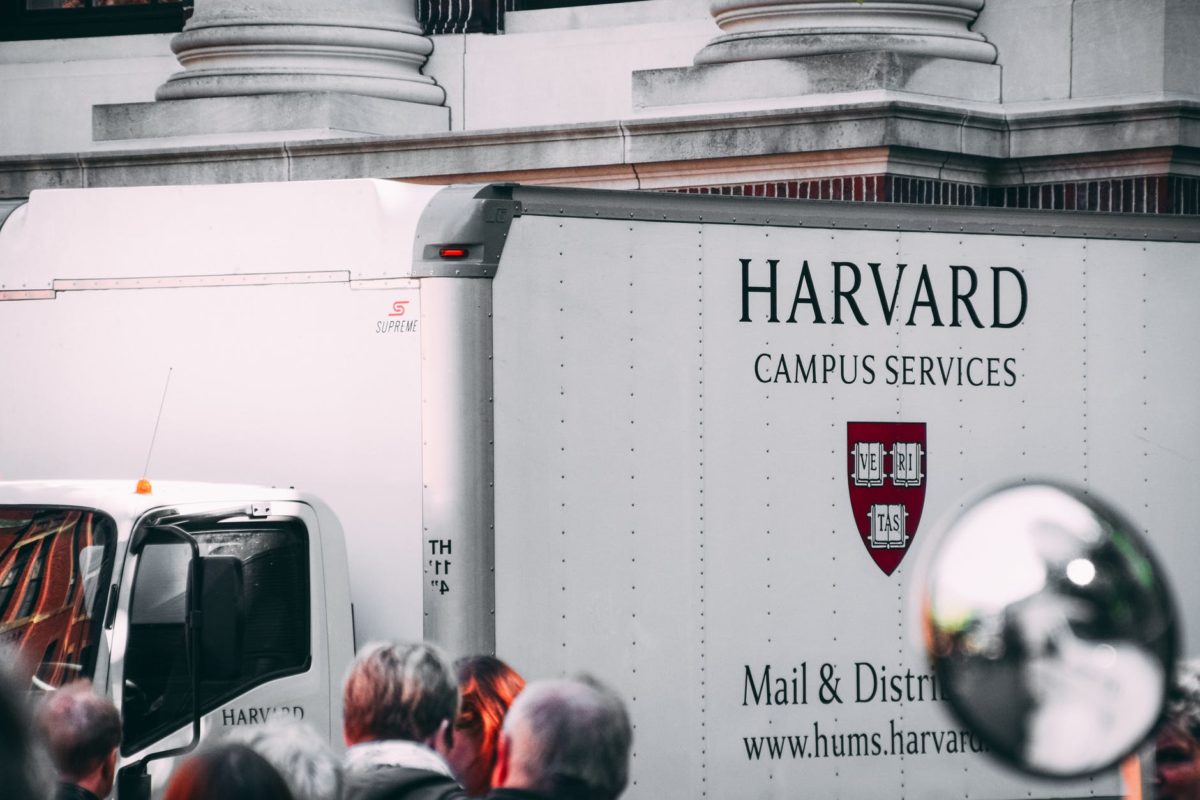
These keynote speakers range in fields of expertise, but one thing they have in common is their acknowledgment from the prestigious Harvard Business Review. BigSpeak’s Harvard business speakers have worked with the Harvard Business Review to solidify themselves as the top thought leaders in their industries. Whether they write for the Harvard Business Review or received a Harvard Business Review bestseller’s award, their work has been elevated through the connection.

BigSpeak’s Harvard Business speakers have incorporated their work with Harvard Business Review into their keynote addresses to bring you top research from their fields. Find your perfect Harvard Business Speaker in BigSpeak’s top list.

Business Culture

Robert Sutton

Robert Sutton is an organizational change expert, Stanford professor, and top business speaker who wrote the bestselling No Asshole Rule. In his speaking and HBR writing, he brings his organizational change expertise to various workplace problems, including office bullies, company growing pains, and creative innovation.

Shawn Achor

Shawn Achor is a happiness researcher, Founder of GoodThink Inc., and top emotional intelligence speaker who is known for his bestseller The Happiness Advantage. His studies focus on positive psychology and leadership and happiness and its place in the workforce.

Bradley Staats

Bradley Staats is an associate professor at the Kenan-Flagler Business School, University of North Carolina, as well as a contributing member to the Harvard Business Review. His teaching and writing focus on the importance of lifelong learning and the role it plays in innovation and staying relevant.

Robyn Benincasa

Robyn Benincasa is an Adventure Racing World Champion, author, and top leadership and teamwork motivational speaker. She has contributed her unique perspective on team building to the writing of HBR.

Innovation 

Peter Diamandis

Peter Diamandis is a futurist, Chairman and CEO of XPRIZE, Co-founder of Celularity, and top innovation speaker. Seen as a true thought leader in innovative technologies, his cutting edge research in human longevity, immunity, and regeneration can be found in his keynotes and writing.

Vijay Govindarajan

Vijay Govindarajan is a Dartmouth International Business Professor, Director of the Tuck Center for Global Leadership, and a strategy and innovation expert. He is best known for his idea of “reverse innovation” in which a company develops in emerging markets—rather than scaling down rich-world products—to derive long-term value.

Entrepreneurship 

Ben Casnocha

Ben Casnocha is a bestselling author, tech entrepreneur, and top business speaker. He has parlayed his work with HBR into speaking topics on startups, millennials, the new networking age, and the entrepreneurial spirit.

Chris Yeh

Chris Yeh is a Silicon Valley entrepreneur, investor, and writer who co-authored  The Alliance: Managing Talent in the Networking Age with Ben Casnocha and Reid Hoffman. His HBR writing and speaking focus on the shifting dynamics between employees and employer and what it takes to hold onto talent in an entrepreneurial workforce.

Leadership 

Sheila Heen

Sheila Heen is a member of the Harvard Negotiation Project, CEO of Triad Consulting, New York Times bestselling author, Harvard Law Professor, and an expert leadership speaker. She uses her expertise in negotiation and consulting to teach leaders how to better communicate with their teams and have the “difficult conversations.”

Linda Hill

Linda Hill is the Wallace Brett Donham Professor of Business Administration at the Harvard Business School, author of three bestselling books, and a leadership speaker. Her writing and speaking focus on the power of leadership and being able to use the collective genius of your organization.

Elise Foster

Elise Foster is a Master Practitioner for the Wiseman Group, author, and executive strategy and leadership speaker. She uses her speaking, coaching, and writing to help leaders with performance management and organizational development.

Dr. Paul Stoltz

Dr. Paul Stoltz is the creator of Adversity Quotient, bestselling author, guest psychology lecturer at MIT, and leading expert on adversity and resilience. As a thought leader on the psychology behind resilience, his writing and speaking focuses on the “bounce back” and overcoming adversity within your company and personal life.

Eric McNulty

Eric McNulty is the Director of Research and Professional Programs at the National Preparedness Leadership Initiative. His expertise in leadership has contributed to his talks and writing for HBR on leading through turbulent times.

Safety and Security 

Allan Friedman

Allan Friedman is the Director of Cybersecurity Initiatives at National Telecommunications and Information Administration in the US Department of Commerce. He uses his unique experiences to educate his audiences on cybersecurity national safety.

Michael Sulmeyer

Michael Sulmeyer is the CyberSecurity Project Director at the Harvard Kennedy School of Government. Dr. Sulmeyer contributes his expertise on the security against the unseen such as the internet, aircraft, and robots.

See Below For More Top Keynote Speakers:

New York Times Bestselling Keynote Speakers

All Top Keynote Speakers

Harvard Business Speakers

Apply Now to Chum the Waters With Your Shark Tank Ideas

As seen on BigSpeak.com

By now every entrepreneur has heard of ABC’s reality show Shark Tank, and most of you have probably considered baiting the hooks with your own business ideas. For those of you unfamiliar with Shark Tank, it is a show where entrepreneurs try their hand at scoring big investments and advice from self-made CEOs and business executives, the “Sharks.”

Week after week, we watch as startups and small businesses present their ideas to the panel of sharks including Mark Cuban, Kevin O’Leary, Barbara Corcoran, Lori Greiner, Daymond John, and Robert Herjavec. Some pitches inspire bidding wars between investors and the room quickly turns into a feeding frenzy. Others flounder on the surface as the Sharks look for a meatier catch.

Those that are chosen by a Shark not only have the financial support of a top executive, but also the guiding wisdom to build their product or service into an empire. Receiving an investment from the Sharks is not a far-fetched goal. If you have an idea you need help with, get inspired by past minnows that grew into big fish and follow their lead with a simple application.

The transformative power of the Sharks

With the time and dedication of the Sharks on your side, you can watch your company grow into the booming business you always dreamed of while you were hand-boxing shipments in your garage. Here are the success stories to prove it. Mark Cuban and Kevin O’Leary split a $150,000 investment into GrooveBook, a photobook-building app that was later sold to Shutterfly for $14.5 million.

Barbara Corcoran’s investment in Grace and Lace, a fashion company, which boosted its sales to a predicted $6.5 million for 2016.

Al “Bubba” Baker reached $200 million in Bubba’s-Q Boneless Ribs’ lifetime sales with the guidance and investment from Daymond Johnson.

Tipsy Elves’ ugly holiday sweaters reached $8 million in sales with the help of Robert Herjavec in 2016.

Be their next success story

I’m sure some of you probably remember watching these episodes and judging from your couch whether or not these ideas/products compared to your entrepreneurial endeavors. We’ve all done it. But being the next Shark Tank success story and working alongside some of the most influential investors isn’t as hard as you’d think.

With an investment rate of 59 percent in their last season, it turns out that the Sharks aren’t as gruesome as you’d expect. Not only are they closing deals more than half the time, but the amount they’re investing has increased dramatically since season 1. They went from shelling out an average of $181,000 per deal in season 1 to an average of $300,000 per deal in seasons 6, 7, and 8.

What it takes to get on the show

If you’re tired of watching other entrepreneur’s win the investments you know your company deserves, give it a go. There are two ways to apply to Shark Tank with your business idea or pitch: email or open casting call. Either way, you’ll need to know your product/pitch down to the smallest details, as you can see from the questions on the Shark Tank initial application.

You have nothing to lose; even if you don’t receive a life-changing investment the Sharks are sure to give you constructive criticism that may turn you into a success on your own.


What Motivates the Motivators?

As seen on BigSpeak.com

At BigSpeak, we believe that motivation is the key to your success, whether you need to be motivated to consistently do a good job at work or to finish some big, hairy, audacious goal after years of struggle. Our top inspirational and motivational speakers inspire and delight business audiences all over the world. But where do they find their energy and inspiration?

To find out, BigSpeak reached out to our top motivational and inspirational speakers to discover what is motivating our biggest motivators in 2018. Their answers were as varied as they were surprising.

“What’s Motivating You in 2018?”

Aaron Ross

Sales Speaker, Business Growth Expert, and Bestselling Author of Predictable Revenue

Having 9 kids, with 5 in private school!!!

Chip Eichelberger

Top Motivational Speaker, Former Tony Robbins Int’l Point Man, Author, and Sales Leader

I am going back to the basics. I have one of the great personal development cassette libraries around. We just moved and I donated about 80% of them and kept the BEST. I am going old school and listening to the best cassette series from Jim Rohn, Denis Waitley and Napoleon Hill.

There are very few “new” ideas out there. Their wisdom is just as valuable today as it was when I first listened to it over 30 years ago.

Erik Qualman

#1 Bestselling Author and Digital Leadership Expert, Pulitzer Prize nominee, and Top 50 Professor

I’m inspired to do less this year! You don’t see that on too many t-shirts do you? As I’ve been privileged to interview, research, and surround myself with today’s Digital Leaders one common thread stands out. They’ve all learned that it’s not about adding stuff, it’s about taking away. This is the opposite of what 99% of us do when setting goals and resolutions. We start adding items to our already full plate. Not this year.

This year I’m motivated to do what I’ve learned from interviewing the world’s top performers. I’m going to do less. I’m going to stop multitasking. I’m going to focus. Specifically, each morning and throughout the day I’m going to pause, breath and ask the simple question: “What is the one thing, that if I do it well, makes everything else easier or unnecessary.” This is what motivates me and I hope it inspires you too!

Jia Jiang

Founder of Wuju Learning, Most Viewed TED Talk of 2017, Bestselling Author

What motivates me in 2018 is my single goal to turn the Rejection movement into an app that millions of people would use.

Josh Linkner

Top Innovation Speaker, Tech Entrepreneur, and New York Times Bestselling Author

For me, two things:

1) The opportunity to elevate the world by unlocking creativity and innovation. If I can help organizations unleash just 5 percent more of these attributes, they enjoy tremendous success, create jobs, and help the world. This is my big dream…to elevate the world’s creative capacity.

2) I’m the proud dad of 1-year-old twins (boy and girl). Talk about inspiring and motivating!

Libby Gill

Top Leadership Speaker, Executive Coach, and CEO of  Libby Gill & Company

My inspiration for 2018 is the science of hopefulness, called hope theory. I’ve spent years researching this topic and I’m delighted to have compiled my research, along with case studies and client stories, into my new book, The Hope-Driven Leader: Harness the Power of Positivity at Work.

With this book–endorsed by bestselling authors Stephen M.R. Covey, Bob Burg, Joe Calloway, CEO of Wicked Good Cupcakes and star of Shark Tank, Tracey Noonan; and numerous business and thought leaders–I’ll be able to help people experiencing change, challenge, and chaos. I plan to guide emerging and established leaders to create more purposeful and productive workplaces by shifting mindsets from siloed to collaborative and productivity levels from sluggish to robust.

My ultimate goal is to disprove the old adage “Hope is not a strategy,” and show the world–now when we need it most–that hope IS a strategy!

Robert Richman

Culture Architect and Customer Experience Expert, Co-creator of Zappos Insights

Robyn Benincasa

Top Leadership and Teamwork Speaker, World Champion Adventure Racer, CNN Hero, and Bestselling Author

In 2018, I’m Inspired to help people (and animals:)) discover and reach their huge, hairy dreams and goals…

1) In my speaking business, I love helping corporate clients and their teams embrace the idea that building, leading and inspiring a team for the journey is how we consistently WIN!

2) In my nonprofit, The Project Athena Foundation, I love helping Survivors of medical or traumatic setbacks cross crazy-challenging, adventurous finish lines as part of their recovery. It’s truly a joy to watch our amazing Athenas (and Zeuses!) shock and Inspire themSELVES—and to show them that they’re never defined by their setbacks…they’re defined by their COMEBACKS!

3) In my next nonprofit endeavor, the Valentine Animal Sanctuary, in Sedona AZ (which I hope to break ground on at the end of the year!), I and my family/team want to help homeless creatures, great and small, to live their dream of a happy, healthy, long, and LOVED life by providing a forever-happy home.  ❤️❤️❤️❤️❤️❤️❤️❤️❤️❤️❤️❤️❤️❤️

Tom Kolditz

Leadership Speaker and Expert, retired Brigadier General, and Executive Director of the Doerr Institute for New Leaders

Inspiration and the motivation that follows are simply choices. I choose to be inspired, from the inside out. The beauty of this attitude is that it can take you through really difficult realities.


Kyle Crocco is the Marketing Coordinator for BigSpeak, has a Ph.D. in Education from UCSB, and likes to play guitar in his free time.

Saying Goodbye to 2017 Will Help You Stick to Your New Year’s Resolutions

As seen on BigSpeak.com

The key to taking on 2018 is finishing off 2017 stronger than ever!

Breaking New Year’s resolutions is so common nowadays it’s comical. With memes and faux-inspirational quotes about giving up on our goals before the end of the month circulating the internet, it’s important to remember why we set New Year’s resolutions and how they benefit us.

Mel Robbins, CNN commentator, co-founder of Inspire52, and motivational speaker, has created a system to empower you through the annual negativity surrounding New Year’s goals. Follow along as we explore her process, with your own free copy of her 2018 Best Year Ever packet.

Look to the Past to Create the Future

Robbins believes something most people are missing when forming their goals is reflectivity. In order to properly move forward, you must be able to look at your previous year with honest and open eyes. In her packet, she coaches you through a review of 2017 and encourages you to assess your past relationships with goal setting, while shedding preconceived notions of imminent failure.

With insights into your past year, it becomes easier to build off previous accomplishments you are proud of. Forbes writer, Shelcy V. Johnson, believes that by carrying the good momentum from 2017 into the new year you are more apt to stick to a familiar goal.

From there, Robbins helps you explore four areas of personal growth—health, love, fun, and work. Through her thought-provoking questions, you’ll have a private space to truly examine 2017’s ups and downs with no judgment, but your own.

Be True to You in 2018

Once you have honestly reviewed the exiting year, it’s time to step into 2018. With an understanding of your recent past, you are more likely to set attainable goals based on your personal wants and needs.

Removing outside influence from these goals is crucial to making a lasting impact. When you are pushing yourself to be better for anyone but yourself, you will never feel complete or satisfied with your results. That is if you even see any results—because external motivation will oftentimes turn into resentment and unfulfilled goals.

Take Action Now

Finally, Robbins provides a guide for you to map out actionable steps to help you reach each goal.

Motivational speaker and former NFL quarterback, Tom Flick, believes that every goal needs to be accompanied by a plan-of-action before it makes the transformation from dream to goal. In his interview about structuring goals to promote longevity, he says the key is measurable moves. When you are able to watch yourself make true progress, no matter how big or small, you will believe in yourself and hold onto those goals.

With Robbins’ packet, you will have the foundation needed to set goals that matter—and hang on to them by following her motivational steps. Her inspiring guide to a new year will have you blocking out the constant stream of goal-abandoning jokesters as you thrive and continue turning dreams into goals.


Jessica Welch is the Content Marketing Associate at BigSpeak Speakers Bureau, holding a Bachelor’s Degree in English Literature and Anthropology from California Polytechnic State University, San Luis Obispo. Her business thought articles often appear on Business 2 Community, Born 2 Invest, and YF Entrepreneurs.

The Future of Technology

As seen on BigSpeak.com

When we wanted to know what the future held, BigSpeak knew the right people to turn to: the people who are changing our future right now. We reached out to our top speakers in the fields of A.I., cyber security, and work for their personal predictions and trends to watch for in 2018 and beyond.

The Future of A.I. and Digital Voice Assistants

Adam Cheyer is a top technology and A.I. speaker, and also the co-founder and engineer behind two successful digital voice assistants: Siri and Viv. Cheyer shared his predictions with us about A.I. and the state of digital voice assistants.

Current state of digital voice assistants

Despite billions of queries flowing every day through automated assistants like Siri, Alexa, Cortana, Google Assistant and Bixby, I believe you’d agree that Assistants are useful today, but not really important. If I took away your web browser or your smartphone, you’d probably feel powerless in today’s world, whereas if I took away your favorite assistant, you might be a little annoyed but it wouldn’t be a major crisis. And certainly no business or industry is significantly impacted by the emergence of these intelligent assistants.  

The next five years in digital voice assistants

Within 5 years, the Assistant as a user interface paradigm will be more important to both industry and to end users than the web or mobile. Why?

Because for end users, it will provide the best experience for getting things done on any device. If I can ask, “Help me plan my trip to my friend’s wedding next month,” and an Assistant can help coordinate all my favorite brands and services to find the best place to stay and eat, the easiest way to get there, the right gift to buy, and the most fun activities to do while I’m there—then this will be a far better experience than trying to achieve this complex task manually using web forms or a myriad of separate apps, where you must repeat the same information over and over.

For businesses, the Assistant will represent a new channel for bringing users to their services, and will enable them to offer these services in new contexts and situations where a web browser and a smartphone don’t work well—for example, when a person is driving, watching TV, jogging with a smartwatch, washing dishes in their kitchen, and so forth. In the same way that the web, phones, and tablets have revolutionized many industries, the Assistant paradigm will do so even more.

How digital voice assistants will grow

Today’s Assistant ecosystems are not there yet. The developer tools are too primitive, the end-user experience is not good enough, and the monetary incentives are not in place to make it worth the effort for businesses to publish their services in this new channel. However, many billions of dollars are being poured into this problem by the technology giants, and these problems will soon be worked through.

A new user interface paradigm comes along every 10 years (PC = 80s, Web = 90s, Apps = 00s) and we are now ten years past the smartphone….It’s time to prepare yourself and your business for the coming technology trend that will dominate computing for the next decade—A.I. as the next U.I.*

*Artificial Intelligence as the new user interface

The Future of Cybersecurity and Cyber Threats

Eric O’Neill is a cybersecurity speaker, national security strategist at Carbon Black and a thought leader on counterintelligence, cybersecurity, and espionage. According to O’Neill, “We have to make sure the bad guys don’t ruin it for us.” O’Neill shared his predictions with us how the future will continue to have increasing ransomware threats but that cyber security defenses will also evolve.

The benefits of connectivity
The future is already an amazing place. An expansive communication network has collapsed a once-massive Earth into smartphones that fit into our pockets. Cloud computing has made all information available wherever our travels take us. We communicate at near the speed of thought, share ideas with only a few keystrokes and manage global business and financial transactions without leaving our living rooms.

In just a few short years we will see self-driving cars, homes connected to smart hubs that allow us to control everything from an app, and augmented reality overlays that update our vision with constant data at every glance. Solar energy and connected robotics will disrupt ancient business models and require a cardinal change in our global workforce. The stroke of a pen over paper will become a luxury reserved for those with the most antiquated of sensibilities.

Ransomware threat will grow

These miracles will come at a cost. As we connect our lives to the Internet, we open ourselves to those that will exploit a shrinking world and dip their blackened fingers into our confidential communications. Ransomware—a type of malicious software that encrypts our files and requires the purchase of a key from the attacker before we can access them—will continue to rise as the #1 cybercrime. The Ransomware criminal industry grew 2,500% from 2015 to 2016 and will triple by 2018. According to the FBI, Ransomware was a $1 billion crime in 2016.
Attackers will find increasingly innovative ways to attack through our many networked and shared connections. Criminals will hold us for ransom. Spies will access our secrets from Russia and China and North Korea’s computers without having to board a plane to make a clandestine meet. Terrorists will seek to disrupt our power and compromise our homes, manufacturing floors and financial markets without lighting a fuse or firing a single shot. We will pay the price for the rapid pace of connectivity. Unless…

Cybersecurity, cloud defenses, and endpoint security

Cybersecurity will grow to meet the demand created by constant cyber breaches.  Security will move from ineffective-network-and-virus security to endpoint security and collaborative cloud defense that places protection closest to humans that can’t help clicking links in malicious emails. Technologies will evolve to isolate and contain information in ways similar to old counterspy tradecraft. The majority of counterintelligence work will be handled by cyber professionals. We will hunt the threats before they hunt us.

Cybersecurity is all too often ignored or postponed because the discipline is archaic and filled with fear. But solutions exist that can already protect individuals and organizations from the majority of attacks, and cyber technology improves daily. The future is already a remarkable place, we just have to ensure the bad guys don’t ruin it for us.

The Future of Work

Mike Walsh is a top innovation and futurist speaker, bestselling author of The Dictionary of Dangerous Ideas, and a thought leader on his blog on mike-walsh.com. According to Walsh, here are three trends we will see more of in 2018 and beyond.

Customization

Data will make companies customized and personal: Companies can leverage personal data to do more for the customer experience. For example, Walsh revealed that one of his favorite brands, Berluti, “might soon allow its customers to follow in real time as their shoes were handmade and personalized for them.”

Discovery

Travel will be more for discovery: Now that we are all interconnected, wireless, etc., the advantage of travel is to have a “direct lived experience.” Direct experience will help companies understand what global trends and innovations are both relevant and translatable in other markets. For example, why a Hello Kitty phone would be a big hit in Japan but not the U.S., or finding an innovative graphic artist in Istanbul that you cannot find on a Google Search.

Collaborative spaces

Offices will be more for collaboration: Remote work used to be the hottest thing in business. Now the trend is about creating collaborative spaces. Architects, such as NBBJ, are using “parametric design” to simulate how a building’s occupants will actually use a space and then optimize it for businesses.


 

Best and Worst Holiday Office Gifts

As seen on BigSpeak.com

Be the hit of the holiday season by choosing these great gifts and avoiding those duds.

The holiday season brings out the best and worst gifts in all corporate offices. To avoid being the talk of the office for that bad gift, get inspiration from these universally enjoyed gift ideas below.

Edible gifts (No, not those kind of edibles)

Everyone loves food, especially indulging in sweet treats during the holiday season.

Good edibles: Wine and fruit subscriptions are always a good idea; and for an extra special touch, splurge for a year-long subscription for top clients or employees that worked especially hard throughout the year. Organizing a catered lunch for the entire office is also a fun and simple way to show appreciation for the whole team.

Some gifts can become a tradition for you and your company. Our company sends out large gift boxes of Godiva chocolate to top partners in December. The gift has become such a holiday staple our clients look forward to them each year.

Worst edibles: Actual THC edibles. Seriously. These gifts may seem fun and edgy, especially with the legalization of marijuana in many states, but they are more likely to send the wrong message, offend the recipient, or put your staff to sleep. Make sure your brownies are just brownies!

Novelty gifts

Novelty gifts add a touch of humor and personality—as long as they remain useful or relevant to the recipient.

Good novelty: One gift we recently discovered are Foot Cardigans. The company, backed by Shark Tank investor Mark Cuban, is a subscription service that delivers a pair of fun and flamboyant socks to subscribers each month. The New York Times declares: “In Silicon Valley, flamboyantly designed socks—like those sold by Foot Cardigan—are worn as a badge of honor demonstrating you’re a member of the startup world that eschews the traditional suit-and-tie uniform.” But we think they’re just plain fun!

Worst novelty: One well-intended gift giver shares an experience of purchasing a novelty gift that was all wrong.

“One of my clients is an executive at a large nonprofit and he admitted to once giving one of his employees Preggie Pops [for morning sickness] because she was having stomach issues,” says Kristie Santana of National Coach Academy. “It turns out the employee was actually not pregnant and was simply experiencing upset stomach from failed attempts at dieting for the last several weeks. The employee was a good sport about it though.”

Experiential gifts

Since we are in the midst of the experience economy and experiential events are all the range, try giving experiential gifts.

Good experiences: You’d be surprised by how much people appreciate you sending a masseuse to their office during the stressful holiday season. Or offer employees an additional paid day off of their choosing. Better yet, give them the whole week off between Christmas and New Years, and pay them for it!

Worst experiences: When gifting experiences, it’s important to make sure the experience is one that the person will truly enjoy. For example, don’t gift your employees a weekend trail ride. Some of them might be afraid of horses or unable to ride. Likewise, don’t gift a client tickets to the latest play or concert unless you know without a doubt that they would enjoy it.

A word of caution

Get to know the people you are buying gifts for first. As keynote speaker and company culture expert Chester Elton advises, “Be thoughtful and make sure you aren’t stepping on any cultural, religious or personal taboos…such as gifting ham to Jewish people or alcohol to Mormons or Muslims.”

With these best and worst gifts in mind, give your employees and clients things they will actually enjoy.


The content writers at BigSpeak Speakers Bureau are Experts on the Experts. They hold doctoral, masters, and bachelors’ degrees in business, writing, literature, and education. Their business thought pieces are published regularly in leading business publications. Working in close association with the top business, entrepreneur, and motivational speakers, BigSpeak content writers are at the forefront of industry trends and research.

How Empathy Helped Jessica Alba Found a Billion Dollar Company

As seen on BigSpeak.com

In the cutthroat world of capitalism, empathy and business are viewed as polar opposites. You don’t get rich by caring about your competitors’ feelings.

As the conventional wisdom goes, if you want to be an empathetic businessperson, start a non-profit. So it’s a refreshing surprise to see Jessica Alba buck the conventional wisdom and merge empathy and entrepreneurship into the very successful business of the  Honest Company.

Since founding her eco-friendly business in 2011, the Honest Company has racked up over 300 million in sales and been valued as high as 1.7 billion dollars.

At Summit LA17, I had a chance to participate in an intimate fireside chat with Jessica Alba and Alex Banayan, the writer who profiled her journey to success—and the journey of other successful people— in the book The Third Door.

Alba chatted about how she was inspired by her childhood illnesses and her own journey as a mother to envision a company that could be successful while also providing products that were fairly priced and safe to use.


Inspiration for the Honest Company

Looking at Jessica Alba now, you wouldn’t suspect she had been battled illness as a child, or that she had gone to 11 schools by age 11 (courtesy of her father being in the Air Force, not because she was a badass). However, it was these experiences of dealing with disease and always being the new kid that taught Alba the important lesson of how to empathize with others.

In her chat, Alba related how she suffered from multiple illnesses ranging from asthma to pneumonia and was a frequent visitor to the hospital as a child, undergoing the knife five times. In addition to appendix and tonsil surgery, she also had kidney surgery due to an infection.

Her empathy only grew when she became a mother. Having suffered from multiple illnesses, Alba was acutely aware of the effects toxic elements could have on the body.

While shopping at the local grocery store, she would look at the packaging for common household and food products to see what was safe. However, the obscure names and convoluted labeling made it hard to figure out what was healthy and safe for her or her child.

That’s when she had her Eureka moment, inspired by her empathy. She couldn’t be alone in her concerns for safety. There had to be other parents out there who worried about the health and safety of products purchased for their children. Other parents needed affordable products they could trust.

Thus was born the concept for the Honest Company.


Empathy was a tough sell

While the solution to parent’s safety concerns was obvious and clear to Alba, the same couldn’t be said for investors. Venture capitalists and bankers couldn’t see the connection—or profit potential— between empathy and entrepreneurship.

She developed a 100-page deck to pitch her idea of healthy, safe, and affordable products only to hear crickets. Fortunately, years of working in the entertainment industry had taught her the power of perseverance in the face of rejection.

She knew this service would help families everywhere and she couldn’t take no for an answer. Eventually, her company was funded and it continues to thrive today, proving that empathy and entrepreneurship can co-exist in the marketplace.


Ken Sterling is the Executive Vice President and Chief Learning Officer at BigSpeak. Ken holds a Ph.D. in Organizational Leadership from the University of California, an M.B.A. from Babson College.

Kyle Crocco is the Marketing Coordinator for BigSpeak and has a Ph.D. in Education from UCSB.

BigSpeak Builds Company Culture with Western Retreat

As seen on BigSpeak.com

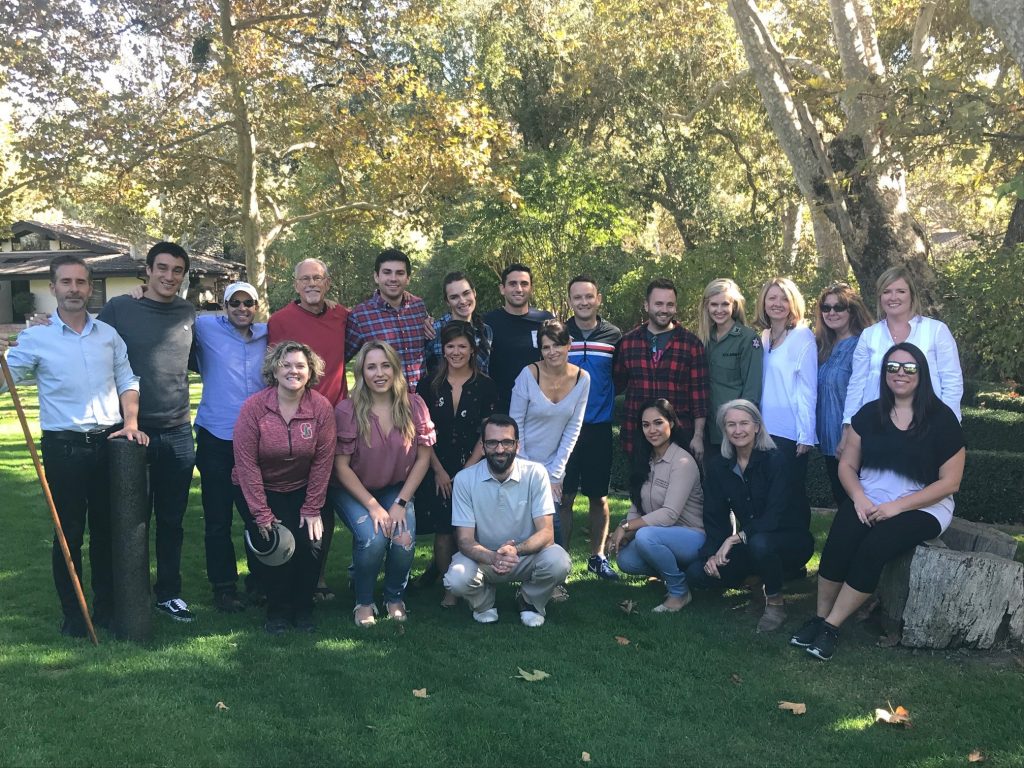
For this year’s annual company retreat, the BigSpeak team got cowboy western at the Alisal Ranch and Resort. The two-day offsite meeting was a chance for members of BigSpeak to think creatively about the future of their company and celebrate its expansion over the past three years. The result was a great deal of team building and team bonding that strengthened the company culture.

Robert Richman, Culture Architect and co-creator of Zappos Insights, led the BigSpeak group through exercises and discussions to channel their energy into future progress for themselves and their clients.

After a year of rapid growth it was time for the company to reflect, identify the driving factors, and expand on them in innovative ways. Instead of preparing for future disruptions, the team took the proactive approach and collaborated on ways to be the industry disruptor.

“It’s that type of thinking that makes companies like Apple and Google best at what they do,” says Executive Vice President Ken Sterling, “We want to break molds, not fit them.  We’re up 50% over last year and want to do it again in 2018 – this type of hyper growth isn’t accidental.”

The team also took this time to appreciate the hard work their speakers and clients contributed to BigSpeak’s success. Throughout the retreat, time was dedicated to improving their current client support systems. One of the top priorities was showing every member of the BigSpeak family how valued their time and commitment was.

Robert Richman created a safe and encouraging space for BigSpeak employees to work side by side with leadership to ensure company culture and morale are as positive as their growth. After two days of stimulating meetings, the BigSpeak team took to the trails on horseback or enjoyed 18 holes of golf on the resort’s rural course. There was something for everyone as the group took the reins or grabbed a club and kicked their feet back, whether it was in stirrups or on a golf cart.

Team members were also able to hone their archery, shooting, and fishing skills during team-building challenges on a secluded lake, as well as get their blood pumping with doubles paddle boating. With a setting as private and comfortable as theirs it wasn’t hard for them to get motivated and focus on team building.

Everybody at BigSpeak left the dude ranch feeling connected, rejuvenated and ready to take on the new year together.

Spread Your Great Ideas in TEDx Talks Through the Mixing Chamber Program

As seen on BigSpeak.com

What if you had a great idea that went unheard? People come up with great ideas all the time, but without proper guidance and coaching, those ideas can flounder and die before ever reaching a receptive audience.

Jonathan Bricker, a Seattle-based scientist, and psychologist was facing this problem when he came up with his innovative idea that could help people quit smoking. His technique combined technology with cutting-edge psychology to help people adopt healthier habits and give up smoking faster.

He explains how new research suggests it takes an average of 30 attempts to successfully quit smoking. What is the secret to self-control, he asks? Willingness. The willingness to have a craving and let it pass.

When Mixing Chamber® creator Andrea Driessen learned about Jonathan’s compelling approach, she invited Jonathan to be coached to present his idea in a short TEDx talk. Visibility from the talk has helped him spread the message on the power of willingness around the world. His presentation has so far garnered over 2.3 million views on YouTube and continues to catalyze interest in Jonathan’s work.

The idea has since been adapted to help millions around the world lower cancer risk, overcome obesity, reduce alcohol abuse and harness other behavioral shifts to live healthier lives.

So what idea do you and your teams have that deserves this level of curation and coaching to foster it into a broader conversation?


The content writers at BigSpeak Speakers Bureau are Experts on the Experts. They hold doctoral, masters, and bachelors’ degrees in business, writing, literature, and education. Their business thought pieces are published regularly in leading business publications. Working in close association with the top business, entrepreneur, and motivational speakers, BigSpeak content writers are at the forefront of industry trends and research.

Thanks for the Exciting World Series, Dodgers and Astros

As seen on BigSpeak.com

It all came down to Game 7, just like it always should when two great teams compete for a championship. While the ending wasn’t as dramatic as the six games before it—the Astros took a commanding lead in Game 7 and never let go—it was an exciting journey to the end.

The setup was the classic matchup of who wanted it the most. On one side, we had the Astros who had never won the World Series in their 55-year history and had only reached the finals once before in 2005, where they had been swept aside in four games by the Chicago White Sox.

On the other side, we had the storied Dodgers franchise (over 130 years old!), which had been to the big game 21 times before, winning six of those contests, but hadn’t competed for top honors since 1988.

In the end, while it was the Astros who stormed the field as winners, the real winners were all the fans who were entertained by two championship teams.

For this memorable experience, BigSpeak would like to thank the team owners of the Dodgers, the Guggenheim Baseball Group who purchased the franchise in 2012—especially keynote speakers Peter Guber and Magic Johnson—for helping to bring back the championship spirit to Los Angeles baseball.

As any sports fan knows, both Peter Guber and Magic Johnson have the winning touch. As part-owner of the Golden State Warriors, Peter Guber has helped instill the winning spirit for a franchise that had not won a championship since 1975. After taking over ownership in 2010, the Warriors have won two NBA championships and are in the record books for the best single-season win record in basketball history.

Magic Johnson also knows about winning championships in L.A, having led the L.A. Lakers to five NBA championships in the 80s.


Kyle Crocco is an East Coast native and content creator for Big Speak. His career has taken him from authoring the Heroes, Inc. series, to living and teaching abroad in France and China, to completing his Ph.D. in Education at the University of California-Santa Barbara. He is also the lead singer for Duh Professors, a local Santa Barbara band.