
Seize the Life You Want by Learning to Let Go of Toxic Worry

As seen on BigSpeak.com

When artist, author, and speaker Amber Rae was living in San Francisco, she had a good job in tech, an apartment full of furniture, and a nice car. But something was wrong. She was a career success but had the career success of someone else’s life. Something was holding her back from the life she really wanted.

Instead of pursuing what she really wanted, Rae succumbed to eating disorders, Adderall abuse, and half-hearted commitments that left her unhappy and seeking answers. Even when she finally made a daring break to move to New York to follow her dreams, Rae gave up at the first offer of a secure job even though it wasn’t what she really wanted. Then after moving on to start the Bold Academy to help young entrepreneurs find their own success, she still felt like a failure.

Worry holds people back

That’s when Rae realized worry had been holding her back from the life she wanted and wonder had been driving her towards her goals. If she could learn to deal with the worry and seize the wonder, she could fully pursue the life she wanted.

In her book, Choose Wonder Over Worry, Rae shares her personal journey from being stuck in her own comfort zone to battling the myths and fears that prevented her from living the life she wanted. Drawing from her personal stories, her hope is to inspire leaders, entrepreneurs, and people who feel stuck that change is possible; then offers exercises to help readers overcome their own worries, live with their feelings, and find a way to identify the life they want.

Two types of worry

According to Rae, people spend too much of their lives doing the wrong kind of worrying. While “useful worry” helps you focus on problems that are within your control, it is the toxic worrying about things out of our control that holds us back and stunts our growth.

The first step to overcoming your toxic worry is to first identify if your worry is a toxic worry. Rae suggests you ask yourself two questions when examining any worry: 1) Is this a real possibility? 2) Is there any productive action I can take right now? If you answer no to either question, then you have a toxic worry.

Choose the life you want

To help you get over your toxic worry, Rae offers journal exercises for you to discover the myths that are holding you back from your goals and offers Wondervention exercises to help you find the answers to choose your right direction. For example, she asks what you would do if success or failure didn’t matter, or what you are afraid of and what your future self might say of this fear.

By reading her story, using the journaling prompts, and completing the Wondervention exercises, Rae hopes to motivate leaders, entrepreneurs, and others seize the life they really want today so they won’t regret tomorrow.

To meet and greet with Amber Rae and pick up a signed copy of Choose Wonder Over Worry visit her on her book tour.


Kyle Crocco is the Content Marketing Coordinator at BigSpeak Speakers Bureau, a graduate of UC Santa Barbara, and the lead singer of Duh Professors. He regularly publishes business book reviews and thought articles on Medium, Business 2 Community, and Born 2 Invest.


Get to Know BigSpeak!

As seen on BigSpeak.com

How can you measure the success of a company? Is it in dollars earned, the price of the stock, or how the company has changed the world? At BigSpeak, we like to think you can measure success by how many people you’ve touched over the years.

So we’ve crunched the numbers to tell our story from our humble beginnings in 1995 in founder Jonathan Wygant’s garage to where we stand now in 2018 with over 30 employees changing millions of lives.

23 years of service

While many businesses are proud to survive a year, it says something about a company, its leadership, and its people to survive two decades. BigSpeak has weathered the dot.com bust, the Great Recession, the good times and the bad, and it’s still growing and thriving.

4.2 million served and 5000 bookings

At BigSpeak, our goal is to help companies improve by sharing ideas. It’s a testament to our longevity and our service that we have been trusted over 5,000 times and have reached over 4.2 million people at events, conferences, and workshops. We are truly humbled by the change we have helped bring to individuals and organizations.

68% of the Fortune 1000

We proudly serve over two-thirds of the Fortune 1000. Successful companies from the U.S and around the world trust us to find inspiring speakers who can bring new ideas to supercharge their company to further success.

Industries served

Who do we serve in the Fortune 1000? At BigSpeak, companies from healthcare, education, finance, tech, retail and more trust us to find motivational speakers and thought leaders that apply to their specific circumstances. Whichever industry has a need for new ideas and a boost of motivation, we have the right speaker who can help.

Inc. 5000 company fastest growing company

Over the years we proudly said we were a boutique company that’s small enough to care about you, but big enough to care for you. However, with our rapid growth over the past three years and the fact we employ twice as many people in Santa Barbara, we are no longer a boutique company. Thanks to all our happy clients, we are a small but growing company which has been recognized as one of the Inc 5000 fastest growing companies three years in a row.

Top 5 topics

The Fortune 1000 companies most often focus on leadership, motivation, innovation, teamwork, and technology. But BigSpeak covers it all. Whatever topic is needed, we know a top thought leader, bestselling author, successful company founder, or big-name celebrity who can inspire their people to become better.

Top 5 cities

Where do our speakers travel to? While BigSpeak speakers go everywhere and anywhere in the world (over 60 countries on six continents), the most popular cities for conferences and events happen to be Las Vegas, Orlando, Boston, Nashville, and New York.

Job titles

Who do we work with at your company? Well, we work with anyone who wants to book a speaker. But most often we help chief executives, marketing coordinators, event planners, and all their assistants find great speakers. Whatever the level, or whatever your experience, BigSpeak will reliably, expertly, and quickly guide you through the process.

International Events and Speakers

As seen on BigSpeak.com

“Wherever you go, go with all your heart.” — Confucious

As one of the leading business speakers bureaus, BigSpeak provides the top keynote speakers, thought leaders, and trainers on a range of business topics, including leadership, motivation, innovation, sales, technology, teamwork and more.

BigSpeak can give you access to almost any speaker—celebrities, bestselling authors, top motivational speakers, sports heroes, and politicians— in the U.S and around the world.

We have helped bring the biggest brand names to hundreds of world-class events in 62 countries on six continents and have worked with 68 percent of the Fortune 1000 as well as many of the Global 500, including:

ARAMCO, Saudi Arabia

Bayer, France

Cargill, Belgium

Coca-Cola, Costa Rica

Deutsche Bank, Germany

Forbes, Vietnam

Fujitsu Limited, Japan

Heineken, Netherlands

ING, Netherlands

Kellogg, Mexico

Marriott International, Canada

McCann Erickson, Spain

Microsoft, Australia

Oracle, Colombia

Procter & Gamble, Singapore

Red Cross, Italy

Times Internet Limited, India

Toyota, Sweden

Unilever, United Kingdom

Vodafone, Iceland

What to know when booking an international speaker:

Fee: Speaker presentation fees for international speakers can range from 50-100% higher than fees for events held domestically. This is because international travel can be more complicated and international presentations take more work to customize. Most speakers we represent start at around $15,000 to present at international events; the median fee is around $25,000 and world-renowned speakers can reach six figures.

Travel: All speakers require business class and some will require first-class travel.

Dates: When booking internationally, have some flexibility in your dates to accommodate an international speaker. Travel arrangements can take more time with visas, airlines, and time zones.

Book with us to make your next event an international success!


The content writers at BigSpeak Speakers Bureau are Experts on the Experts. They hold doctoral, masters, and bachelors’ degrees in business, writing, literature, and education. Their business thought pieces are published regularly in leading business publications. Working in close association with the top business, entrepreneur, and motivational speakers, BigSpeak content writers are at the forefront of industry trends and research.

How to Finance Your Startup

As seen on BigSpeak.com

You conceptualized and planned; then prototyped and tested; now you’re finally ready to launch your startup. One thing is missing…money. Starting a small business takes funding– lots of well-planned funding.

According to Forbes, 29 percent of startups that fail do so from a lack of funding. For many, that statistic alone is enough to keep them typing away at their desk job. So what do you do when your trust fund is fresh out and the lottery keeps coming up bust?

But you know there’s no place for fear in starting your own business, and you’ve decided your idea is good enough to relinquish you from the tethers of your nine to five. You’re at the crucial point of finding funding, but unfortunately, your trust fund is fresh out and the lottery months away. What do you do?

Find an angel investor

The difference between an investor and an angel investor is the halo they receive when they hand over their financial support with little proof of the startup’s success. Angel investors invest during the early stages of a company with little sales or history for them to bank on. They take big risks and for it, they receive a heavenly status from the small businesses they take under their angel wings. But how do you convince an angel investor to, well, invest?

With the startup craze of the new millennium, you have to be unique. Your product or service needs to be new and exciting, and your presentation needs to be even more cutting-edge. Here are a few ways to do this–

  • Make sure you’re passionate. A good idea isn’t all it takes anymore. These investors are being wooed left and right and they won’t be excited about a good idea if they sense your motive is solely money.
  • Don’t waste their time. Know your market, your numbers, and your target goals. Be succinct in your presentation while giving them all the details they need.
  • Make it experiential. Give them a real taste of what they’re buying into. Whether it’s a product or a service, show them an abridged version to hold their attention.
  • Know your angel. If you’re pitching to Daymond John, Founder and CEO of clothing line FUBU, your presentation should be drastically different than if you’re selling to Marc Randolph, Co-creator of Netflix and tech startup mentor. Pick an investor who is savvy in your industry. Not only will they be more likely to fund you, but they’ll also be able to mentor you.

Attracting an angel investor puts you in a vulnerable but profitable position. You are opening your business up to another person and their opinion. If this is too much for you and your baby try a different approach.

Cut your costs until they don’t exist

This funding method is the hardest to figure out, but if you can, your company WILL be a success. Instead of getting big checks from big-name investors, try to minimize your costs. Take a look at your product/service and its industry with fresh eyes and determine what you can eliminate to cut costs and expedite your process. This is where true innovation is born.

Jonas Kjellberg did this very thing when he co-created Skype. He looked at the phone/video conference technologies and realized that by using the internet server the company could avoid telecommunication costs altogether.

Uber is another example of cutting costs, by requiring their drivers to use their own vehicles they avoid buying and maintaining cars. Not only will you save your company money by cutting costs to zero, but you’ll probably flip an industry on its head.

Raise money

Family and friends are a common source of funding for small businesses, but this comes at the risk of damaging relationships. It’s always an option, but there are other ways to raise money, like crowdfunding.

There is a multitude of different crowdfunding sites, all with their own limitations and stipulations. Kickstart.com is a popular site where you ask for a certain amount of money within a specific time frame ($15,000 in 90 days), and in the end, it’s all or nothing. Crowdfunding is great for a one-time nest egg, but it’s not viable as long-term funding.

Borrow money

It could be as easy as finding a low-interest credit card (if you and your credit score are friends), or as substantial (and daunting) as a bank loan. With banks still wary of chancing their own money, you’ll want to get a Small Business Association- back loan. There are a few requirements you must meet, so check and see if this is a viable option for you and your company.

If you do struggle with credit, an option for you would be a microloan from a source other than a bank. Microloans range from $5,000 to $35,000 and are generally so insignificant to a bank they won’t even bother with them. A microlender is a non-profit organization that is more flexible than a bank but often charges higher interest.

Sell something extra

While you’re focused on selling the product/service you’ve centered your company around you may have forgotten there are other valuable commodities hidden in your business. Take a lesson from MoviePass, the subscription-based movie-ticketing service that is disrupting the industry. People are going crazy trying to understand how a company can be sustainable while offering thirty movies a month for $9.99. Yes, they have major investors, like Helios and Matheson, but they also make a large portion of their profits from selling the data they’ve gathered on movie-goers behavior.

If you are able to find an added value to your company (consumer-behavior is always valuable) you may be able to fund your startup.

3 Times Molly Bloom Used Storytelling to Do the Unthinkable

As seen on BigSpeak.com

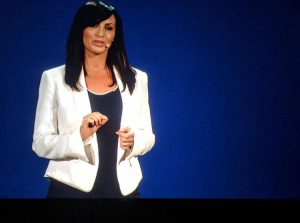
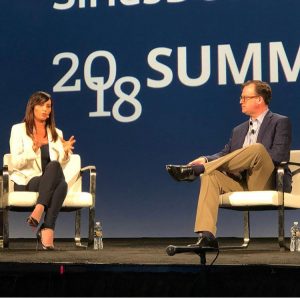
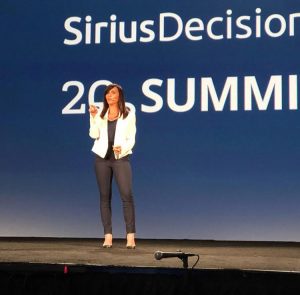
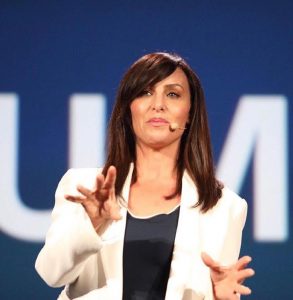
Molly Bloom recently took the stage at SiriusDecisions Summit 2018 in Las Vegas to tell her personal story about how she harnessed the power of storytelling throughout her vast career to live an extraordinary life. By now you’ve seen her movie written by Aaron Sorkin, Molly’s Game, but that’s only a chapter in Molly’s strategic storytelling.

Molly has branded herself and her businesses through the art of storytelling. Whether you know it or not, you have a story in you waiting to help you brand your business, your book, or even yourself. Take Molly’s example and write your story with a great ending in mind.


1. The transition from pro skier to poker entrepreneur

Molly grew up competitive skiing the Rocky Mountains of Colorado, and although you may know her as the woman who dominated the poker world, she actually first made a name for herself in the cut-throat world of professional skiing.

As a young girl, she was diagnosed with severe scoliosis that doctors said would end her ski career. She thought otherwise. Her determination helped her fight through painful surgeries and an even more trying recovery period.

Her unwavering self-actualization carried her to the U.S. ski team where she ranked third in North American Moguls. She was on the up when a particularly bad fall made the scoliosis pain unbearable and ended her skiing career before she could take on the Olympics.

It was then that she needed to rewrite the story of her life. Everything she had worked so hard for—her vision of greatness, the legacy she saw herself leaving—was gone. She recommitted herself to greatness within a new narrative. She moved to L.A. and took a job as an executive assistant to learn a new trade from the ground up, rebranding herself in a new, corporate world.

2. Created the most coveted poker experience in the nation

After moving to L.A. her new narrative took form in the elusive world of underground poker. It didn’t take Molly long to learn from her boss the nuances of hosting high-end, high-stakes poker games. When she finally broke free from her oppressive employer and started her own poker ring, she used storytelling to make a seat at her table the most sought-after experience in L.A.

Molly knew the men attending the games were rich and powerful enough to get whatever they wanted, so what do you give people who already have everything they want? She gave them an experience. She made every player feel like 007, surrounded by beautiful women, their favorite everything on hand, their whims predicted. She turned her poker games into a luxurious escape; a seat at her table meant you could be anyone for the night.

She branded her poker business by creating a story where her players were the protagonist (or antagonist if they so wished) in a fantasy world centered around themselves. It was a change from the dingy, underground poker rings most players were used to, and it was so successful it attracted stars like Leonardo DiCaprio, Ben Affleck, A-Rod, and others.

3. Rebuilt after the federal government took everything

But it didn’t last forever. Due to some reckless decisions on Molly’s part (all of which she sees as lessons for her future career), the federal government took down her poker game. After her poker business was brought to an abrupt end—and her federal indictments were resolved, she was left penniless with a seemingly tainted reputation. Instead of shaming herself into believing her path to greatness was ruined, she rewrote her story again… this time with the help of Aaron Sorkin.

Molly looked for the silver lining, and even though it looked silk-string thin, she found it. She had built herself up in L.A., did it again in New York, worked with some of the biggest names in film and sports, been threatened by the mafia, and federally indicted. She had her story.

In true entrepreneurial fashion, she took what felt like her last resource and turned it into a new career as an author, entrepreneur, and speaker. Her book was adapted into an Oscar-nominated film written by Aaron Sorkin. Once again her path to greatness was wiped off the map by life’s mudslides, so she trekked into new territory and rebuilt anew to make her mark on the world.

Great YPO Keynote Speakers and Facilitators for Your Next Event

As seen on BigSpeak.com

At BigSpeak, we share the same mission as the Young Presidents Organization (YPO): to create and foster better leaders through lifelong learning and idea exchange. The YPO fosters better leadership among its 24,000 members in over 130 countries by providing a place to meet and network, and to see invited speakers who can share engaging ideas.

We at BigSpeak are not only members of YPO and YPO Gold, but we also make it our mission to foster better leadership and exchange of ideas. Daily, we help find thought leaders and inspiring keynote speakers for corporate events and workshops so leaders can gain actionable advice, learn insights into industry trends, and be inspired by life-changing stories.

Over the years, we have found great YPO keynote speakers and facilitators who have given highly rated talks or experiential programs for YPO Chapters in San Antonio, Miami, Santa Barbara, Bahamas, and British Columbia, just to name a few. These keynote speakers provided engaging and interactive presentations with compelling content and actionable takeaways that leaders can use in their businesses and their own lives today.

Great YPO Speakers 

Peter Zeihan 

9.91 YPO speaker rating. Geopolitical strategist. Peter provides organizations with insights to meet geopolitical challenges coming from global energy, demographics, and security.

Jeff DeGraff

9.61 YPO speaker rating. The “Dean of Innovation.” Jeff provides actionable takeaways on how organizations can innovate better to thrive in changing markets.

Matthew Luhn 

9.49 YPO speaker rating. Former Pixar animator and story artist. Matthew shows how businesses can use storytelling to sell and market their products and services by connecting ideas to a narrative.

Robert Richman 

9.42 YPO speaker rating. Former culture architect at Zappos. Robert has helped many Fortune 1000 companies by running workshops to co-create solutions and improve company culture.

Pat Williams 

9.25 YPO speaker rating. Senior Vice President of the Orlando Magic. Pat is a motivational speaker and a master of marketing, who helped co-found the NBA franchise in Orlando.

Brian Siever 

Sales expert on the future of sales, selling motivation, sales enablement, millennial leadership principles, and organizational culture. Bryan provides actionable takeaways from his 20+ years of industry experience building and leading sales, sales enablement and product operations for B2C and B2B organizations.

New Speakers With Fresh Insights

Robyn Benincasa

Adventure Racing World Champion. Based on her winning experiences in high-performance teams, Robyn provides actionable takeaways for inspired leadership.

Molly Bloom

Poker entrepreneur featured in the film Molly’s Game. Molly provides insights into female entrepreneurship from her experience of growing her poker business from scratch into a multimillion-dollar enterprise.

Jia Jiang

Resilience expert. Jia provides takeaways on how to handle rejection and become rejection-proof based on his own experiment with 100 Days of Rejection.

Omar Johnson

Former CMO of Beats By Dre. Omar is a branding genius, helping to grow Beats into an international brand on a low marketing budget.

Alden Mills

Co-founder of Perfect Fitness and former Navy Seal. Alden uses riveting storytelling and innovative teaching methodologies to show how to promote and sell your business.

Robert Sutton

Organizational change expert and author of The No Asshole Rule. Robert provides insights on the causes and cures of friction in companies.

See Below For More Top Keynote Speakers:

Top Business Keynote Speakers

All Top Keynote Speakers

Learn More:

As the leading business speakers bureau, BigSpeak has the knowledge and experience to find the engaging keynote speakers who can inspire your chapter members with compelling stories from their own experiences, while providing key takeaways each member can use to become a better leader.


The content writers at BigSpeak Speakers Bureau are Experts on the Experts. They hold doctoral, masters, and bachelors’ degrees in business, writing, literature, and education. Their business thought pieces are published regularly in leading business publications. Working in close association with the top business, entrepreneur, and motivational speakers, BigSpeak content writers are at the forefront of industry trends and research.

How to Book a Celebrity Speaker

As seen in BigSpeak.com

So you want to book a big famous celebrity to speak at your event? But how do you go about hiring such a person? How do you even get their attention? What do you need to know?

Don’t worry, we got this. It doesn’t matter if you’re interested in the latest reality TV star or a world-famous A-List celeb, a speakers bureau can help you contact the right people to reach the star of your dreams and seal the deal.

Celebrities are a great draw for any event. A celeb’s name recognition alone can drive sales and sell out your event, as well as generate buzz and provide free advertising.

What you should know before booking:

Your budget. It’s no surprise that celebs cost more than a thought leader. Be ready to pay a little more for their added value. Celeb prices start around 50,000 for a household name and can go into the mid-six figures for globally recognized stars.

Your date. Have the dates fixed before you make the call to book a celebrity (or any speaker, really). Most celebs have jobs (doing what makes them famous) as well as other engagements. Without a fixed date, celebs will not be able to commit to your event.

Your location. Having your event location determined will help with booking a celeb. If you’re in a major city like New York or Los Angeles, you’ll have a wider selection of local celebs—who can even commit on short notice. For other cities, and international events, you’ll want more time to book a celeb.

Your audience. Who will be attending this event? Match the interests of your attendees with the celeb you book. You probably don’t want a rock star for your evangelical event or a model to speak to engineers (or maybe you do). Likewise, you probably don’t want the typical white, male speaker to address your women of color empowerment conference. You’ll be better able to attract a celeb if your audience interests match the celeb’s.

Your purpose. To choose the perfect celebrity for your event, know your purpose for having one speak. Do you want to motivate, entertain, bring awareness, or raise money for a cause?

Don’t just book a famous name for the sake of having a famous name. While a big name can drive sales, having the right celeb for the right purpose can increase attendee satisfaction and your return on investment.

Your presentation type. Do you want a keynote speaker who will deliver a set talk? Or would you like a moderated Q&A. Remember that celebrities are not just famous for being famous (even Kim Kardashian is an expert on branding and marketing), they are also subject matter experts and can add definite value for your attendees, especially when using moderated Q&As where you can let them do a deep dive into a subject.

Your team. You’ll want to have all the decision-makers in place before making inquiries. Since celebrities are in demand, you’ll want to be able to say yes as soon as they do. If you don’t have all the decision-makers in place, you could lose a great celebrity speaker from too much delay.

Your expectations. Celebrities have different requirements than your usual keynote speaker. You may have to pick out all the brown M&Ms. For more on this, check out the article “What to expect when booking a celebrity speaker.”


Kyle Crocco is the Content Marketing Coordinator at BigSpeak Speakers Bureau, a graduate of UC Santa Barbara, and the lead singer of Duh Professors. He regularly publishes business book reviews and thought articles on Medium, Business 2 Community, and Born 2 Invest.
Five Reasons Why the US Will Benefit from Future Global Finance and Economic Trends

As seen on BigSpeak.com

Changing demographics and rise of automation will pose new challenges and rewards

You wake up and tell your flat screen to turn on so you can watch the morning financial news. As your personal robot delivers you a warm cup of coffee, you learn about continued stagnant growth in Europe, more jobs are being reduced by automation in China and India, and factories are returning to the U.S.

Is this a dream or is the future? According to these thought leaders, these are some of the demographic, technological, and financial trends heading your way. The good news is that there is a lot of good news in your economic future.

Here is a preview of what’s to come in the not too distant future.

1. Changing demographics will impoverish Europe, China, and India. According to geopolitical expert Peter Zeihan, the world is getting old. While this is great for cosmetic surgeons, this change in demographics will impoverish rather than enrichen the majority of people in Europe, China, and India. In Europe, there are not enough young people to help grow and stimulate the economy.

For China and India, the situation is a little more dire because these countries were not rich to begin with. Instead of going forward, the aging population will make them lose ground.

2. Automation will bring manufacturing back to the U.S. According to disruptive change expert Kevin Surace, automation is going to change the economic landscape. Any job that is simple and routine, like many manufacturing jobs, will be replaced by a machine.

China and India, where much of U.S. manufacturing of takes place, will be two of the biggest economies affected by automation. In fact, they are already losing jobs to machines. Surace points to his own A.I. software testing program, which is replacing the need for human software testers in India.

This bad news for China and India will be good news for the U.S. in terms of manufacturing returning to the U.S. When most manufacturing is done by machines, there is no longer any need to have operations outsourced. While there will be fewer routine jobs in factories, employment will increase from the non-routine jobs associated with factory output.

Machines will free us from drudgery. While routine jobs will be lost to machines, the good news is that people will be freed from the shackles of working like machines. According to Andrew McAfee, more jobs and opportunities will be open for non-routine tasks.

These new jobs will be more rewarding and challenge us, leading to more fulfilling careers where we can explore and learn. For those who are displaced, McAfee says they will benefit from passage of bills for a universal basic income.

Free trade will bring peace and lower priced goods. While free trade is currently under threat by the present administration, the world as a whole is moving towards a market where goods will move without restrictions or tariffs. Trading unions are forming in the Pacific and Europe that will allow the free exchange of goods with the U.S.

According to free trade expert, David Dreier, free trade is the key to world peace and prosperity. Free trade was instrumental to democracy and peace following World War II. Despite what you may think from watching the news, the world is actually a far more peaceful place than when there were tariffs in place.

Tariffs are more of a threat than terrorism. Dreier points to Smoot-Hawley Tariff Act passed by the U.S. during the Depression, which not only created worse economic conditions for the U.S. and abroad, but also helped lead to the rise of political extremism and leaders like Hitler.

Banking will become decentralized. Blockchain technology will disrupt the way we exchange value. While we all know about bitcoin and the wild west of digital currencies, it is really the technology behind these currencies—blockchain—that will change the way finance, trade, and business work in the future.

According to blockchain expert Bettina Warburg, blockchain lowers uncertainty about one another (builds trust) so we can exchange value (sell goods and services) with greater ease. Blockchain will eliminate the need for the traditional middle-man institutions of banks or governments which helped lower uncertainty in the past.

Without the need for banks or governments to ensure transactions, the result will be a distributed, transparent, autonomous system for exchanging value, which is cheaper to use.

The changes, of course, won’t be easy, but the prospects for U.S. business look good with more opportunity ahead.


Kyle Crocco is the Content Marketing Coordinator at BigSpeak, the amazing lead singer of the Duh Professors, and thinks cardio box is a great way to rip up your core.

Omar Johnson Stole the Show at Domopalooza 2018

As seen on BigSpeak.com

Omar Johnson stole the show at this year’s Domopalooza. His insights into the branding that propelled Beats By Dre headphones to the number one spot in premier headphones had the entire conference buzzing.

Johnson gave the opening keynote speech for the five-day conference in Salt Lake City, Utah. He spoke alongside thought leaders like Josh James, Phil Jackson, Catherine Wong, and Matt Cohler, and while all speakers showed their industry knowledge, Johnson’s story of Beats’ innovative marketing strategy captivated the audience.

He connected with the crowd by sharing how he was nervous to launch Beats marketing campaigns with a limited budget, especially after coming from Nike, where he was able to produce ads with boundless resources.

With determination to prove himself and his product, he wrote out an equation that guided his Beats marketing strategy–

Brand = Product + People + Storytelling

From there Johnson focused on the people. While you need to have an excellent product to success, having an excellent product does not ensure success. He determined that people were the key element in he equation; the people who consume the product, the people who make the product, and the people who will love and promote the product.

The three most successful social campaigns for Beats were born from this idea. His team listened to the stories of his ideal consumer—professional athletes. In discussing their pre-game rituals, Johnson and his team found the perfect positioning for Beats. They launched their “Above the Noise” campaign, promoting Beats headphones’ noise cancellation feature to block out the negativity all professional athletes experience before a game.

Next, he turned to the best athletes in the world and marketed to the Olympics. He created the Beats Lounge at the 2012 Olympic games where the athletes were offered protection from the paparazzi and conditions that were luxurious compared to the dorm-style living of the Olympic village. Once again, he gave the people what they wanted and because of it every Olympian was wearing Beats headphones before they competed.

In 2015 Johnson launched the biggest social campaign of the year and spent virtually nothing. After the premiere of “Straight Outta Compton,” Johnson’s team realized everyone has a connection to their origins, whether it’s a hometown, a person, or a legacy. They created a simple graphic with the “Straight Outta Compton” logo, their logo, and the ability to interchange Compton with anything the consumer wanted—to tell their personal story.

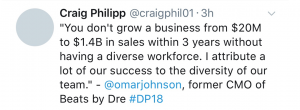
After laying out the bare bones of the Beats empire, Johnson credited most of the success to his diverse team. He told his audience the people you work with are just as important as the people who buy your product. It was actually a group of millennials who were “straight outta college” that came up with the Compton idea. A truly talented team will be made up of young, old, black, brown, blonde, and pink haired people, because every person will bring something different to the table.

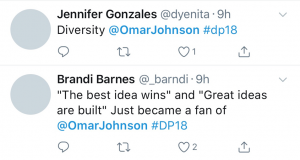
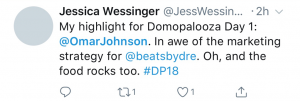
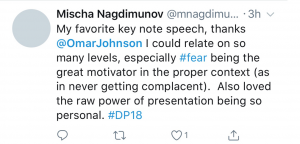
His message hit home for a number of attendees and the social media response was overwhelming. Here are some tweets that speak to Johnson’s impactfulness.

How to Create an Experiential Event

As seen on BigSpeak.com

Are attendees zoning out and going comatose at your events or corporate meetings? They may have contracted Conference Coma.

Conference Coma is the debilitating epidemic plaguing boardrooms and conference halls across the globe. Symptoms include: open-eye napping, compulsive texting, Tweeting, and swiping right, and, in severe cases, post-event amnesia. To combat the debilitating effects of conference coma, experts recommend a healthy dose of experiential corporate events.

Keeping team members engaged and involved during keynote events and meetings is not just about entertainment, it’s also about improving comprehension, information retention, and boosting performance.

According to Harvard Magazine, experiential learning is multi-sensory and participative. It is highly effective because it engages the senses in a way that promotes learning and comprehension on multiple levels. The same hands-on, experiential learning concept can be applied to the business world. While the feedback from experiential keynote events are undeniably positive, the possibilities for greater comprehension and information retention are even more worthwhile. The out-of-the-box approach means that each event can be uniquely tailored to speak to your audience and get team members involved, and learning.

Here are a few curative ideas to implement into your next event:

Use Tech as a Tool

Use every resource available to engage audience members, especially technology. Keynote speakers who utilize apps and interactive technology add a hands-on element that keeps audiences invested in meetings. For example, technology and futurist speaker Tan Le utilizes a live “mind reading” demonstration with her Emotiv headset to get the audience thinking in new ways about innovation.

Laugh it up

Who said meetings had to be so serious? More businesses are incorporating games into their experiential meetings to get people moving, thinking, and laughing. Take Adam Christing, who use improv games, magic, and comedy to tackle major organizational culture issues. Incorporating games and humor into your meeting is not only fun, but also a great way to drive home a message that your teams won’t forget.

Incorporate visual and sensory experiences

Music and art can help create an immersive conference experience that grabs attention and enhances retention. For example, Daymond John brings in a DJ to create a memorable and experiential keynote. Pop/Rock recording artist Steve Acho gathers information from clients to create an original song about their company. And Chic Streetman uses storytelling, music, and theater techniques in his workshop to help participants strengthen their ability to connect with others.

Use an emcee or host

An emcee or host can connect the dots of each message, provide surprise, humor, and strategic truth-telling. Comedic hosts like Taylor Hughes also prime the audience for the keynote speaker by raising audience energy levels right before the speaker steps on stage.

Create a theme for your event or meeting

Creating a theme around your corporate meeting or keynote event gets everyone thinking on the same page and highlights the desired takeaway message of the event. For example, a team building event with the Afterburner fighter-pilots could be themed “flawless execution” or a corporate meeting with Juliet Funt could be centered around the theme of reclaiming time to think, or what she calls “white space.”

Award your event attendees

An awards celebration is another potential end-of-conference activity to keep attendees engaged. The awards should be given for participation in the conference, not for success in event games or questions answered correctly. This encourages people to stick around to see if they win and energizes them to participate in the first place.

Deliver the content that you would want to stay for

This one should be obvious, but the most surefire way to keep attendees at your conference is by delivering thought-provoking and insightful content that they won’t get anywhere else. If attendees genuinely feel like they’d miss out on a valuable experience if they weren’t there, then they won’t leave early unless they absolutely have to.

Use data to personalize the experience 

Nowadays there are event technology vendors that will help you gather data about what your audience wants. By collecting data beforehand in a survey or questionnaire, you can personalize the type of engagement to your audience’s preferences. Do you guest want to network and freely chat or would they prefer a more structured keynote? Maybe they want a moderated talk or a more intimate Q&A with your speaker. With event technology vendors you can specifiy your event to be EXACTLY what your audience wants.

Don’t forget the basics

Good food, enticing venues, engaging speakers, unexpected delights, and meaningful music/staging go a long way! Also, make sure all of the speaker’s content supports each other and the purpose of your event/meeting, without being repetitive.

Follow these tips and you’re on your way to curing conference coma by creating an engaging, memorable, and comprehensive keynote event or corporate meeting.


The content writers at BigSpeak Speakers Bureau are Experts on the Experts. They hold doctoral, masters, and bachelors’ degrees in business, writing, literature, and education. Their business thought pieces are published regularly in leading business publications. Working in close association with the top business, entrepreneur, and motivational speakers, BigSpeak content writers are at the forefront of industry trends and research.

Mark Pollock’s Inspiring Journey of a Million Steps

As seen on BigSpeak.com

Mark Pollock’s story is one of true resilience and dedication. At the age of five, he lost sight in his right eye due to a genetic disease and was forced to stop playing contact sports to protect his remaining eyesight. It wasn’t until he was twenty-two that he went completely blind as his retina detached from the eye.

For most, this would’ve severely hindered their lives, and Pollock admits it did for a time being. He assumed total blindness meant no social life, no career, no work, no sports. But those assumptions faded as he quickly realized his capabilities through disability courses that helped him cope and move forward.

It wasn’t long after that he acquainted himself with rowing, winning a bronze and silver medal in the 2002 Commonwealth Rowing Championship. In 2003, he ran six marathons in seven days alongside a sighted guide in the Gobi Desert (China) to raise thousands of euros for Sightsavers International. A year later he ran the North Pole Marathon to celebrate his resilience on the sixth anniversary of his blindness. To tackle his tenth anniversary, he decided to race to the South Pole in the Amundsen Omega 3 South Pole Race. His team was one of six teams to finish and ranked fifth out of the total nine teams, making him the first blind man to race to the South Pole.

To help inspire others he wrote Making It Happen, a book about the process of rebuilding your life with a disability.

In 2010, a new tragedy left Pollock repurposing the lessons he wrote about. He fell from a two-story window and became paralyzed from the waist down. Since his accident, he has committed himself to living a prosperous and action-packed life.

He continues with his pioneering spirit as the world’s leading test pilot for Ekso Bionic robotic legs. Using this technology, Mark has walked over 1 million steps and is able to feel sensations in his legs. When he first started, each step took about 15 seconds, but now he walks much more freely.

In 2012, Pollock started the Mark Pollock Trust to bring together leaders from different industries to fast-track a cure for paralysis. The goal has been set at putting $400,000 yearly towards research and development to change the lives of the 60 million people who suffer from paralysis around the world and the 2.5 million people who specifically endure spinal cord injuries.

He and his wife recently took the 2018 Global TED stage in Vancouver and was featured in their series “The Age of Amazement.” He travels the world speaking to organizations and companies about resilience, collaboration, and innovation.

Keynote Experts Speak Out About the Facebook Controversy

As seen on BigSpeak.com

What does this latest controversy mean for Facebook? Should we all delete Facebook and revive our MySpace accounts? Will our private information remain private or be just as unsafe as always?

After watching Mark Zuckerberg testify you might come away with absolutely no answers to the above questions but a feeling that 1) the old guard of Congress have no idea how Facebook and social media work, 2) the congress members are somewhat starstruck by international celebrities, and 3) that social media as we know it is going to end…or maybe not.

How did we get here?

The warning signs for Facebook’s troubles were fired much earlier this year when Unilever (owner of Dove, Lipton, and Ben & Jerry’s), one of the world’s top advertisers, threatened to pull their advertising from digital platforms that had become “swamps” of fake news and hate rhetoric.

Keith Weed, Unilever marketing boss, stated, “We cannot continue to prop up a digital supply chain … which at times is little better than a swamp in terms of its transparency.”

According to CNN Money, Unilever has an annual marketing budget of nearly 10 billions and 25% of its ads are digital, so its impact would be huge.

The final blow came with the Cambridge Analytica controversy in which the data of over 87 million users was shared with the Trump campaign during the 2016 Presidential election.

#DeleteFacebook

In the wake of privacy concerns and lack of control over Facebook’s shared content, a campaign to delete facebook went viral.

Prominent among the deleters was none other than Steve Wozniak, co-founder of Apple Computers, who said he was leaving Facebook over concerns of how Facebook treats users’ private information.

In an email to USA Today, Wozniak explained, “Users provide every detail of their life to Facebook and … The profits are all based on the user’s info, but the users get none of the profits back.”

Data is the new oil

Chris Kelly, who was employee number 25 and served as Chief Privacy Officer, General Counsel, and Head of Global Public Policy for Facebook, adds that “data is the new oil.” Everyone is finding ways to make money off it and drilling new wells of data everywhere.

The controversy’s effect

While the price of the stock went down initially from a peak of $185 on March 16 before the scandal broke, the price of the stock recovered some ground when Zuckerberg testified.

Kevin O’Leary of Shark Tank fame believes that the controversy will have little effect on the business model of Facebook and that the controversy will blow over in two months.

On CNBC, O’Leary said, “I bet in two months, after all this blows over, their cash flows will be up, not down, because there’s nowhere else to go.”

Facebook’s advantage and strength are that they have 2.2 billion users and specialized tools for targeted advertising, which are too useful for businesses to ignore.

What’s right doesn’t always win

Facebook has nothing to worry about. Facebook is following the typical path of fame. We champion a company’s rise, marvel at its triumphs, grow tired of the company, watch it fall from grace due to some scandal, only to see it rise again. Call it the zig-zag of long-term success.

As for our personal and private data…until better encryption tools are made, you should know that everything you do online is potentially public—from what you look at to what you purchase to who you interact with. It’s the price we pay for the price we don’t pay to use the services.


Kyle Crocco is the Content Marketing Coordinator at BigSpeak Speakers Bureau, a graduate of UC Santa Barbara, and the lead singer of Duh Professors. He regularly publishes business book reviews and thought articles on Medium, Business 2 Community, and Born 2 Invest.