
6 Ways To Nail Your Client’s Holiday Gifts

As seen on BigSpeak.com

The holiday season is an excellent time to build new client relationships and stoke the fire under the ones that have grown cold throughout the year. Client presents are the gifts that keep on giving because investing in these relationships means return business for you. There’s no better way to get your clients’ attention then with a meaningful gift that speaks to them on a deeper level.

Anybody who has received a necktie or candle knows there’s an art to gift giving…one that many of us are not well versed in. When it comes to a relationship as delicate as your clients, you really don’t want to mess it up. We’ve put together some guidelines to help you navigate client wishlists.

Things to remember when shopping for client gifts

  1. Personalize your gifts. Sending the generic Ghirardelli chocolates might put a smile on your client’s face, but it won’t differentiate you and keep you in his or her memory when planning next years big event. If you want to stand out you need to personalize each gift to the client. This may be the only time you’ll ever be upset about having a long client list, but there are quick and easy ways to customize. Take for instance the sock company, Foot Cardigan, who makes fun and quirky socks that can be shipped all over the world. By doing a little social media research, it’s easy to send your dog-loving client pug socks and your beach bum client surf socks.
  2. But don’t get too personal. While everyone can appreciate a gift tailored to their tastes, there’s a line that shouldn’t be crossed. It’s best to steer clear of anything the client is supposed to put on his or her body: perfume, lotions, jewelry. These gifts can turn sour for two reasons. Scented gifts leave room for the client to interpret you think they smell or they may even be taken as a come-on.
  3. Use the gift to tell about you. A holiday gift is a way to create a deeper connection with the client. You want it to stay in their memory. The best way is to send a gift that tells your story. If you’re based somewhere interesting send a memento that’s unique with a little note letting them know they’re being thought about all around the world.
  4. Keep it non-denominational. It’s hard to be 100 percent sure what religion or belief system your clients’ practice. Just to be safe, stick with something festive for everyone. Nowadays it’s easy to find winter-themed gifts and wrapping that don’t signify any certain religion, yet still bring all the good ol’ fashion holiday cheer.
  5. Make it experiential. To help build your clients’ muscle memory around you and your brand give them something they can interact with. An easy and relaxing experiential gift is sending your clients to a spa day or massage. Something a little more out of the box could be sending Vector, a personalized desk robot. This little guy lives on your desk and uses facial recognition and a voice integrated AI to communicate with you.
  6. Don’t forget about allergies. Food is always a fan-favorite during the holidays. Everyone loves a good treat delivered right to their office during the time of guilt-free indulgence. So, make sure they’ll be able to enjoy it. Avoid nuts and soy. If you really want to be safe, get rid of dairy and gluten as well. You don’t want to be the reason your client ends up in the hospital on Christmas Eve.

If you follow these guidelines and add your own personal flair to the gift, you’re a sure bet to be the first person your client calls in the new year.


Jessica Welch is the Content Marketing Associate at BigSpeak Speakers Bureau, holding a Bachelor’s Degree in English Literature and Anthropology from California Polytechnic State University, San Luis Obispo. Her business thought articles often appear on Business 2 Community, Born 2 Invest, and YF Entrepreneurs.


BigSpeak Thought Leader Predictions for 2019 and Beyond

As seen on BigSpeak.com

What do you think of when you think of the future? Do you imagine robots, trips to space, and voice-activated computers? That’s the standard responses when anyone is asked about the future. That’s why we decided to also reach out to speakers outside of tech to see what the near future looks like in people terms. We asked experts in creativity, neuroscience, geopolitics and more to tell us what they thought. The answers were as surprising as they were diverse.

Erik Qualman, Top Technology and Motivational Speaker, & Futurist

We will vote for presidents and prime ministers via our mobile devices. Voice search will supplant text searches. We will have more conversations with bots and artificial intelligence than our significant others. Self-driving cars will dramatically reduce pollution, congestion, and accidents. Blockchain will be referenced like Y2K. Despite improvements in holograms, great speakers will still be in demand.

Jeff DeGraff, Top Innovation Speaker and “Dean of Innovation”

More 5 years than 2019:

Boundaryless communication and ever smaller and cheaper microprocessors will fulfill the promise of artificial intelligence: better health care, transportation, and education. Political and economic institutions and systems will struggle to adapt at the speed and magnitude of these innovations. Sustainability solutions will drive the next big growth market.

Carmen Simon, PH.D., Cognitive Neuroscientist and Executive Coach

As a cognitive neuroscientist, I predict that advancements in studying and understanding the brain with advanced imaging technologies and computer modeling will continue to grow, not linearly but exponentially. This will be great news for all of us in business because all your customers have a brain. The more you understand it, the easier it will be to know when to captivate it and when to leave it alone.

Mark Pollock, Explorer and Innovator

Up to this point in history it has proven to be impossible to find a cure for paralysis. Yet history is filled with accounts of the impossible made possible through human endeavour.

The kind of human endeavour that took explorers to the South Pole at the start of the last century. And, the kind of human endeavour that will take a new wave of adventurers to Mars in the early part of this century.

Inspired by those stories of exploration, I began asking myself why can’t that same human endeavour cure paralysis in our lifetime? Today, as we explore the intersection where humans and technology collide, we believe it can. That’s what we’re working on for 2019.

Natalie Nixon, Ph.D., Innovation Strategist & President of Figure 8 Thinking

The most successful companies in the next 5 years will be those that stop planning and start improvising. Plans are fiction: they haven’t happened yet. The competitive landscape will be more ambiguous and complex. Thus, an organization’s Creativity Quotient will be more essential than ever. Use technology to amplify curiosity, intuition and creativity in order to grow exponentially. This will make all the difference in the world.

Peter Guber, Hollywood Legend and Co-Owner of Golden State Warriors and L.A. Dodgers

The adventure of fishing for what lies ahead. The next five years will require one to cast their line over the horizon where you can’t see. When you feel the tug of a dream, don’t try to pull it to where you are…allow it to draw you in and trust that you will have the inspiration and perspiration to recognize and realize it’s potential.

Peter Zeihan, Geopolitical Strategist

Seventy years of global stability will unwind—violently—in 2019. The American alliance system collapses, a hard Brexit devastates London, the US-China trade war turns brutal, and that’s just the year through March!

Robyn Benincasa, Top Leadership Speaker, Adventure Racing World Champion, CNN Hero

Because we’re bombarded with so much tech every day, I think that to really break through the clutter and connect, people go back to writing personal notes and handwritten cards.

Srinivas Rao, Host of the Unmistakable Creative

Artificial intelligence will play a big role in replacing any work that is repetitive. Even cognitively demanding but repetitive work will be replaced by automation.  So creativity will be essential to people’s success professionally and personally.

Tan Le, Innovative Technology and Founder and CEO of Emotiv

In the next decade, emerging next-generation technologies for brain enhancement will transform the way we think, work, and heal in wondrous and unexpected ways. It’s the dawn of a new era I call the NeuroGeneration, and it will be characterized by the seamless integration of the physical, digital, and biological realms—a blurring of human and machine.

Kevin Surace, Creator of the first Smart Phone and Digital Assistant

Artificial Intelligence will continue to creep into our lives, slowly, and augment our workplace to make our lives far better and more productive. While some jobs will be lost, the overall gain in jobs will outpace what AI replaces for the next 10-20 years in the U.S. It’s truly an exciting time to be alive!

Tien Tzuo, Foremost Expert of the Subscription Economy

The GDP will become obsolete in 5 years. The current definition of GDP (much like the current definitions of GAAP revenue) is a past-tense framework. It simply does not capture the value of recurring revenue. To our national GDP, a dollar is a dollar, representing a discrete, finite value. Needless to say, there are no discrete, finite values in the Subscription Economy—the goal is to sustain ongoing lifetime customer value for decades. Subscription companies have all sorts of revenue that they can count on but can’t formally recognize, and if you throw upgrades and bundling into the mix, these revenue figures quickly start diverging from standard GDP metrics. Hundreds of billions of dollars of economic activity is not being defined or categorized correctly.
Mitch Lowe, CEO of MoviePass and Co-Founding Executive of Netflix

Whatever 2019 brings for sure there will be some big surprises and shockers.

How to Handle Holiday Stress In the Office

As seen on BigSpeak.com

With all the holiday cheer comes gift shopping, party planning, home decorating, and a million other to-do’s added to your already pressing work deadlines. Finishing out the quarter and year often means late nights at the office and ever-surmounting stress. During the holidays more than ever, it’s important to put forward a conscious effort to reduce your stress and cope with the chaos of the season. Here are some tips and tricks for keeping your stress in check this holiday season.

Set gift guidelines.

Every year there’s stress surrounding who you should buy a gift for and how much you should spend. Eliminate all of that right out the gates by setting gift-giving guidelines. It’s nice to set a price cap on gifts around the office—something that everyone feels comfortable with. If people feel the need to exceed it, they can give their gifts outside of work. Maybe your office decides there will be no gift exchange during company hours if it’s too messy. Making a team decision on gifts will give you one less awkward social encounter to worry about this holiday season.

Express gratitude.

Keep in mind the holidays are stressful for everyone. You’re feeling all of the seasonal pressures on the home front, as well as dealing with quickly approaching deadlines at work. You should assume everyone’s in the same boat. If you take the time to express your gratitude for your coworkers, you will shift your work environment to a more positive vibe, despite the stress. Positivity is contagious and once you start a trend, others will follow.

Watch your food and drink intake.

There are a lot of temptations during the holidays: chocolates and cookies around the office, big meals to celebrate with family, and lots of alcohol to keep warm. Snacking around the office and sampling each gift that’s sent to your team will catch up with you. Around this time of year, people are getting less sun and find themselves a little more down than usual. If you add weight gain and drinking to the mix, your mood may be severely affected. Of course, indulging every once in a while is welcomed. Just try to be aware of what you are putting into your body.

Keep up your exercise.

The days feel shorter in the winter with the sun setting around the time most of us get off work, but it’s important to keep up your exercise. This, along with dropping temperatures can be difficult for those of us who prefer outdoor activities after work. Well folks, it’s time to join a gym or set your alarm a bit earlier because maintaining an active lifestyle will keep your mood upbeat and help you manage your stress levels. As soon as you abandon your workout routine you take away your body’s best stress outlet. Find a way to burn off that stress energy.

Be inclusive.

With an ever-diversifying workplace, it’s important to keep in mind everyone has a different ideology surrounding the holidays. For some, not knowing the right thing to do or say is a point of stress. Be open and accepting of every culture by asking how each person celebrates the holidays. The best way to make sure everyone feels included and seen during the holidays is to keep your gifts and parties in the workplace non-denominational.

Organize more than usual.

It’s time to crank up your organizational skills because you’re going to have to start fitting ten pounds of activities into a five-pound bag. End of the year means doubling up on meetings, holiday parties, and other time sucks that normally aren’t there. The only way to stay on top of all your tasks, while decreasing work hours because of obligatory gatherings is to over-organize. Schedule out your days down to the minute if need be. Buy an additional planner to map out your workday. Do whatever it takes to keep a clear head.

If things seem to be stacking too high to get to everything, prioritize your family and friends. When it comes down to it the holidays are a time to celebrate each other and according to Dr. Robert Waldginer’s 78-year long study on happiness, healthy and strong relationships with loved ones are what bring us the most happiness. Remember that when deciding between a family moment or a deadline.


Jessica Welch is the Content Marketing Associate at BigSpeak Speakers Bureau, holding a Bachelor’s Degree in English Literature and Anthropology from California Polytechnic State University, San Luis Obispo. Her business thought articles often appear on Business 2 Community, Born 2 Invest, and YF Entrepreneurs.

How Sales Enablement Consultant Roderick Jefferson Can Help Your Company Grow

As seen on BigSpeak.com

Has your sales team hit the wall? Are you having trouble getting the right people on board? Does it seem like your sales, marketing, human resources, and product development teams are speaking different languages? Is it taking too long to get to revenue?

If you have any of these problems, you might be in need of a sales enablement expert. Sales enablement is more than just training. Enablement is about changing the whole sales culture from recruiting to onboarding to decreasing the time to revenue to increasing rep productivity.

Roderick Jefferson has been a sales enablement expert for over twenty years, teaching, training, and turning around the sales cultures of established giants like Marketo, Oracle, Salesforce, and PayPal as well as many, many small and mid-sized companies. Recently, his excellent work was recognized with the award of Leading Sales Consultant in 2018 by SellingPower. Previously, he was recognized as Sales Onboarding Program of the Year by SiriusDecisions in 2015, beating out over 280 companies.

Jefferson took time out of his busy consulting schedule to chat with me about sales enablement.

Not a quick fix

Sales enablement is not a quick fix. Sales enablement consultants do not come in to “fix” broken things. That’s for IT specialists. Jefferson said enablement is about getting the whole organization into alignment. His consulting firm works with small and mid-sized companies to improve the sales experience from recruiting new hires to increasing close sales rates.

Holistic process

Sales enablement is a holistic process. It begins with recruiting the right people, onboarding them properly, and teaching them how to collaborate with other lines of business, including marketing, human resources, and product development.

Jefferson said the process goes in both directions—top down and bottom up, looking at leadership and salespeople—making sure the right people are in the right roles. In the long term, it’s about creating the best delivery mechanisms that are scalable and repeatable and will ultimately lead to increased revenue for your company.

For mature and hyper-growth companies

Sales enablement works for both mature and growing companies. In hyper-growth companies, Jefferson shows how to get people up to speed faster, cutting down the time to revenue. In mature companies, enablement is more about organizational alignment and getting salespeople on the same page as the customer.

Enhanced by technology

Technology has improved sales enablement. Jefferson explained content management systems are automating the processes that used to be manual. He sees artificial intelligence playing a greater role in sales coaching. Not only can automated systems record sales calls, but intelligent systems will help monitor and target the areas that need to be worked on right away.

To learn more about how sales enablement can help your company grow, contact BigSpeak Speakers Bureau today to book Roderick Jefferson.


Kyle Crocco is the Content Marketing Coordinator at BigSpeak Speakers Bureau, a graduate of UC Santa Barbara, and the lead singer of Duh Professors. He regularly publishes business book reviews and thought articles on Medium, Business 2 Community, and Born 2 Invest.

Sports Maven Peter Guber Expands Into New Arenas

As seen on BigSpeak.com

The Dodgers, The Golden State Warriors, Los Angeles Football Club—what do they all have in common? Peter Guber is at the helm of their ships. Not only has Guber dipped his toes into all the most popular sports (baseball, basketball, soccer), but he also breached the world of online gaming and esports with Team Liquid and AXiomatic. After taking ownership of an all-star team in almost every sport, Guber is restless to find new avenues for growth in the sports world.

Guber recently released his plans for an 18,000-seat stadium to be built in 2019. It will be privately funded and located in the Mission Bay area of San Francisco. The Chase Center will be home to Guber’s NBA team, The Golden State Warriors, moving them from their home base at the Oracle Arena in Oakland. While it will be primarily used for basketball, it will have a theater configuration and a view overlooking the water of the bay. Construction started in 2016 and it is estimated to be finished by 2020 at the latest.

This isn’t the first time Guber took on a sports arena. To accompany his new L.A. Football Club, Guber backed a $350 million soccer stadium for Major League Soccer in downtown L.A last year. This was the first open-air stadium the city has seen since the 1960s.


Jessica Welch is the Content Marketing Associate at BigSpeak Speakers Bureau, holding a Bachelor’s Degree in English Literature and Anthropology from California Polytechnic State University, San Luis Obispo. Her business thought articles often appear on Business 2 Community, Born 2 Invest, and YF Entrepreneurs.

Achieve Your Goals With the X-Pill Experience

As seen on BigSpeak.com

“The Xpill experience created the environment for people to tell the truth, to connect based on what’s most important to them, and to understand each other in a deeply empathetic way.”

— Nathan Cheong, Managing Director, Designs for Health.

What would happen if in real life you could take the red pill from the Matrix movie and wake up to the real world? Robert Richman, former Culture strategist of Zappos, decided to find out. So he created his own red pill, called the Xpill, and tested it on volunteers at Burning Man, at workshops, and with friends. The results were amazing. The Xpill changed lives.

Xpill box

What is the Xpill?

The pill had various incarnations. At Burning Man, Richman used red  Tic Tacs. Later, he made red pills filled with non-gmo, brown rice powder. And for fun, he created a purple pill in deference to the red AND blue pill of Matrix (so you could wake up to a new world and stay in the same at the same time).

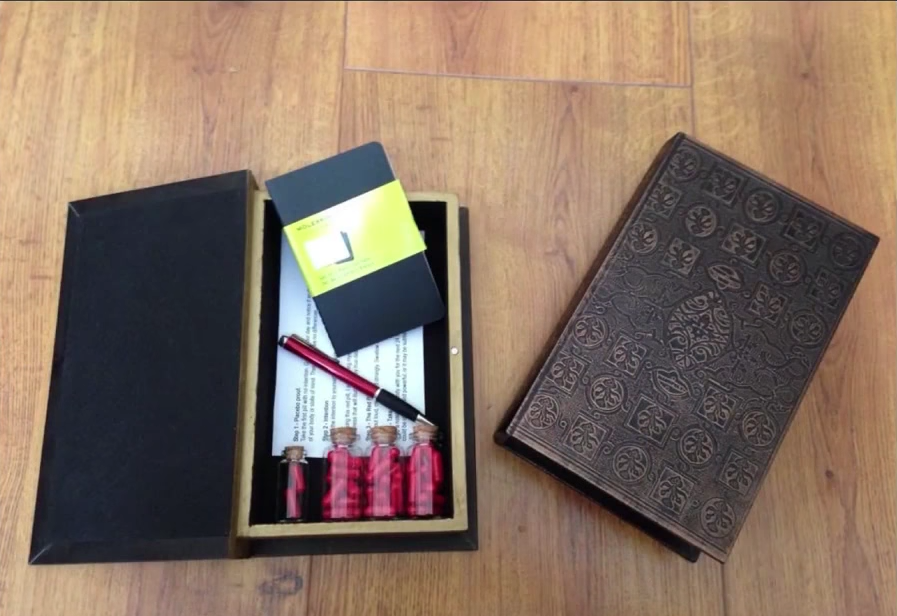
Sometimes getting the Xpill was a whole experience: Richman would send people a package that contained a secret book container, which included the pills, a journal, and instructions inside. No matter what the pills looked like, they had two things in common: no active ingredients and the power to change lives.

After taking the Xpill, people became better organized, started businesses, or found love. For each person who believed in the Xpill’s power, it changed their life.

How does the Xpill change lives with no active ingredients?

Simple. It wasn’t just the pill that changed their life, it was the whole experience of taking the pill.

Richman had each person who swallowed the Xpill follow a four-step process. Before swallowing, Richman requested each person set an intention (their goal), choose a date for completion, explain why they had this intention, and then share it publicly.

For example, one man who started a business said his goal was to start one in two weeks, and his reason why was so he could be rich and leave a legacy. Once he took the pill, he was so motivated he got his business ideas going in two days, not two weeks.

While these four steps are the same steps you would take when setting any goal, swallowing the Xpill made a difference in the outcome. Once you swallow the pill with an intention, Richman said, you can’t take it back.

To get the Xpill experience, contact BigSpeak Speakers Bureau today to book Robert Richman.


Kyle Crocco is the Content Marketing Coordinator at BigSpeak Speakers Bureau, a graduate of UC Santa Barbara, and the lead singer of Duh Professors. He regularly publishes business book reviews and thought articles on Medium, Business 2 Community, and Born 2 Invest.

Your Voice Is the New Killer App

As seen on BigSpeak.com

When Adam Cheyer and Dag Kittlaus developed the Siri application, it was quickly snatched up by Steve Jobs to be included with the iPhone. Siri debuted on the iPhone 4S in 2011 and entirely changed the world. Or not.

While Apple may have changed our productivity (or lack of) with smartphone apps, they dropped the ball on voice apps. Seven years later, you can’t do much more than open up applications, send a text, or ask for a song to be played. Not exactly groundbreaking.

In an interview with Mad Money’s Jim Cramer, Dag Kittlaus revealed that’s all about to change. The wide world of voice apps is coming to a Samsung smartphone near you. Since leaving Apple, Kittlaus and Cheyer developed a more advanced voice app called Bixby, which can be found on Samsung phones.

Now Kittlaus and Cheyer are opening up the Bixby voice app to third-party developers, much in the same way that Apple opened up the iPhone apps to third-party developers. Kittlaus expects an explosion of new voice-activated apps and a change in the way we interact with our phones.

“It’s absolutely going to happen,” he said. “Once you use that, you don’t go back to the old way.”

Dream to Live Extreme Through Project Athena

As seen on BigSpeak.com

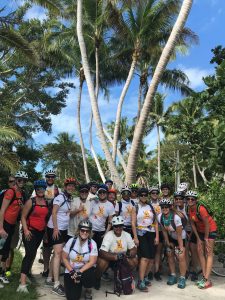
Our own BigSpeak team member, Daria Wagganer, joined Robyn Benincasa’s annual Project Athena trip to the Florida Keys to push her limits alongside other women overcoming medical and traumatic setbacks. The nonprofit, Project Athena, was founded by Benincasa to help women find their inner goddesses and achieve their biggest adventure goals in the face of any hardship.

The Florida Keys to Recovery trip took place November 15-19, lasting three days and covering 120 miles of the Floridian coastline. The team of 24 Athenas and volunteers started in Key Largo; then kayaked and cycled to Key West, while camping on the beach and enjoying local cuisine on the way. Through grants and fundraising, Project Athena adventures are available to anyone with a dream to live extreme.

BigSpeak’s daring sales consultant and bureau liaison Daria shared her personal motivations after her first day of the three-day venture.

First and foremost, I am doing this for three inspiring “Athenas” in my life—my grandmother, my mom and my sister…all cancer survivors (though my grandmother is no longer with us, she lived with non-Hodgkins lymphoma for 17 years before she died). My mom is a 12 year survivor of the same type of lymphoma, and my baby sister was diagnosed and treated for cervical cancer this past year. All three of them, and all of the Athenas on Robyn’s trip to the Keys this week are so inspiring—and making me appreciate my own health.

Second, I wanted to tackle something like this just to get out of my comfort zone, to try new sports, to appreciate the capabilities that my body has (while it still has them!). There’s nothing in the world like a concentrated dose of Robyn’s magic to make you feel unstoppable! Still, have two more days and “miles to go before we sleep,” but I’m feeling strong and optimistic rather than anxious and worried. That change alone was worth the whole trip!

Robyn Benincasa is a 2014 CNN Hero, San Diego Firefighter, ten-time Ironman Finisher, World Champion Adventure Racer, and three-time Guinness Endurance Paddling World Record holder.

After replacing both hips, the doctors told Robyn she would never be able to live the physically demanding life she was accustomed to, but Benincasa didn’t accept that fate. She continued to push her extreme limits and created the Project Athena Foundation. Her mission now is to inspire every Survivor she encounters to realize that it’s not about the setback, it’s about the comeback.

Her motivational speaking brings this tenacity to the business world by helping create unbreakable team bonds that will get your company through any challenge and inspire innovation by teaching audiences how to push the boundaries.


Jessica Welch is the Content Marketing Associate at BigSpeak Speakers Bureau, holding a Bachelor’s Degree in English Literature and Anthropology from California Polytechnic State University, San Luis Obispo. Her business thought articles often appear on Business 2 Community, Born 2 Invest, and YF Entrepreneurs.

Do This 1 Thing To Strengthen Your Life And Career

As seen on BigSpeak.com

This article was originally published by David K. William at Forbes

This week I had the chance to visit with Adam Markel, former attorney, entrepreneur and CEOof More Love Media. He’s also a bestselling author of the book “Pivot: The Art and Science of Reinventing Your Career and Life.

The book is an excellent read that re-examines the concept of “pivoting.” In my own life and career I have made several pivots. Each was painful but was also a vital step on the path of reaching my highest fulfillment and goals. As I look back on these events, I realize the greatest experiences of my life would not have occurred if I had not lived and learned from the phases of unexpected change and disappointment as well.

Adam Markel is a bestselling author, speaker and expert onperformance and leadership skillsMORE LOVE MEDIA

In business, the concept of the pivot is a frequent and even expected occurrence: “We created a gaming system. It works! But the market didn’t respond in the way we’d have liked, so the pivot is ….” (and the company moves to Plan B). Granted, there is much more to a successful business pivot than simply re-assigning a target, but failing fast, learning from missteps and moving forward with clarity is a concept I love.

In particular, Markel and I discussed his thoughts on resilience. As a principle, I regard resilience so highly that it is one of the key principles in my own book, “The 7 Non-Negotiables of Winning.” There are aspects of Markel’s thinking, however, that turn the world’s typical view of resilience on its head.

As Markel sees it, there are three main steps in resilience. When a challenge arises, you must do the following:

    1. Reframe. The art and science of framing a situation is a masterful skill. “This is a disaster,” “I suck at this,” and “We’ll never survive this” can be replaced by “This is our opportunity to learn and share a better story.” “Other companies are facing this, too,” and my personal favorite, “So what did this just open up for us?” For example, consider the story of Starbucks CEO Kevin Johnson upon hearing that two African American men stepped into a Starbucks store to use the restroom and were subsequently arrested. It was an unexpected call of the kind no CEO would want to receive. In the heat of emotion, he could have dealt with the scenario in a variety of ways. Lawyers and others might have advised him to deflect blame, shield the company’s reputation and blame and fire the manager, or blame the two gentlemen or the police. Instead, he went on national TV the next morning and owned the entire situation. He took personal responsibility and vowed to find out the root cause of the situation and make it better. Weeks later the company resolved the situation legally and amicably with the two men who’d been improperly treated. Two months later, 8,000 Starbucks stores were closed for 4 hours for all staff to receive training on unconscious bias. It was not an instantaneous cure, but an admirable step in the right direction in the face of a threat that could have erupted in loss of stock valuation and departure of talent. Instead, he reframed the occurrence in a way that was costly, of course, but that would bring about more loyalty to the company and brand. He allowed the world to see Starbucks as an organization doing its best to learn and move forward.
    2. Mine for Insight. Markel talks about his grandmother Edith, a great cook who made tiny cakes the size of a half dollar. When Markel asked her about the tiny size of the cakes, she said, “Little things in life can have a very big impact.” She called the cakes “little gems.” This is a vital principle in resilience as well. We must find the little gems in any situation. Ask yourself…What is the lesson, the hidden opportunity, and the ultimate benefit the hard situation can bring?
    3. Recover. This principle is the one Markel emphasizes most strongly to the companies he advises, he said, that turns our traditional thinking about resilience on its head. Most leaders and businesses think about resilience as a form of endurance: “We’ve gotta muscle through this, survive on less sleep, earn the night owl award, roll up our sleeves and be a model of endurance.” Yes, the ability to rise up and endure is a component of resilience. But equally important and often ignored is recovery—the need to restore our strength and reserves after a period when our highest grit is required. Think of Rocky Balboa in the original Rocky Movie, Markel says. He notes a series of Harvard Business Review articles that studied top performing athletes. Those who do the best, he notes, are not necessarily the ones who practice the longest or who endure the most pain. The top athletes, research has concluded are those who recover more quickly. They have mastered self-care. They have recovery rituals to regain their internal and external strength, and they build these rituals into the process of performance.

Let’s examine this principle more fully. In your life and in your business, recovery is a vital part of the process for becoming a high-performance individual or team. When you face a tough deadline or an impossible challenge, what are the personal and professional rituals you use to replenish and repair?

In my own businesses I have stressed the need to match hard work with hard play. Lunch hour hikes. Biking teams. Fitness classes. Touch football.

Markel notes that his own upbringing was not a life of ease or high wealth, but that every Friday his parents would take the day off of work to do what they wanted to do—visit the health food store, the chiropractor, or to schedule in some recreation and fun. The “Freedom Day” was part of their plan for success.

Sadly, this is a principle many leaders in business have lost. As the “great recession” of 2010-2012 left many organizations in the fight for their lives, participants at every level were pressed to do more with less. But in too many cases, although the economy is now stronger, the urgency and pressure to over-perform never left.

It is not the stress of business that kills us, Markel says. It’s actually the lack of recovery from exhaustion and stress. Disengagement takes over, costing our economy more than $500 billion per year. Indirectly, the stress leads to depression, self-medication and addiction, leading not only to lost revenue but loss of happiness, loss of fulfillment and in too many cases, loss of wellbeing and even of lives.

Resilience is vital to personal and business successand recovery is a critical key.


I am the founder and chairman of DKW Ventures. I am a serial entrepreneur, have led divisions and companies and a C-level executive for companies ranging from startups to multi-nationals. I am a consultant to C-level executives throughout the world, from South Africa to Amer…

MORE

David K. Williams is a serial entrepreneur, founder and chairman of DKW Ventures and author of “The 7 Non-Negotiables of Winning: Tying Soft Traits to Hard Results,” available here.

Bethenny Frankel’s bstrong Program is Donating to California Wildfires

As seen on BigSpeak.com

After the devastation of Hurrican Irene hit Puerto Rico in 2017, business speaker and Real Housewives of New York reality TV star Bethenny Frankel took matters into her own hands. She was shocked by the lack of aid being provided to the victims of natural disasters, so she founded the bstrong program to give private aid to the global community.

Now she is focusing bstrong’s efforts on the victims of the California wildfires. Bstrong has partnered with the Global Empowerment Mission to provide fast and effective aid to those who have been affected by the fires. Teams will be delivering cash cards and aid supplies to Southern Californians as early as this upcoming Friday, November 16, and will be supporting the Paradise area by Monday, November 19. As a California based company, BigSpeak Speakers Bureau wants to thank all the efforts that have been put into keeping our home state safe. If you’d like to help, you can donate at the bstrong website to provide victims with cash cards and you can drop off donations at 20463 Hart St., Winnetka, CA 91306.


Jessica Welch is the Content Marketing Associate at BigSpeak Speakers Bureau, holding a Bachelor’s Degree in English Literature and Anthropology from California Polytechnic State University, San Luis Obispo. Her business thought articles often appear on Business 2 Community, Born 2 Invest, and YF Entrepreneurs.
Jason Bradshaw Believes Everyone Can Be One Percent Better

As seen on BigSpeak.com

Jason Bradshaw learned the importance of customer experience at age 14. Jason started his own computer retail business with the goal of making enough money to subsidize buying his own computer. He soon found his business expanding into office and hardware supplies. While he couldn’t always compete on price, Jason knew he could keep customers coming back by providing an excellent experience.

In college, he learned success was really about providing an excellent employee experience. When he lost his telemarketing job for a cleaning service because the company went out of business, he started his own cleaning service. Finding good telemarketers was difficult, so he treated his telemarketers (and the rest of the staff) well so they would continue working with him. With his focus firmly on employee experience, his customers became loyal and his business flourished.

Now Jason is the Chief Customer and Marketing Officer (CCMO) at Volkswagen in Australia, a keynote speaker, and author. His new book It’s All About CEX compiles his customer and employee experience (CEX) philosophy he developed over the years while working in the telecommunications, retail, and finance industries.

Be one percent better than everyone else

At the heart of his philosophy, Jason believes the key to a great customer experience is a great employee experience. Employees are the ambassadors and evangelists for a company’s product and services. If the employees are having a great experience with the company, their positive behavior will translate into a better experience for customers. That way an employee’s bad day doesn’t become a customer’s last day with the company.

How much better do you have to be to have a great employee or customer experience? 10 percent better, 20 percent better, or a 100 percent better? Jason believes if we each aim to do just one percent better we can make a great experience for everyone: employees and customers. One percent better is an attainable goal we can all reach. So what does one percent look like?

You only need to look at Disney for a great example of a one-percent-better customer experience. Disney had already improved the queuing experience for rides. They had posted wait times at regular intervals, managed the expectations of guests, and made the wait experience a journey rather than a nightmare. When you saw a sign it was 30 minutes or less until the ride, you could count on it being 30 minutes or less.

Then Disney noticed people were on their mobile devices while waiting in line. The wait experience had changed. So Disney decided figured out how to make it one percent better for people on devices. They created an app that entertained the guests while waiting in line. They didn’t have to do this, but that small attention to detail in all that they do is what keeps people coming back.

If you want to learn more about making a great customer and employee experience, contact BigSpeak Speakers Bureau today to book Jason Bradshaw.


Kyle Crocco is the Content Marketing Coordinator at BigSpeak Speakers Bureau, a graduate of UC Santa Barbara, and the lead singer of Duh Professors. He regularly publishes business book reviews and thought pieces on Medium, Business 2 Community, and Born 2 Invest.

BigSpeak Rocks the Vote Nationwide

As seen on BigSpeak.com

“Public sentiment is everything. With public sentiment, nothing can fail. Without it, nothing can succeed.” — Abraham Lincoln

BigSpeak is proud to say they did their part with 96% voter participation among staff.

BigSpeak Speakers Bureau is based in Southern California, but it’s staff are statewide and nationwide, voting in Northern California, Massachusetts, Georgia, and Texas.

You may have felt an overwhelming attention on voter turnout this year. In 2014 there was an all-time low voter turnout rate for midterm elections of 36.4%. The nation saw a 12.6% increase in voter turnout from the 2014 midterm elections to now.

BigSpeak conducted their own personal “rock the vote” campaign inside and outside of the office. While the campaign was unable to book Bono or Madonna for cool commercials, EVP Ken Sterling and the marketing department sent email reminders on voter registration and voting to the entire BigSpeak database of over 20,000 people nationwide.

Inside the office, BigSpeak President Barrett Cordero and executive staff sent personal encouragements to vote and arranged an open forum to discuss the ballot propositions at the Santa Barbara office.

BigSpeak feels it’s important for everyone to make a choice in what they believe. Not only does BigSpeak allow time for voting, but they also offer employees two paid days to donate their time for charitable causes, and often participate in matching donations to charitable campaigns.