
Carmen Simon Is Here to Make Your Marketing More Memorable

As seen on BigSpeak.com

Marketing and leadership keynote speaker and branding/sales expert, Dr. Carmen Simon, researches and teaches cognitive neuroscience at Stanford University to bring the most cutting-edge findings to her Silicon Valley startup, Memzy. As the founder of Memzy, she helps corporations use brain science to create memorable messages that influence customers’ decisions.

Her most recent book, Impossible to Ignore: Creating Memorable Content to Influence Decisions, has been promoted on several book lists as one of the top international books on persuasion. In the book, Carmen explains how you and your company can use memory hacking tricks to market better, tell a significant story, and make sure your brand is remembered by your consumers.

Carmen has two doctorate degrees, one in instructional technology and another in cognitive psychology, and is a recognized expert in applying neuroscience to leadership, communication design, and customer engagement.

Her sought-after keynote speeches unveil science-based techniques for getting others to see your way, remember your way, and go your way.

Carmen speaks on…

The Neuroscience of Being Memorable:

Carmen offers strategies for transforming yourself and your message into something worth noticing and remembering. To help us understand how people pay attention, remember content, and ultimately act on it, we look at the field of neuroscience, which reveals insights on how the brain processes information and tends to remember it – or, more often – forget it.

The Neuroscience of Engagement:

What does it really take for the brain to be engaged? This keynote offers four evidence-based, practical guidelines, which you can use immediately to create meaningful engagement for your internal and external audiences.

The Science of Storytelling for Leaders:

To become true leaders and influence others’ action, we must ask: what makes a memorable story? And what is the optimal amount of narrative we can use when we speak about technical or scientific content? Carmen shares the latest brain science research on storytelling and how to best apply it to your own leadership style to inspire and influence others.

The Neuroscience of Humor:

The most successful business professionals are the ones people remember. Join this session to hear a cognitive neuroscientist’s view on how you can create communication at the corner of humorous and memorable. You will learn practical guidelines and reconsider preconceived notions about using humor in business communication and interactions.

The Neuroscience of Decision Making:

Join this keynote to discover strategies for transforming your message into something worth noticing and remembering. To help us understand how customers pay attention, remember messages, and ultimately act on them, we look at the field of neuroscience, which reveals insights on how the brain processes information and tends to remember it – or more often – forget it.

Could a Robot Replace You?

We can look at the “human vs. machine” as a symbiotic process: The computer and the human need each other to make each other better. Unfortunately, when we rely too much on automation, the computer seems to take over. Automation may free us from that which makes us free. Carmen looks at ways to balance the human and the machine and create better engagement with your customers.

Crisis Equals Opportunity: Why You Should Dive In When Everyone Is Leaping Out

As seen on BigSpeak.com

Do you remember where you were when the housing market crashed? Were you out weeding the garden, at dinner with close friends, or maybe just listening to a pop song on the radio when the news came on?

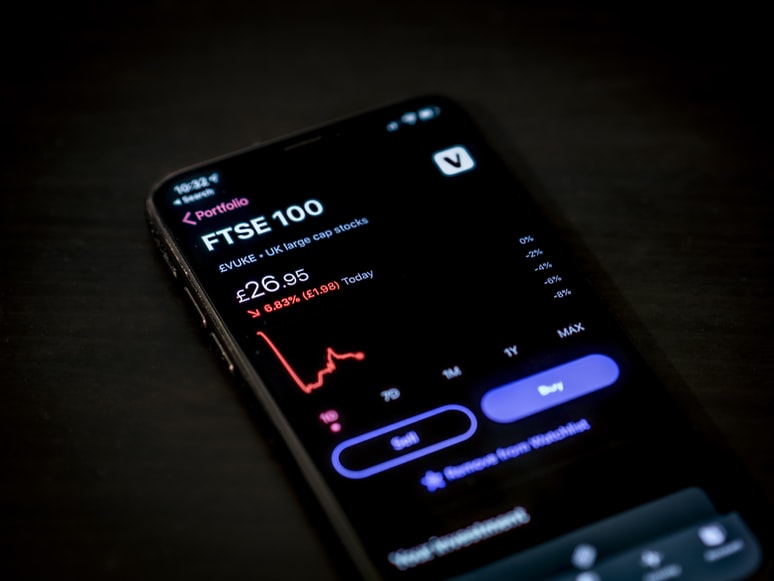
If you don’t remember where you were, what you were doing, or who you were doing it with that’s because the housing crash didn’t happen in one day. Mostly, the market collapse was a slow-motion train wreck with a few precipitous cliff drops during an 18-month period between October 2007 and March 2009.

The aftermath is probably the only part you remember. Your investments had lost half their value. Your house was valued at less than your mortgage. Plans for early retirement had to be postponed or canceled entirely. And the last place you wanted to put your money was in stocks.

But if you were a value investor, like Sir John Templeton, you were probably smiling. Not because John was a cruel, heartless bastard. Rather it was because the housing collapse represented the singular best buying opportunity in several decades. If you had invested after the crash (or kept investing all along), you would have seen momentous returns over the next decade.

Investing when no one else will is at the heart of what value investing is all about and the subject of top financial speaker Lauren Templeton’s book Investing the Templeton Way, based on the successful market-beating strategies of her uncle, Sir John Templeton.

How to Beat the Market and Make Millions

If you want to beat the market and make millions, the principles are quite simple. Executing those principles, however, is difficult. Here are four ways to become rich over time.

1) Buy stocks that no one else wants

You have to go against the crowd and all the conventional wisdom. You have to purchase stocks in companies or countries that don’t look attractive, that no one else seems interested in, whose price is undervalued.

While your friends are buying Amazon, Google, Apple, and whatever stock seems sexy, you will be buying stocks no one has heard of or have had a recent downturn. People will think you are stupid and tell you that you are making unwise choices. Except it’s these undervalued ugly duckling stocks that will make you the most money in the long run.

Sir John Templeton invested in Japan in the 60s when no one thought Japan would amount to anything. In the 70s, all those bets paid off.

2) Buy when no one else wants to buy

Volatility is a bargain hunter’s best ally. Crisis spells opportunity. When everyone is selling stocks because of a crash or crisis, this is the time for you to dive in and start buying.

Buying when prices are going down takes a strong stomach and a lot of courage. As Sir John Templeton said, “The best time to buy is when there’s blood in the streets.” Sometimes that blood may be your own investments.

You should also be prepared for a coming crisis. Have a wishlist of stocks of good companies you want to buy when their prices fall low enough to make a good company’s stock undervalued.

When the dot-com bubble burst, Sir John Templeton had his list of companies he was waiting to buy when the stock price was just right. For example, if a company was overpriced at $100 a share but a bargain at $60 a share, he already had the buy order in place for when the stock price fell to $60.

3) Do your homework

What separates the successful investor from the mediocre investor? It’s not luck, but the ability to do the extra legwork. Bargain hunters research companies thoroughly, find the information no one else can be bothered to look for, and seize the opportunities that no one else has spent the time to discover.

This means going beyond stock reports. The information in public stock reports is already figured into the stock price. If you do the extra work, you can find opportunities no one else sees and profit once everyone figures out that the company’s (or country’s) stock is a good deal.

Before the housing crash, a small group of investors read the fine print and realized that collateralized debt obligations (CDOs) were filled with subprime mortgages that were going to fail (Go see The Big Short for a digestible lesson on this from the late Anthony Bourdain). They did their homework, saw what no one else saw, and profited.

4) Have patience

As a value investor, you must have patience. You will make sound decisions based on research that will yield results in the long term. These results may take years to materialize. While everyone is making money in the next big tech stock, or bitcoin offering, your portfolio may be underperforming. People will say your methods are wrong, out-of-date, and we are living in a new paradigm.

Take the 1970s, for example. The U.S. stock market was virtually flat for a decade. You would have seen no gain in your investments for ten years. By the end of the 70s, there were articles that declared stocks were dead and the future was real estate and gold.

However, had you ignored those nay-sayers and stayed in stocks, you would have seen everything in the market was vastly undervalued. You could have bought lots of bargains, bode your time, and experienced a tremendous rebound when Reagan was elected into office.

So if you want to be rich, it’s quite easy. You just have to go against the crowd, have a strong stomach, do your homework, and be patient.


Kyle Crocco is the Content Marketing Coordinator at BigSpeak Speakers Bureau, a graduate of UC Santa Barbara, and the lead singer of Duh Professors. He regularly publishes business book reviews and thought articles on Medium, Business 2 Community, and Born 2 Invest.

Top Political Speakers

As seen on BigSpeak.com

Are you looking for a top political speaker, politician, economist, or expert on national and international issues for your conference or event? Knowing and understanding the political climate is imperative in making business decisions. Whether it’s the upcoming election, predicting the state of the economy, or national security concerns, these keynote speakers can give you the insights you need.

Peter Zeihan

Top geopolitical keynote speaker Peter Zeihan specializes in global energy, demographics, and security. He will guide your company through the tumultuous future of global economics. He’ll cover everything from why China may be irrelevant in the near future to how Europe will aid in their own demise to steps to take to avoid the whole ordeal. You need Peter on your side if you want your company to stay alive.

David Dreier

David Dreier, former congressman and current Chairman of the Annenberg-Dreier Commission of Sunnyland, is a top keynote speaker focusing on trade and foreign policies. In this globalized marketplace, every move made by even the smallest countries affects you and your company. His behind-the-scenes insights into free trade and foreign involvement will keep your business a step ahead of your competitor.

Tan Le

Technology and Innovation speaker Tan Le has a unique perspective on global politics. As a refugee with an unbelievable story of escape, she used her outsider’s perspective to influence the framework of her company. Her talk focuses on the struggles of immigration as a refugee and how it shaped her into the entrepreneur who created world-changing brain control technology.

Larry Wilmore

Larry Wilmore, better known as the “Senior Black Correspondent” on The Daily Show with Jon Stewart and Host of the Nightly Show, brings comedy and humor to the often painful political climate of today.

Wilmore’s first book, I’d Rather We Got Casinos and Other Black Thoughts by Larry Wilmore, was published in fall 2008 and displays “an ability to convince, confound and compel in equal measure,” according to Publishers Weekly. He has been nominated and received numerous awards including an Emmy, a Peabody, Humanitas, TV Critics, and NAACP Image Award.

Dambisa Moyo

Dambisa Moyo is a global economist keynote speaker, author, and macroeconomy and international affairs analyst. Her work has taken her to more than 70 countries over the last decade, during which time she has developed a unique knowledge of the inherent conflicts facing developed economies, as well as the interaction between politics, international finance and developing markets.

Ian Siegel

Technology and entrepreneur keynote speaker and founder and CEO of ZipRecruiter, Ian Siegel analyzes how changing laws affect the job market to give you deeper insights into your hiring and retention, as well as possible integrations and alternative routes for your business.

Carl Bernstein

Carl Bernstein made a name for himself as one the most influential investigative reporters when he broke the Watergate story that aided in the impeachment of former President Richard Nixon. Since then he hasn’t slowed down. His insights into the dark and hidden world of politics are as intriguing as they are informative and helpful to your business. Book an evening with Carl to hear about the underbelly of America.

See Below For More Top Keynote Speakers:

Top Financial Keynote Speakers

All Top Keynote Speakers